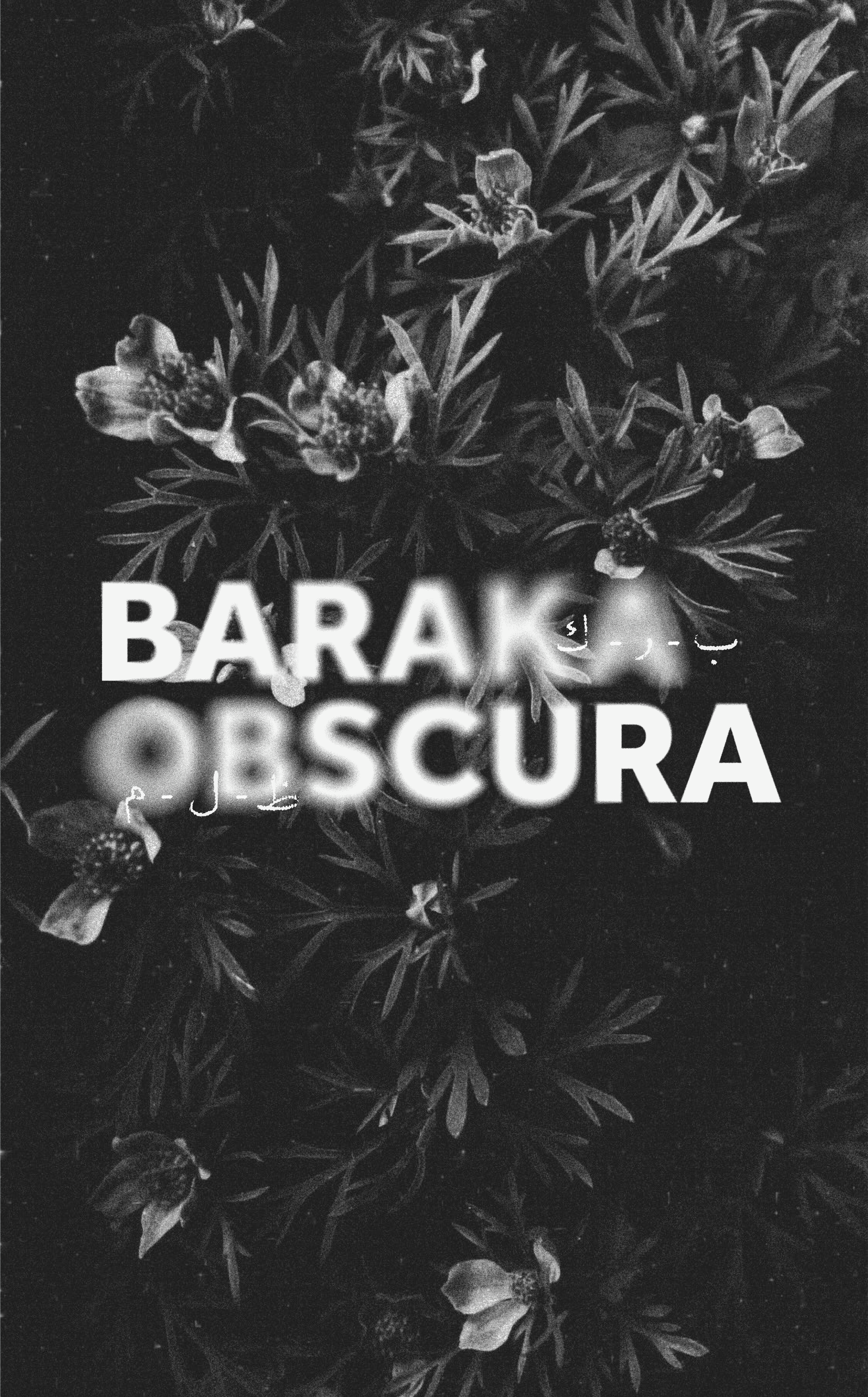
(ب - ر - ك | ظ - ل - م)
Exhibited at Shubbak Festival x V&A Friday Lates, July 2026
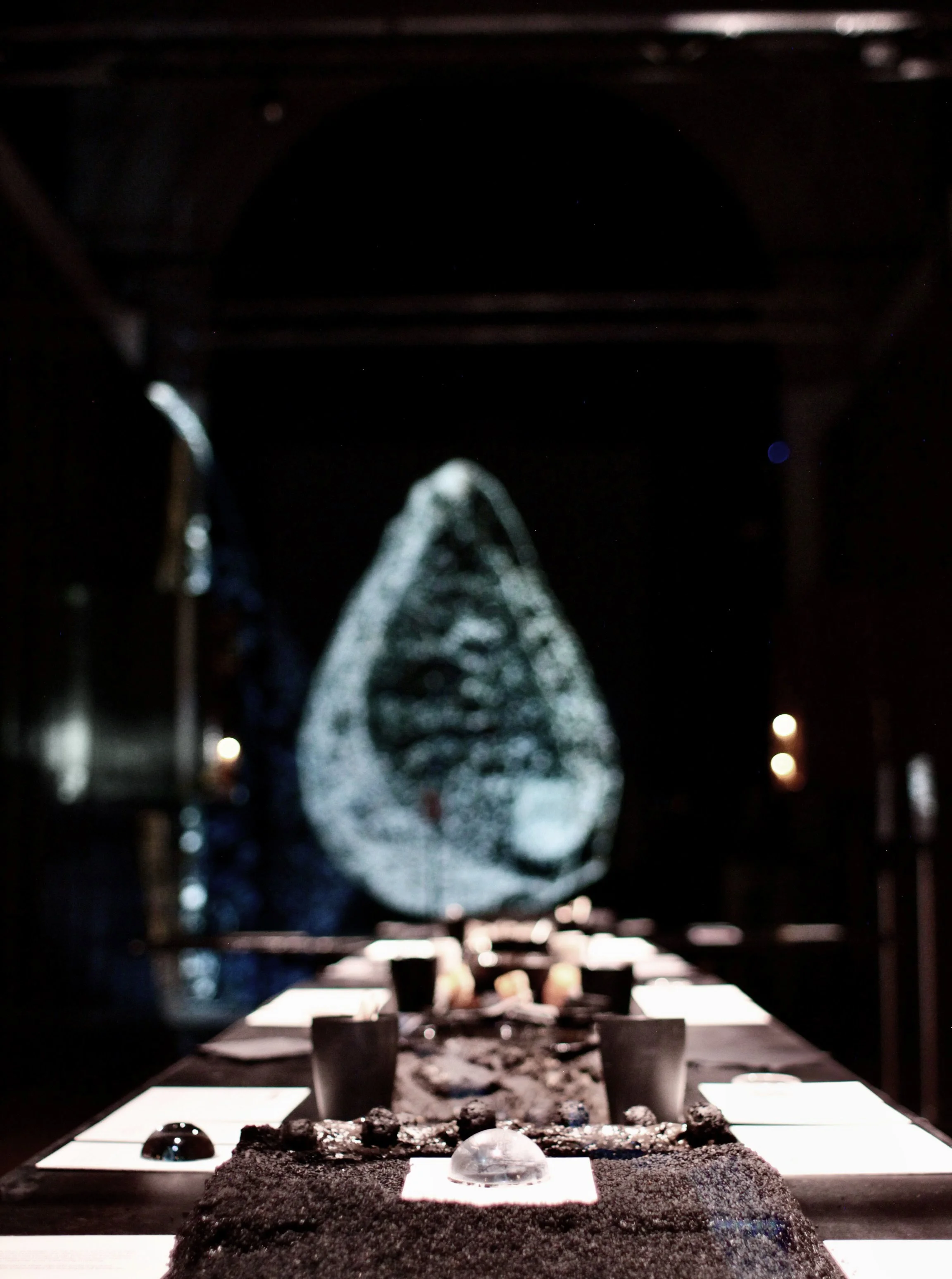
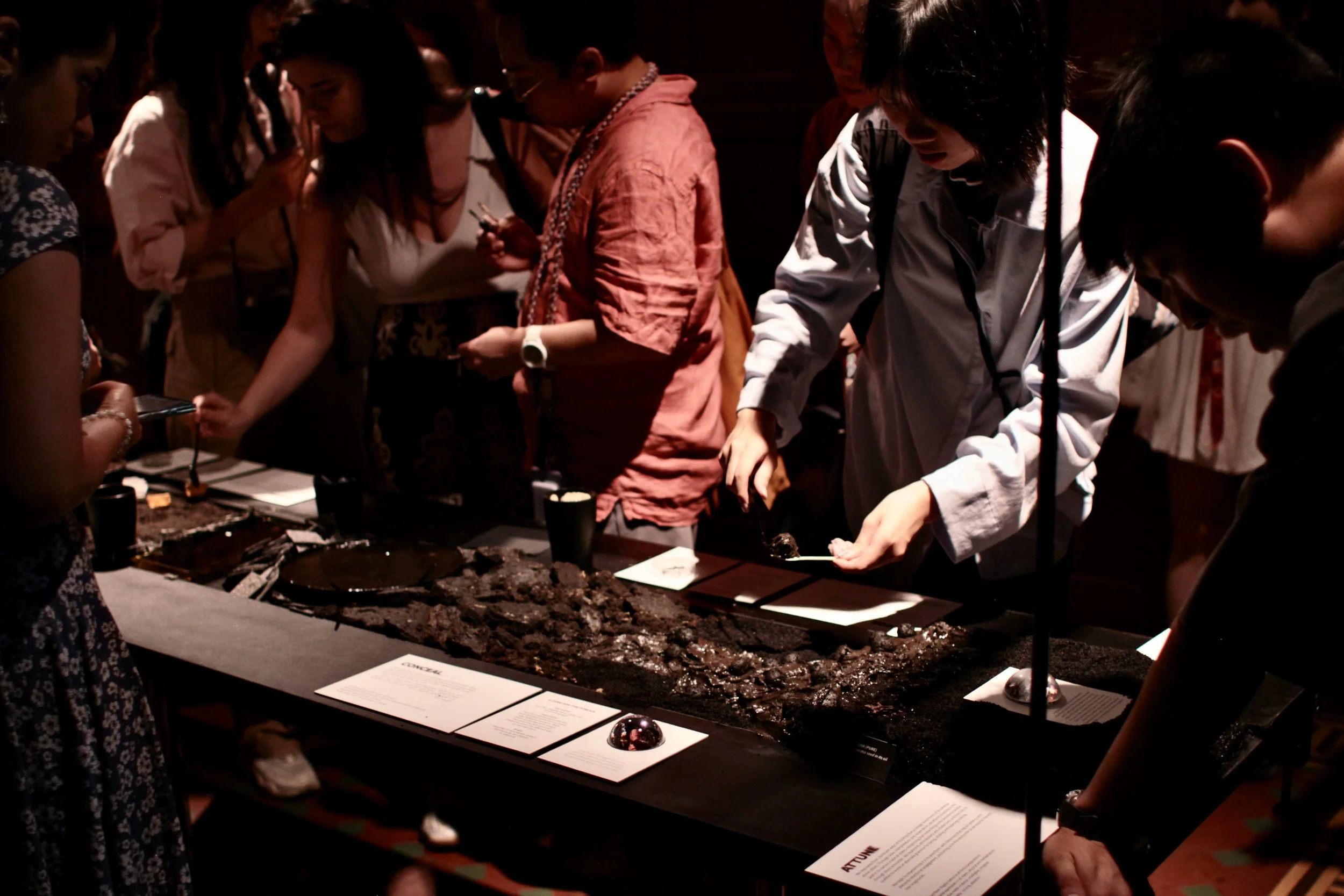
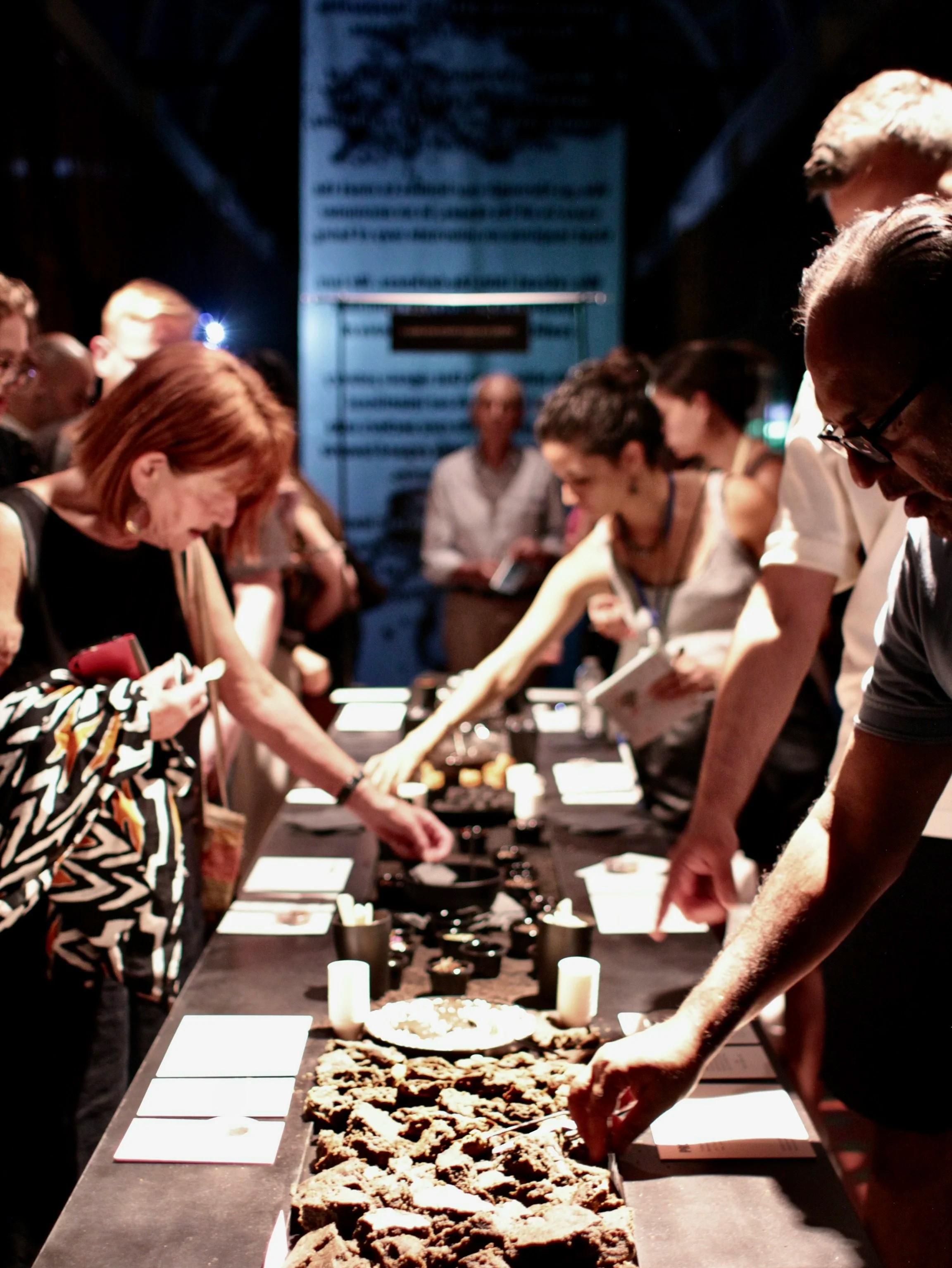
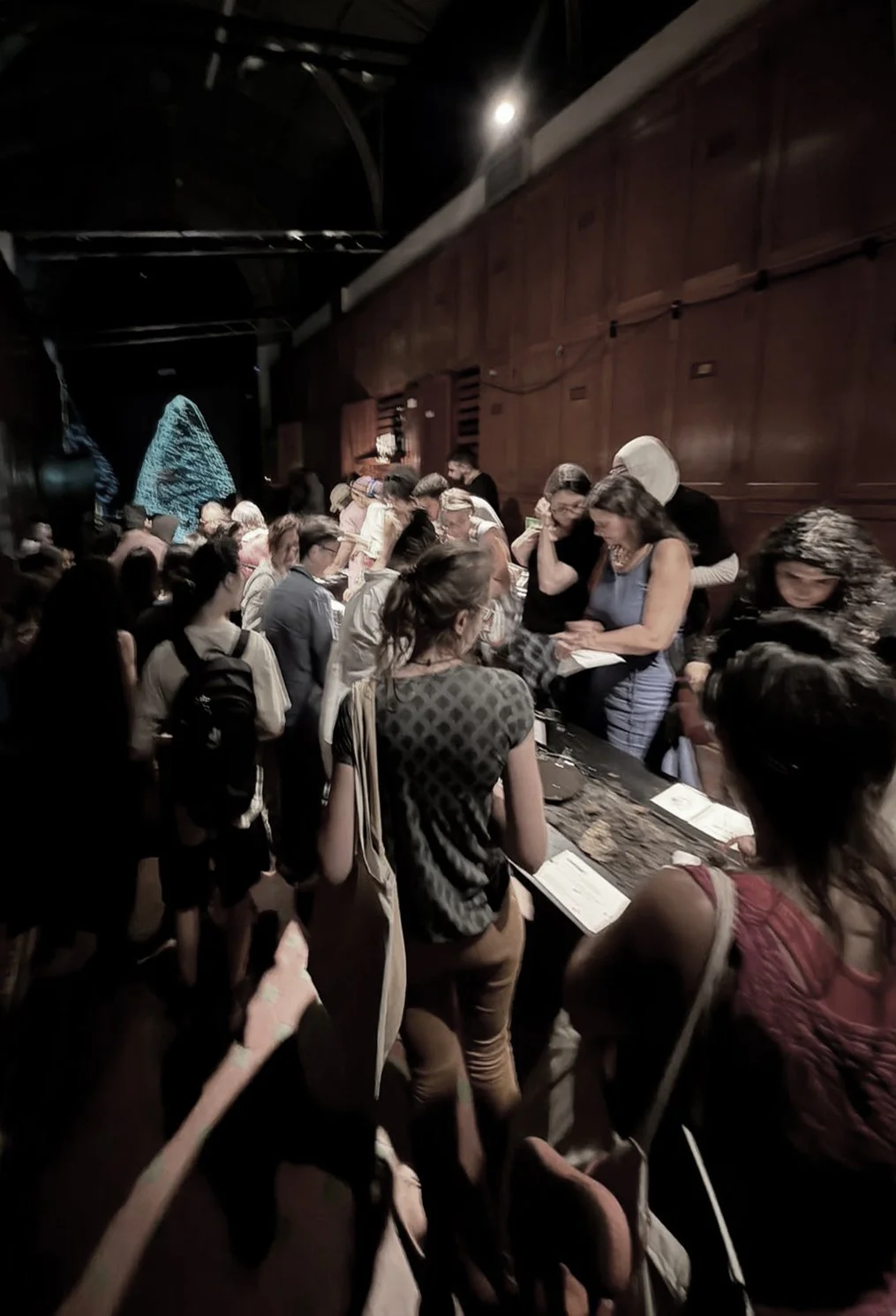
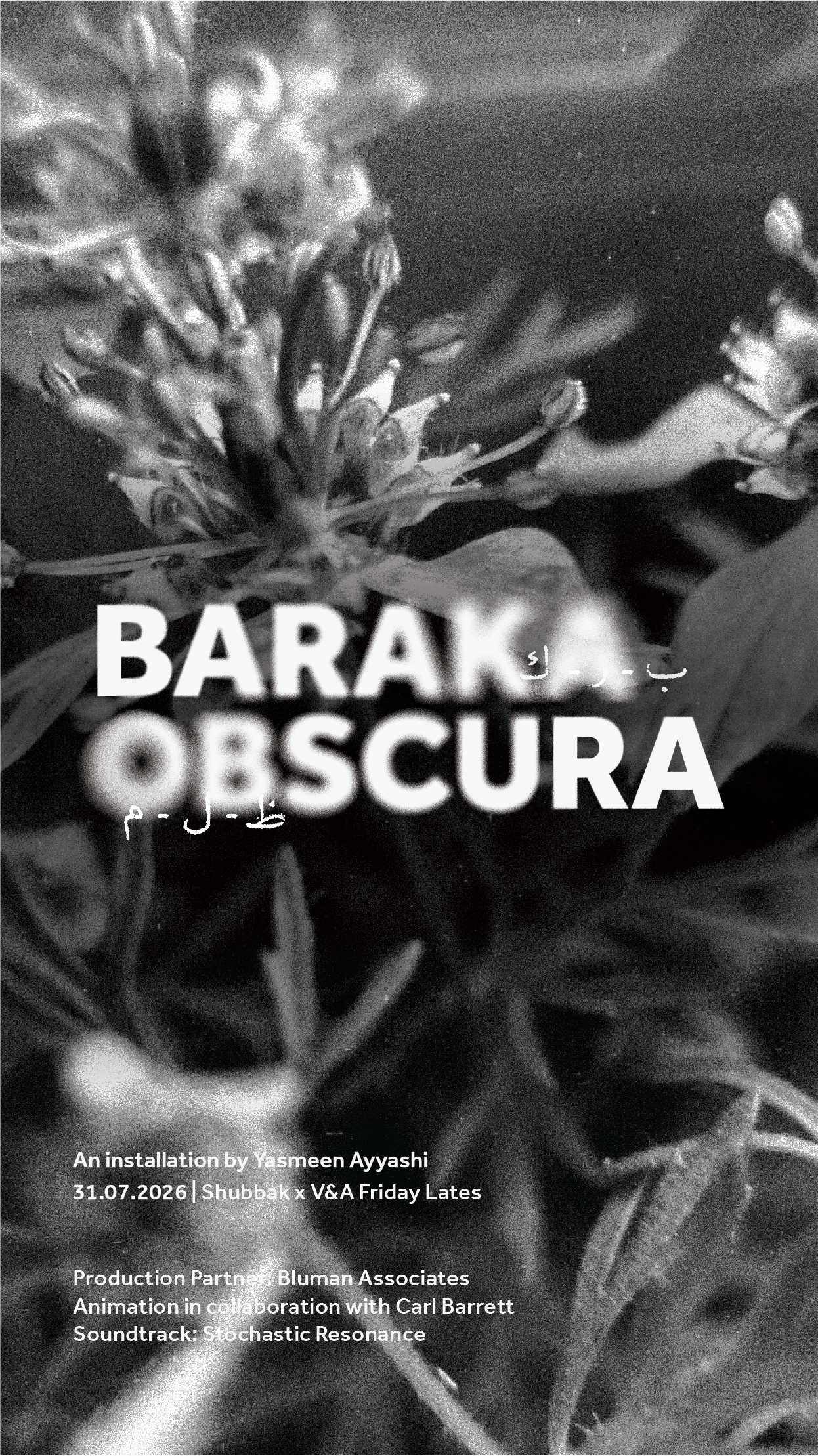
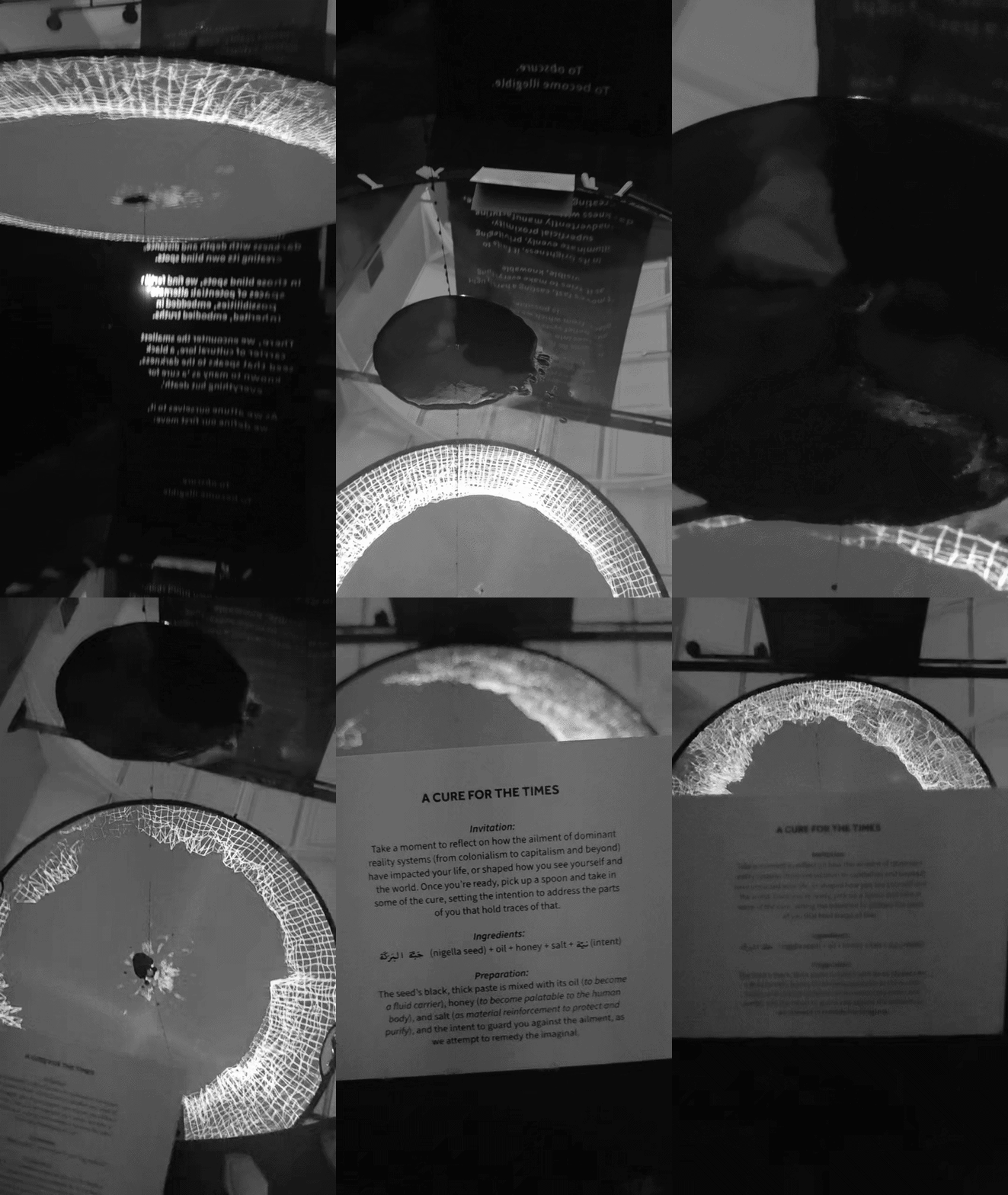
Part of an ongoing body of research and work examining worldbuilding from SWANA perspectives, Baraka Obscura is a durational immersive installation that unfolds through spatial, virtual, edible and sonic elements. It is a participatory experience in two parts: an invitation to abandon one reality, and an encounter that unveils an alternative.
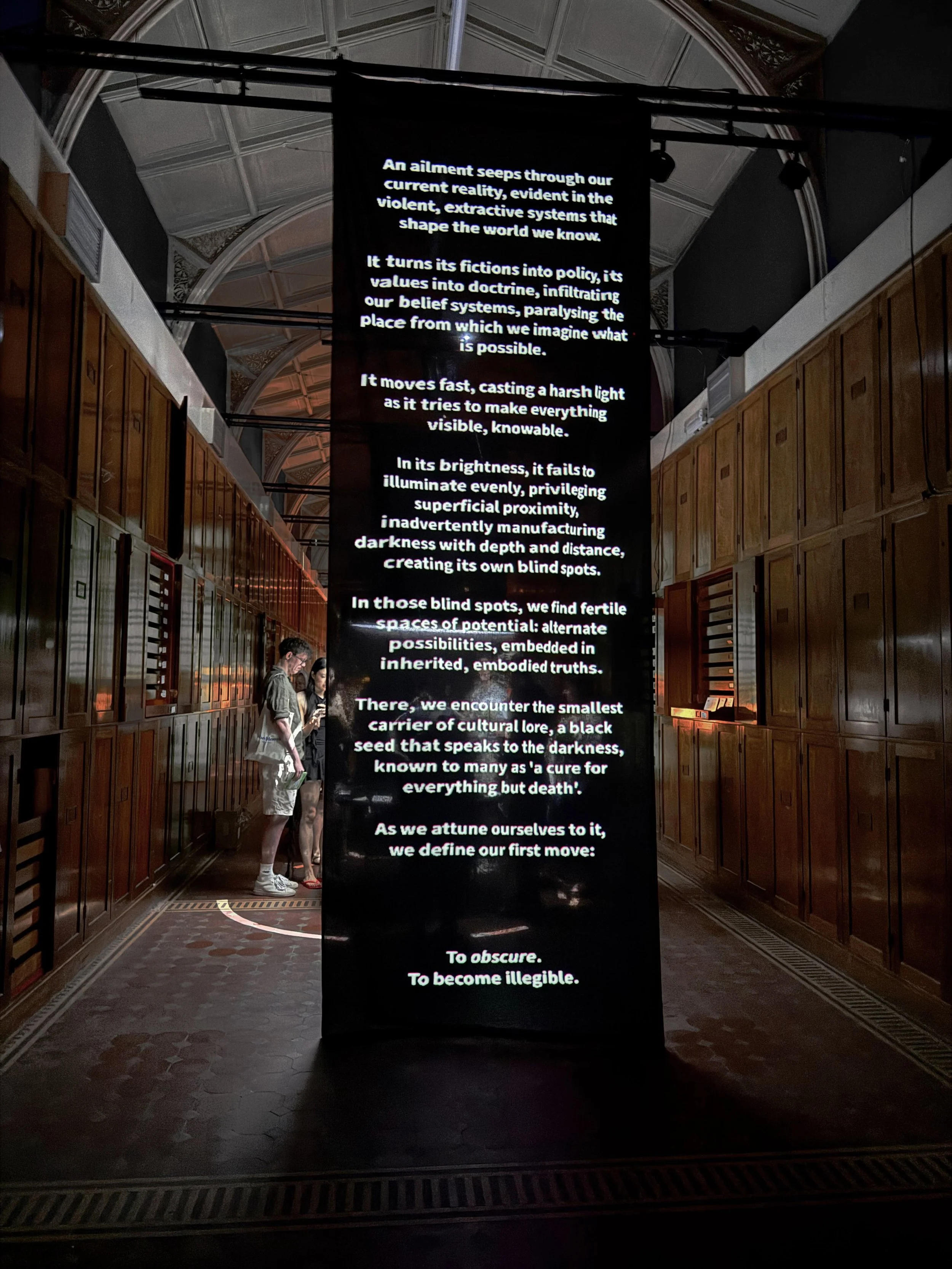
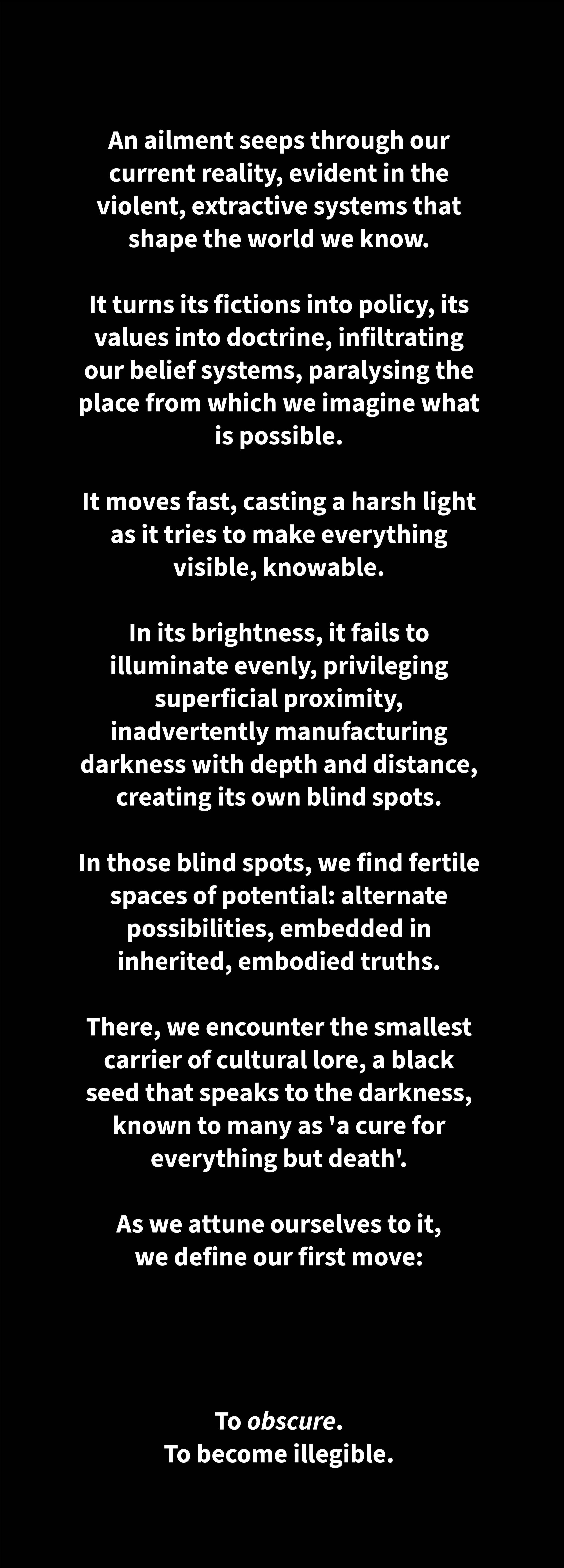
The experience stages dominant reality - and the violent, extractive, hierarchical systems that structure the world we know - as afflicted with an ‘ailment’ that infiltrates everything from the infinitesimal to the cosmological.
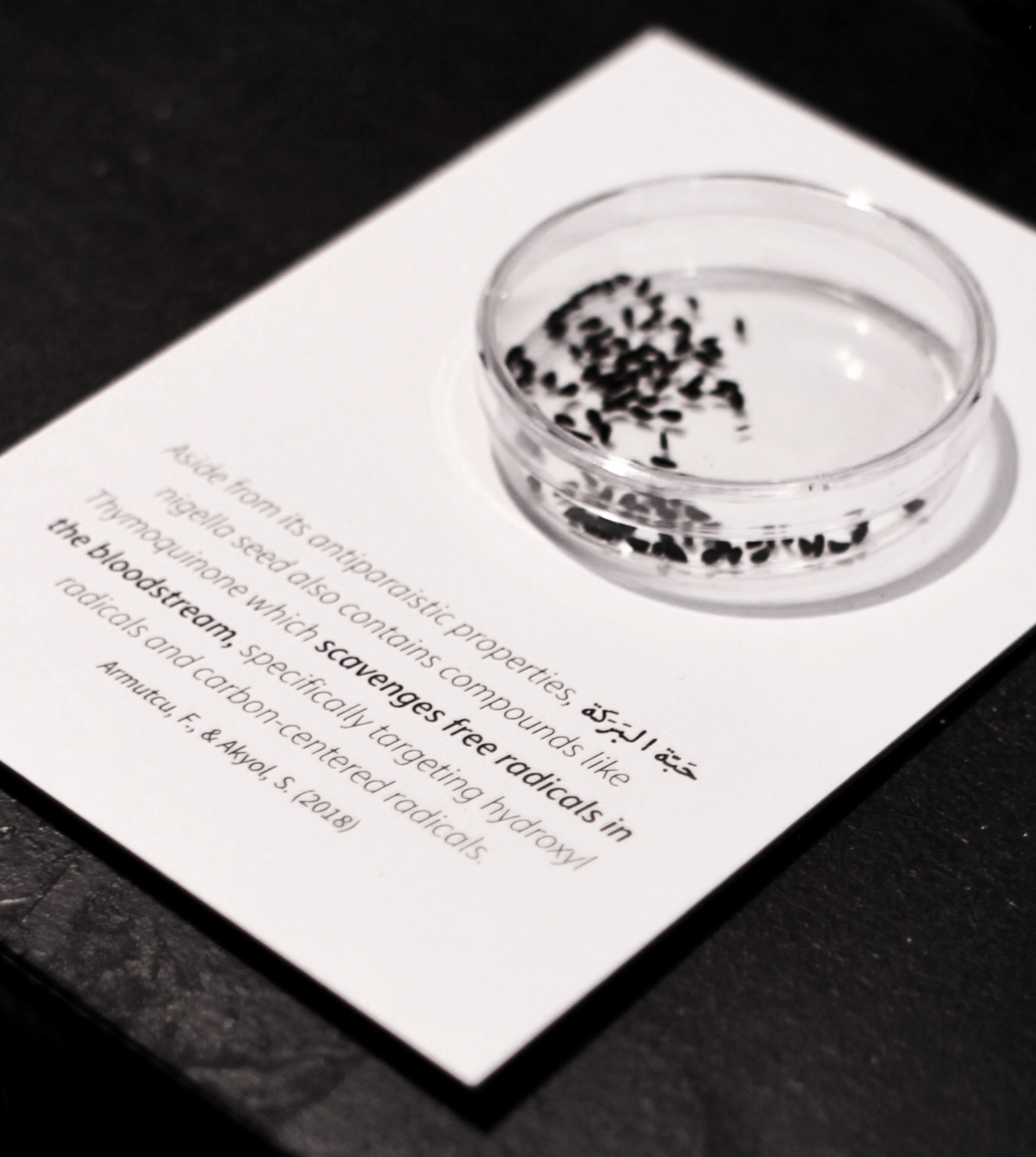
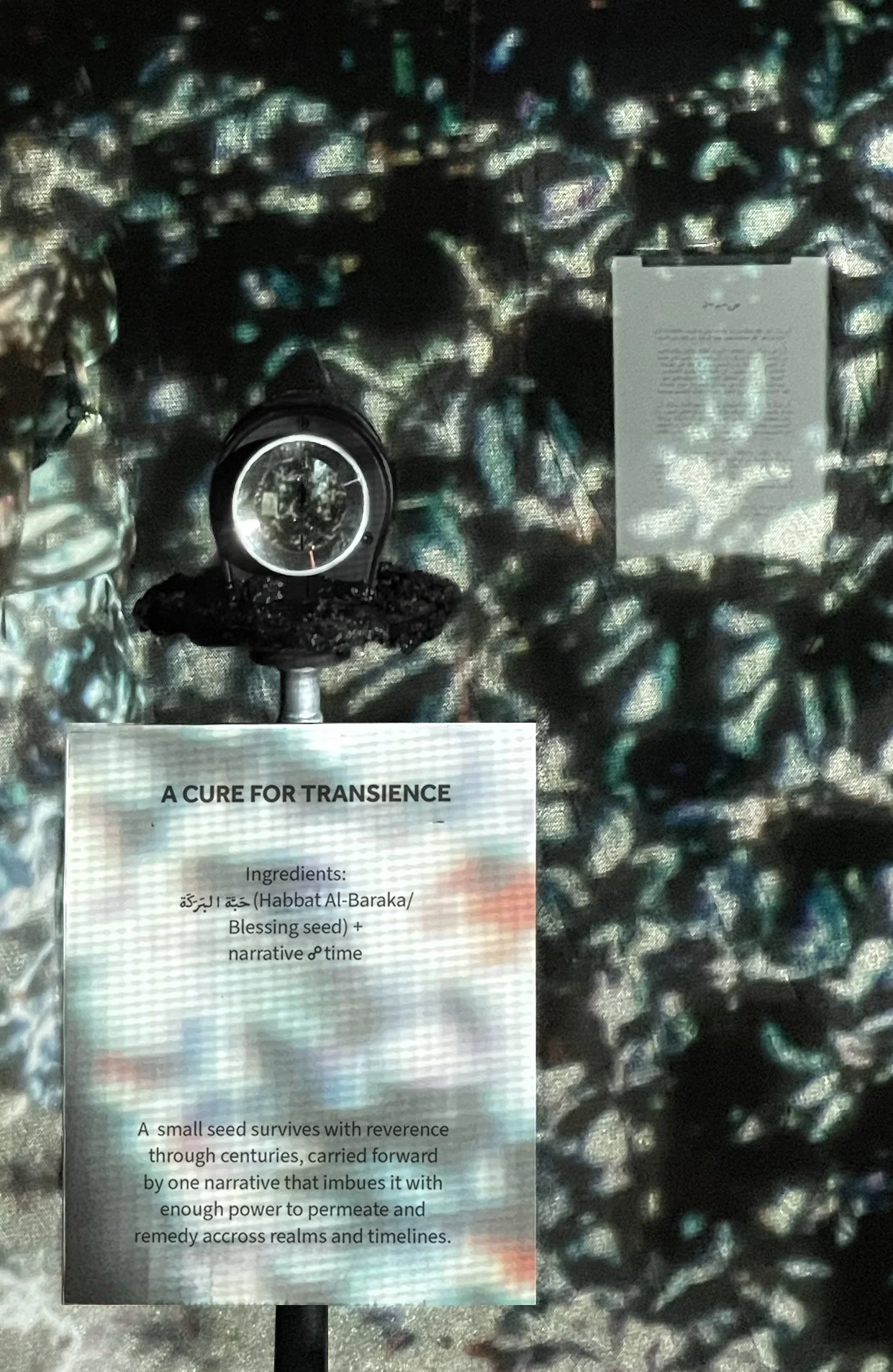
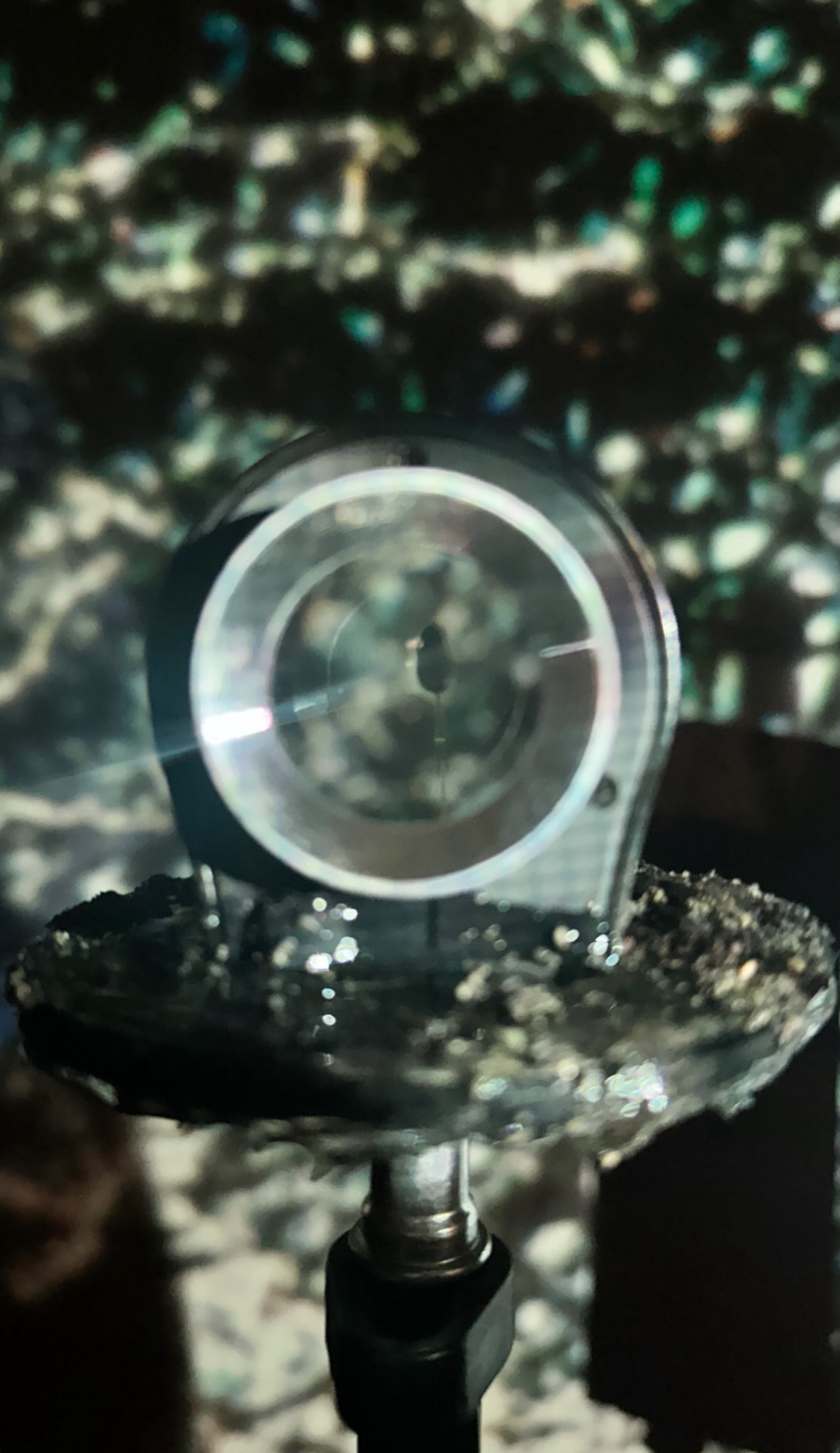
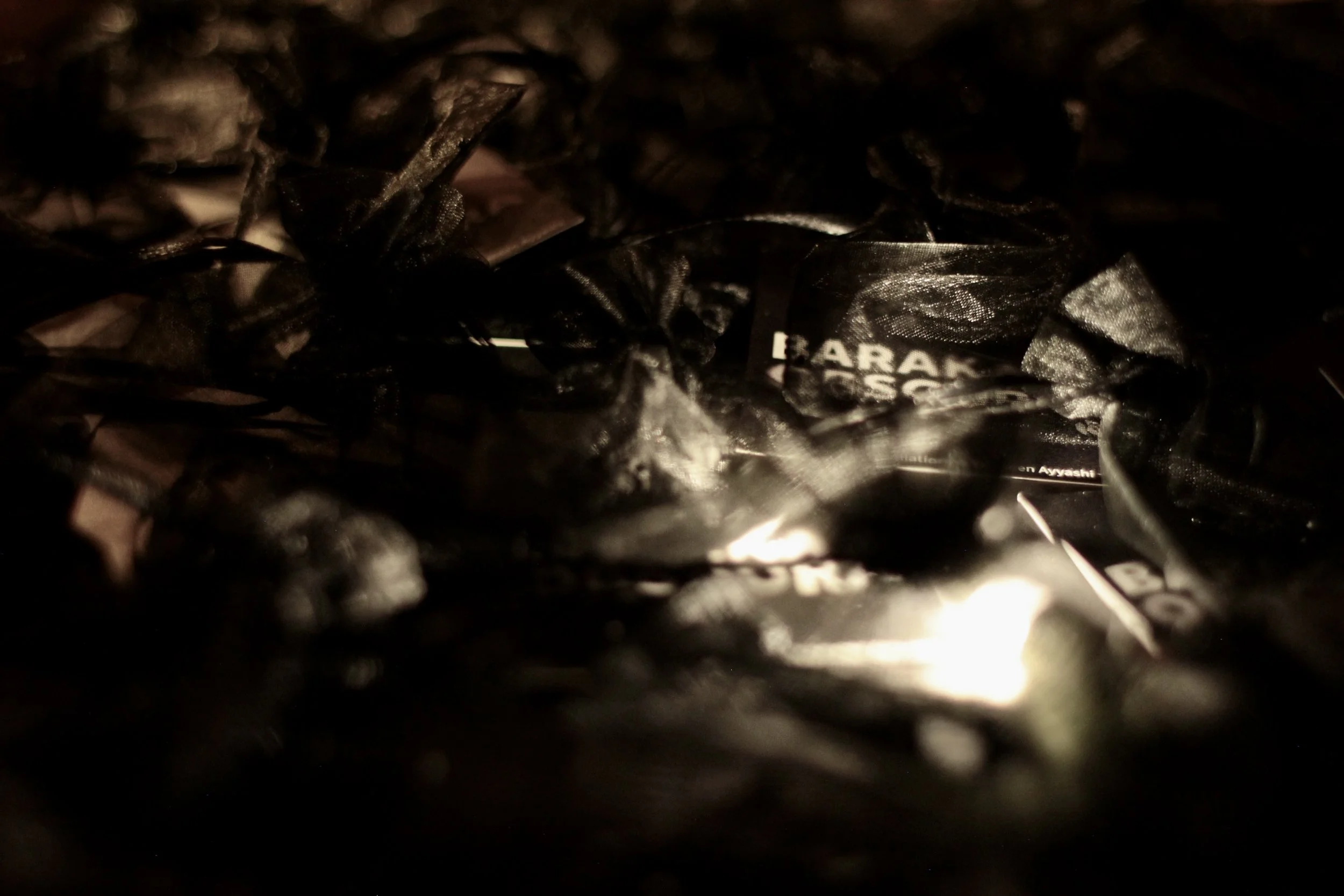
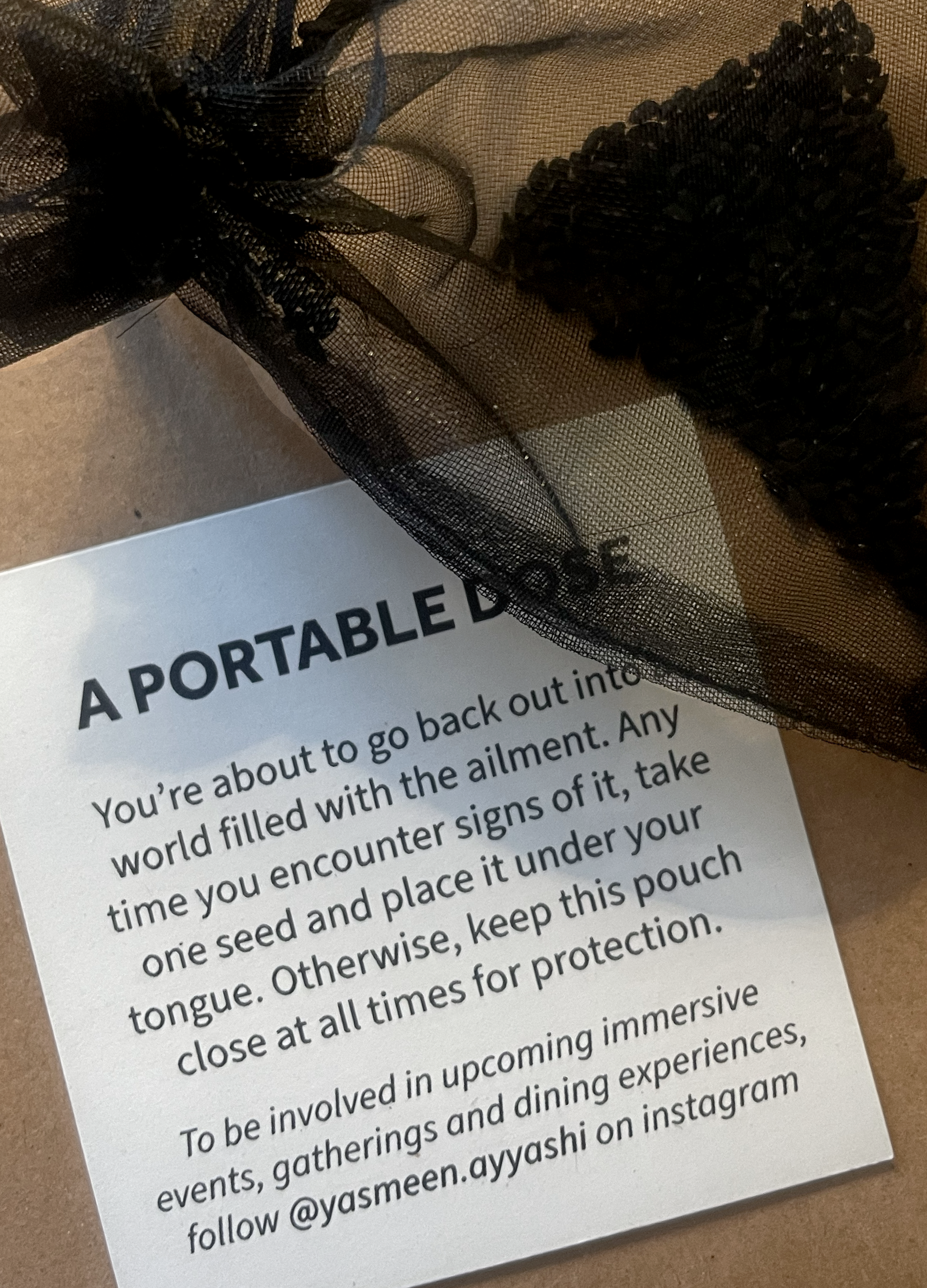
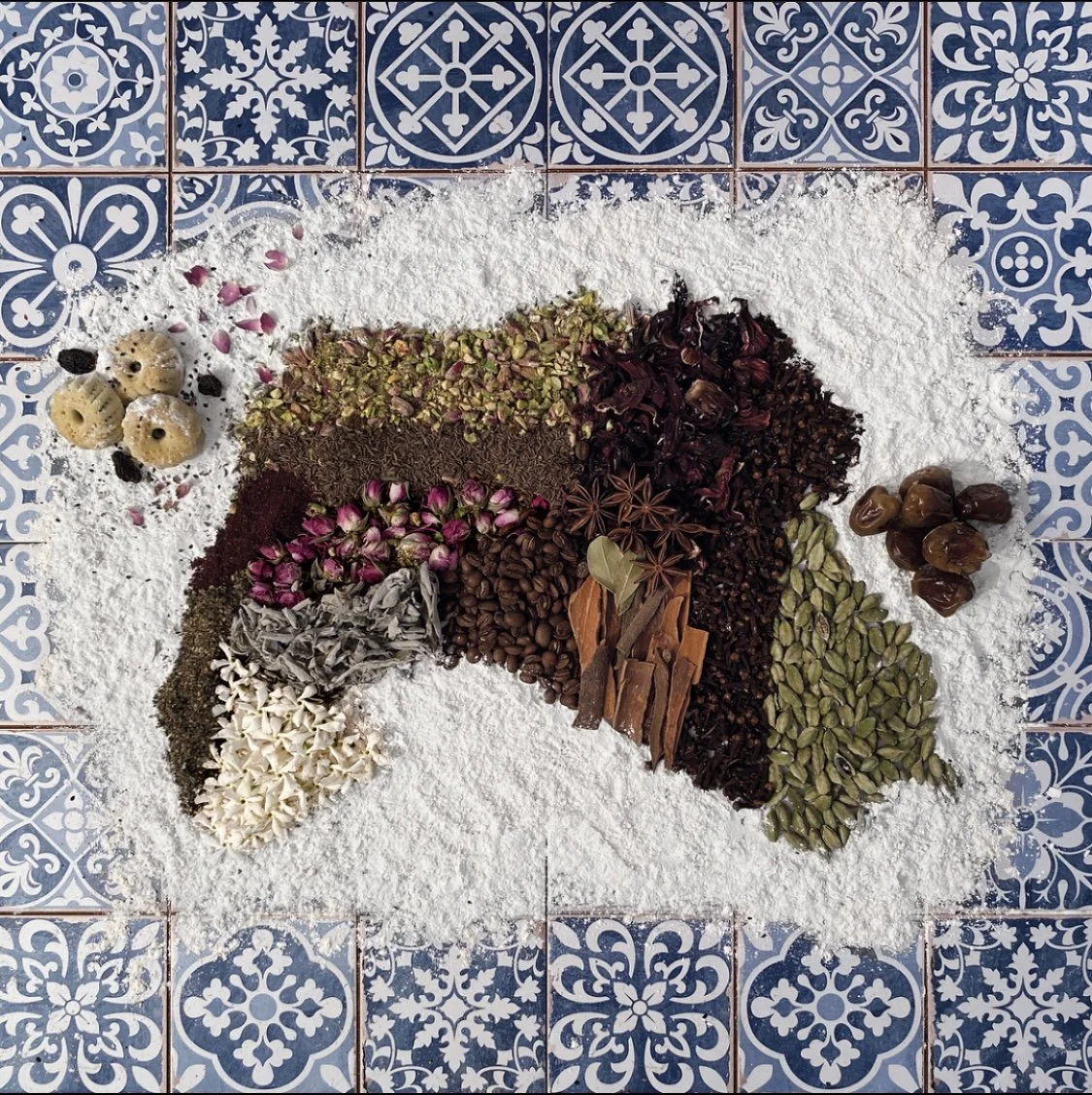
The narrative then turns to one of the smallest containers of SWANA cultural lore: the baraka (blessing) seed - Nigella sativa, known to many as “a cure for everything but death”, positioning it as the central material and narrative device through which an alternate way of conceptualising reality is revealed. Through philosophy, ecology, mysticism, occultism and cultural practices, a system of worldbuilding contained within the seed emerges, extending its remedial powers across realms and timelines. As the experience unfolds, the seed acts as a cure for the ailment of the times, by anchoring us back to what is known through the body, through relationship with the land, and through inherited truths that dominant reality systems actively sever us from.
Across various SWANA cultures, the cure is carried through a constellation of beliefs through which reality emerges as layered, and porous, capable of moving between material and immaterial states.
1. THE AILMENT:
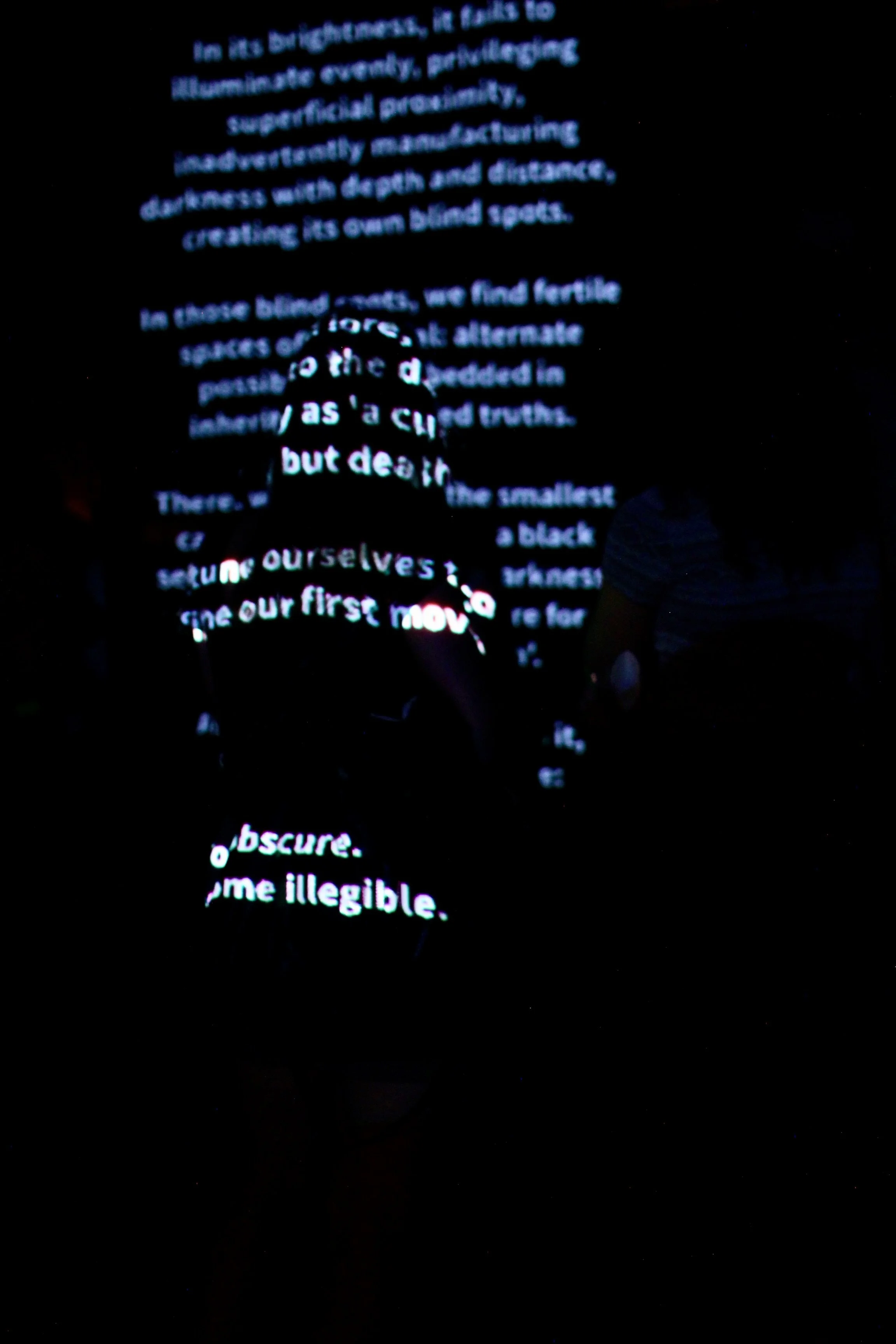
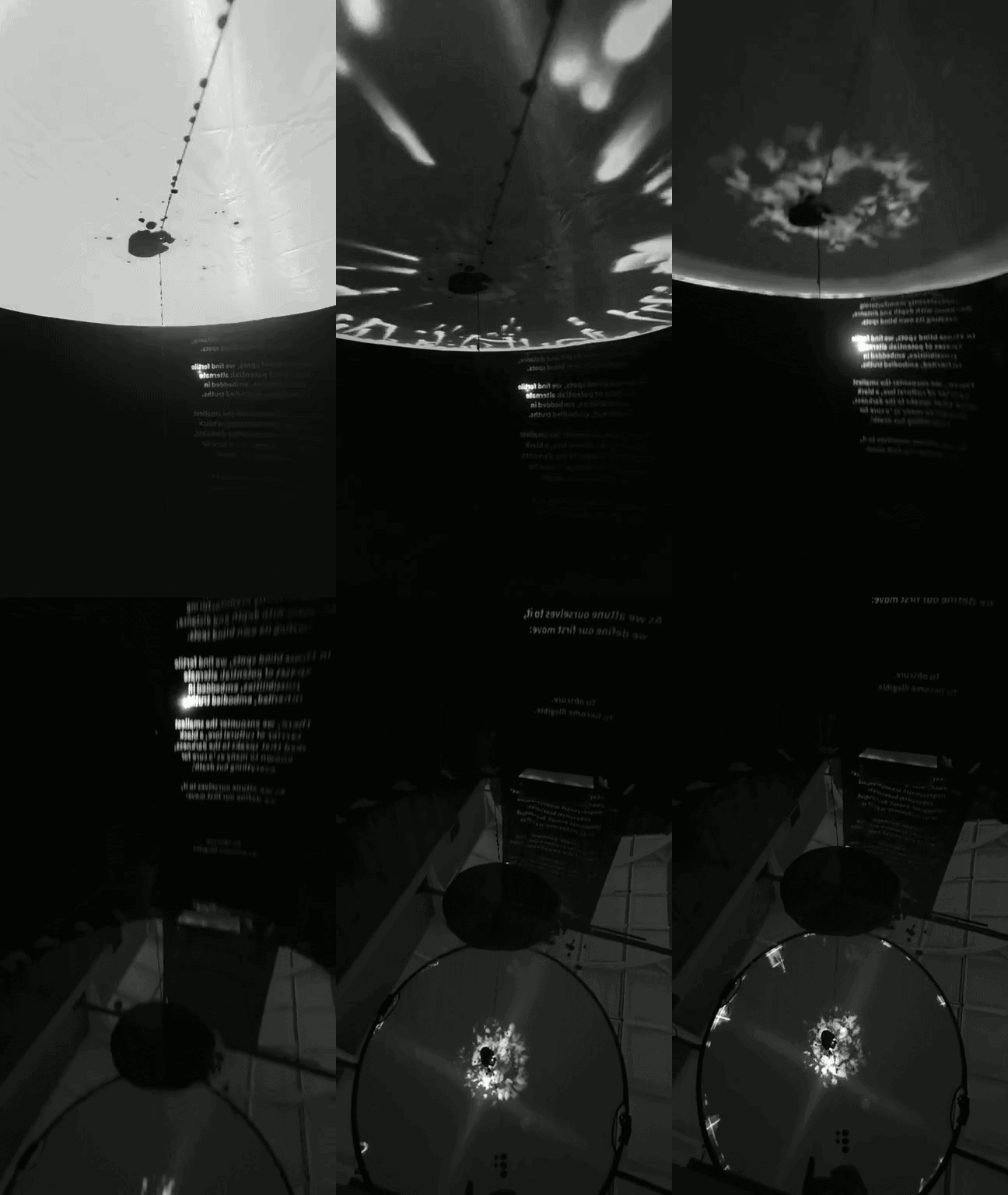
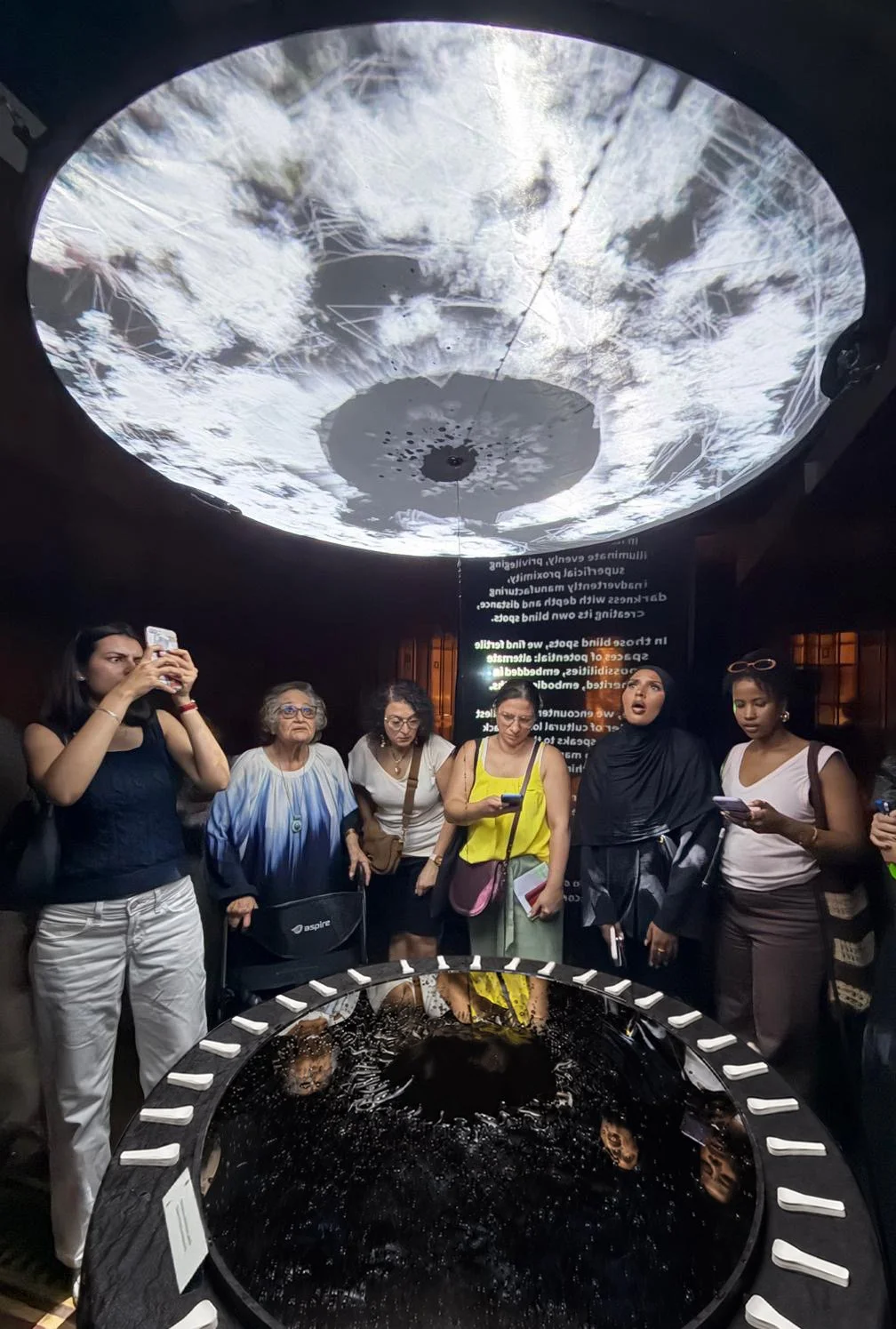
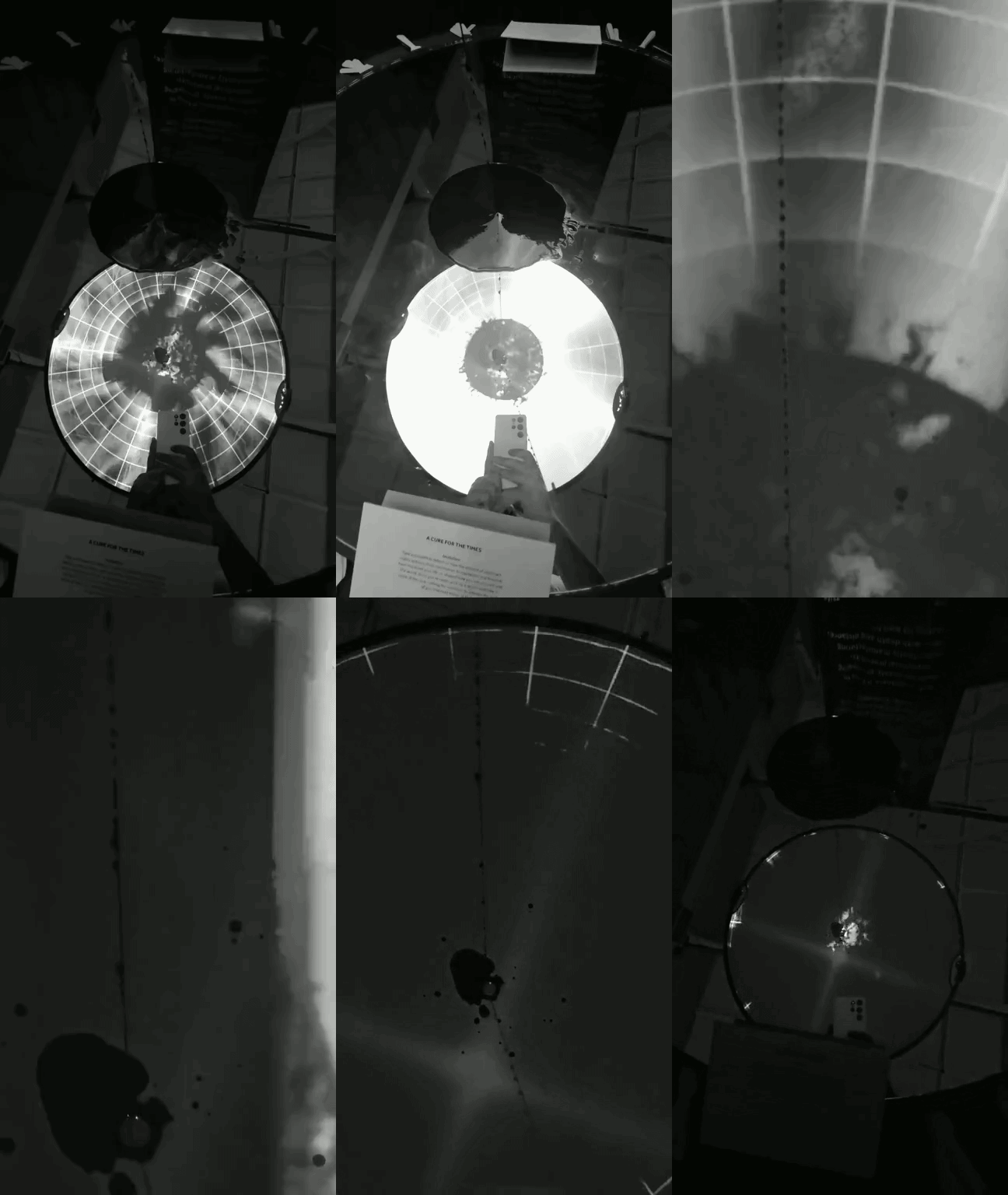
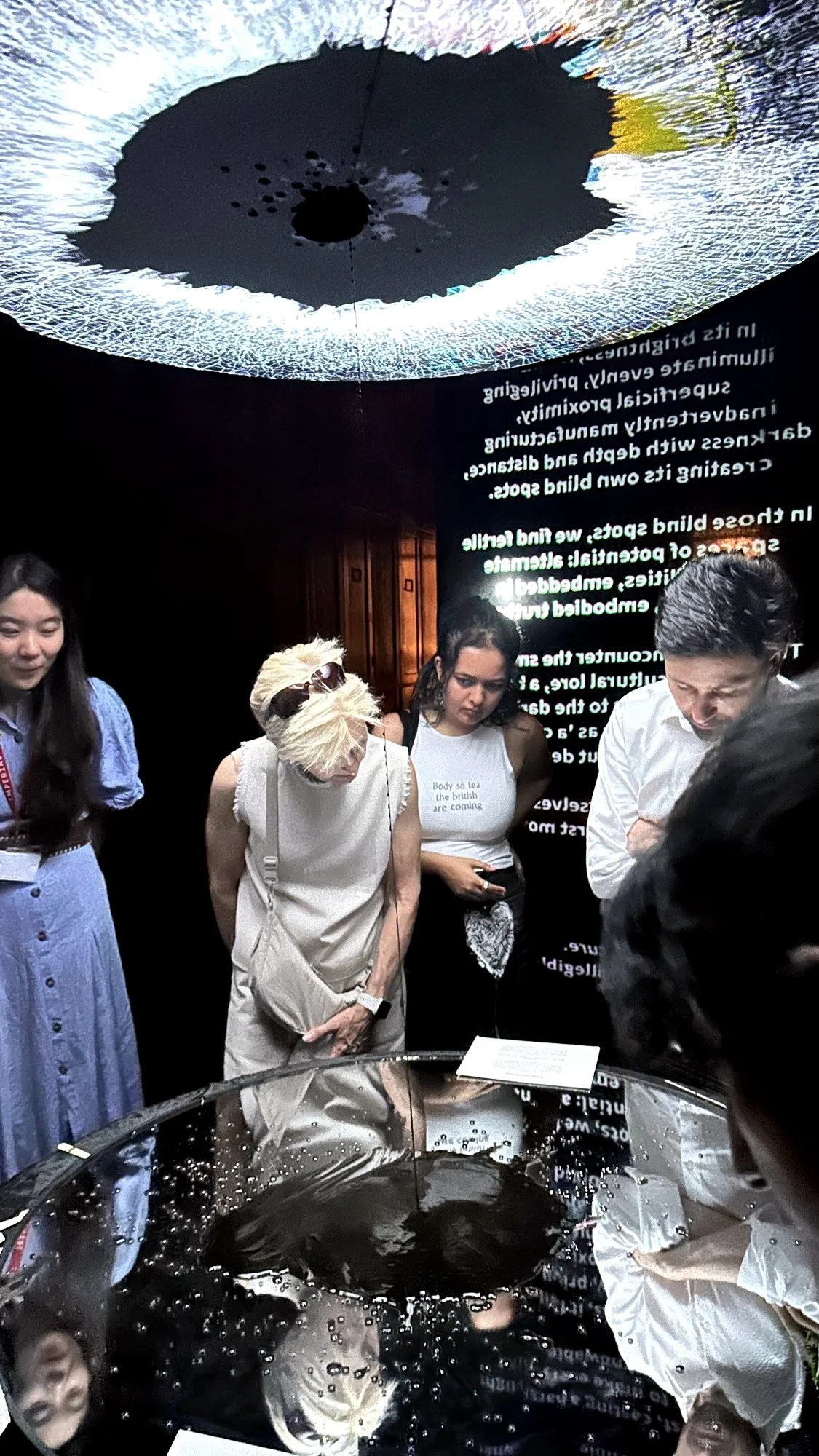
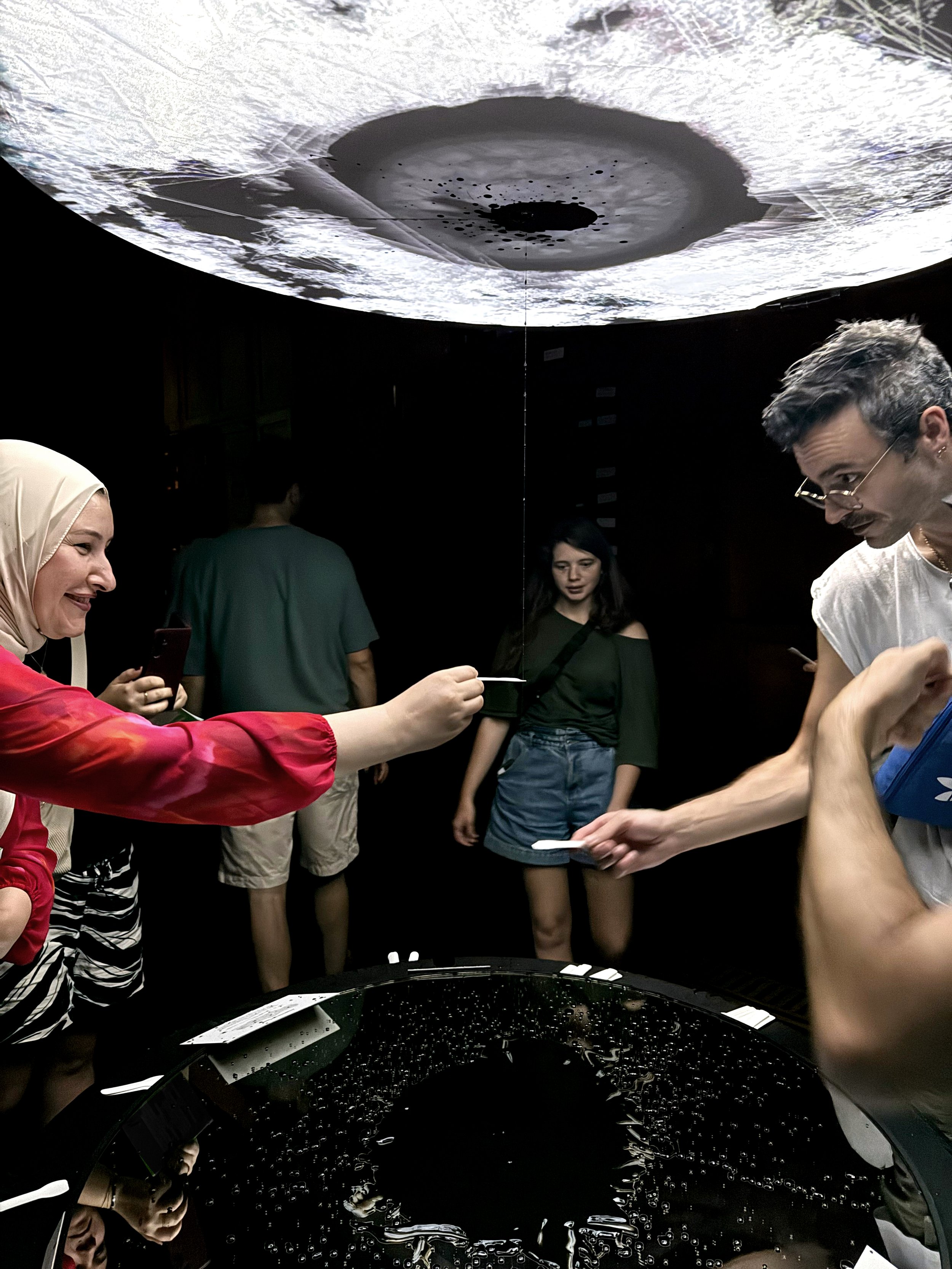
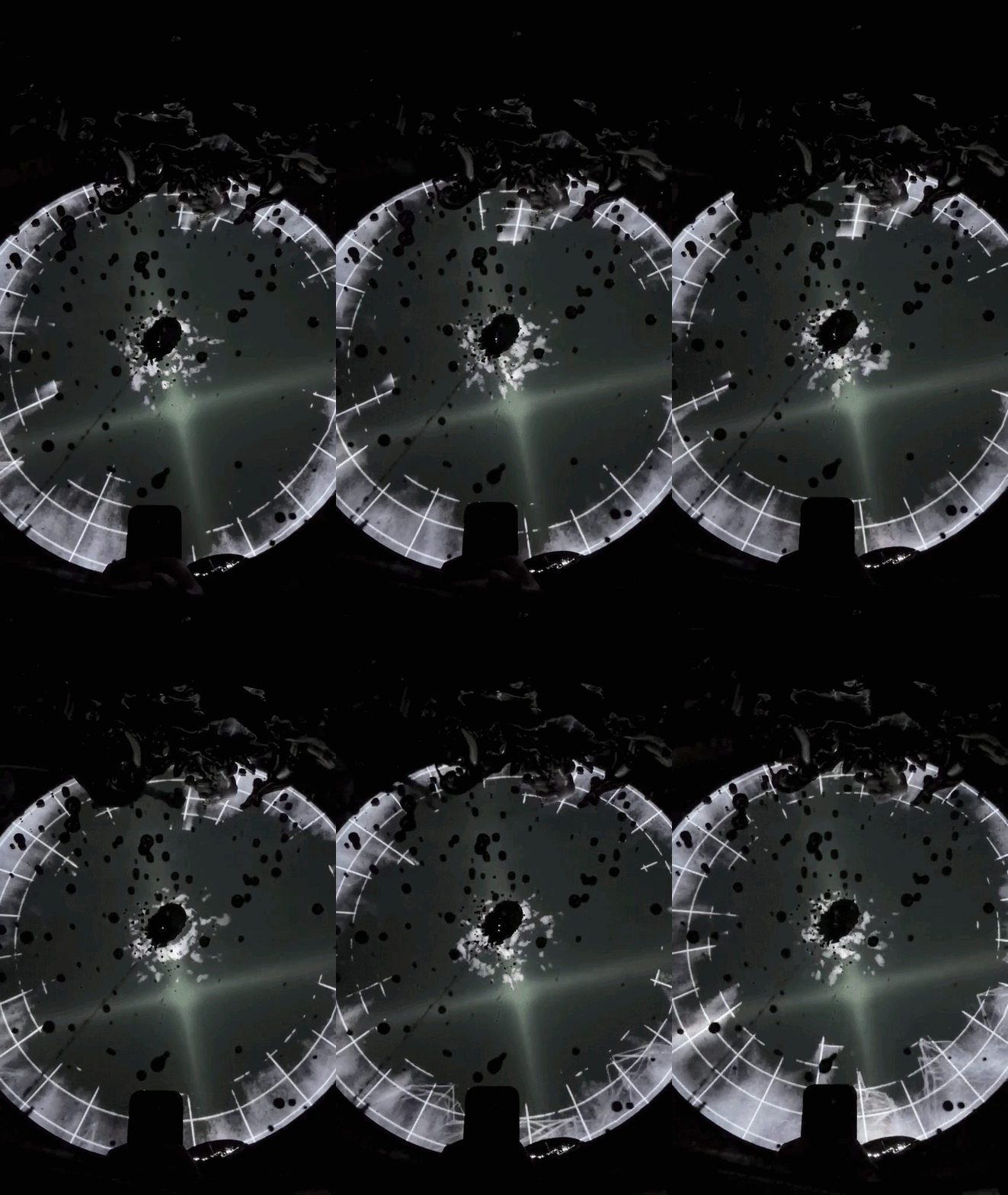
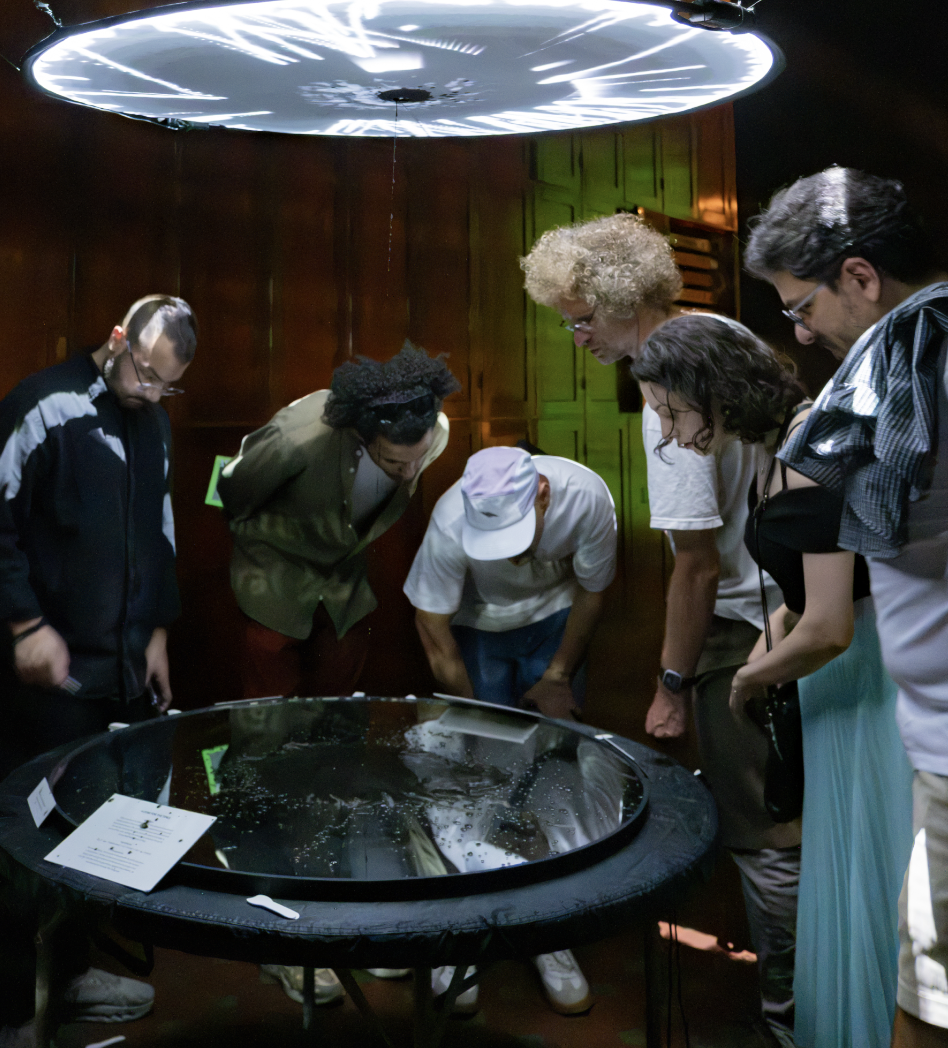
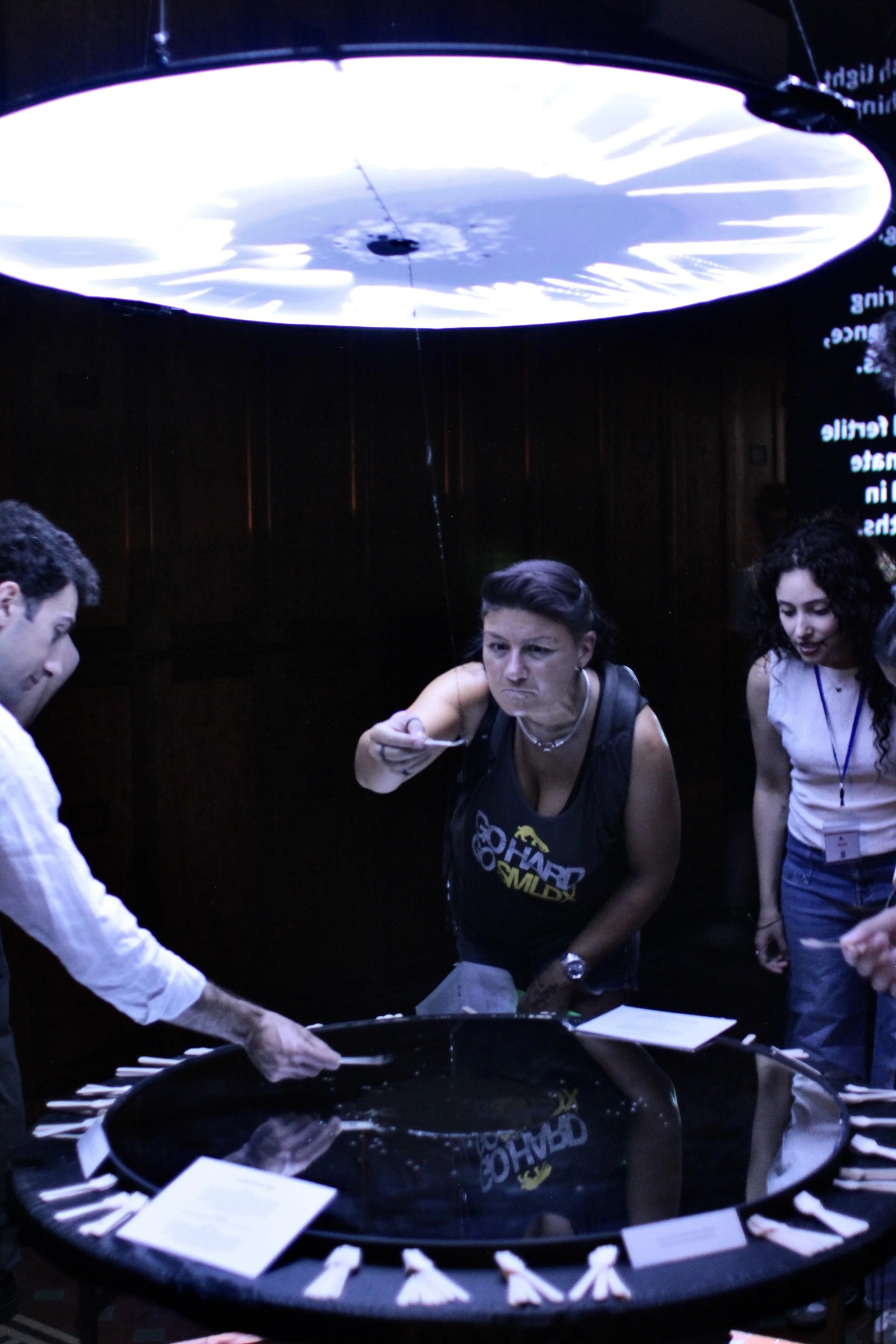
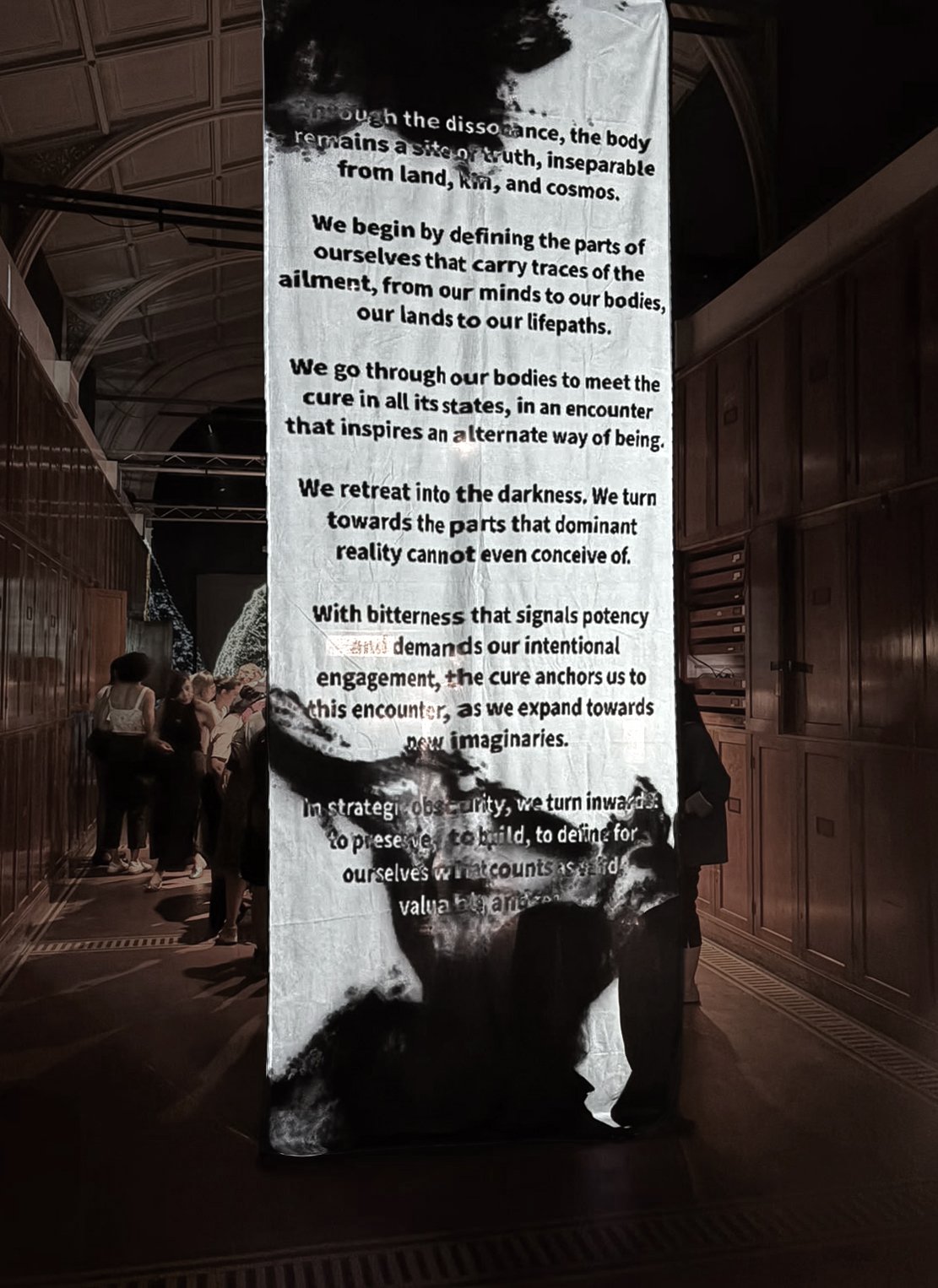
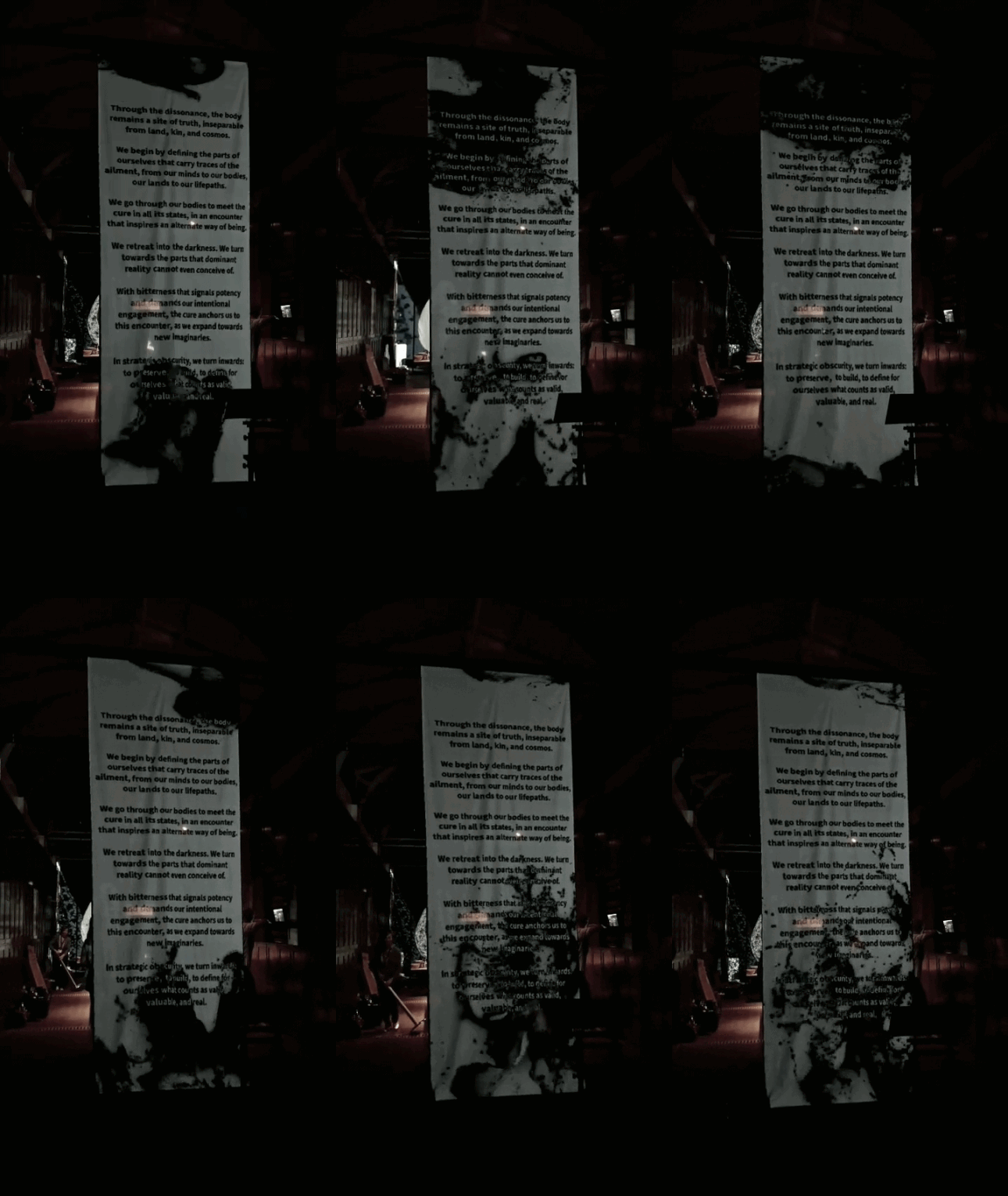
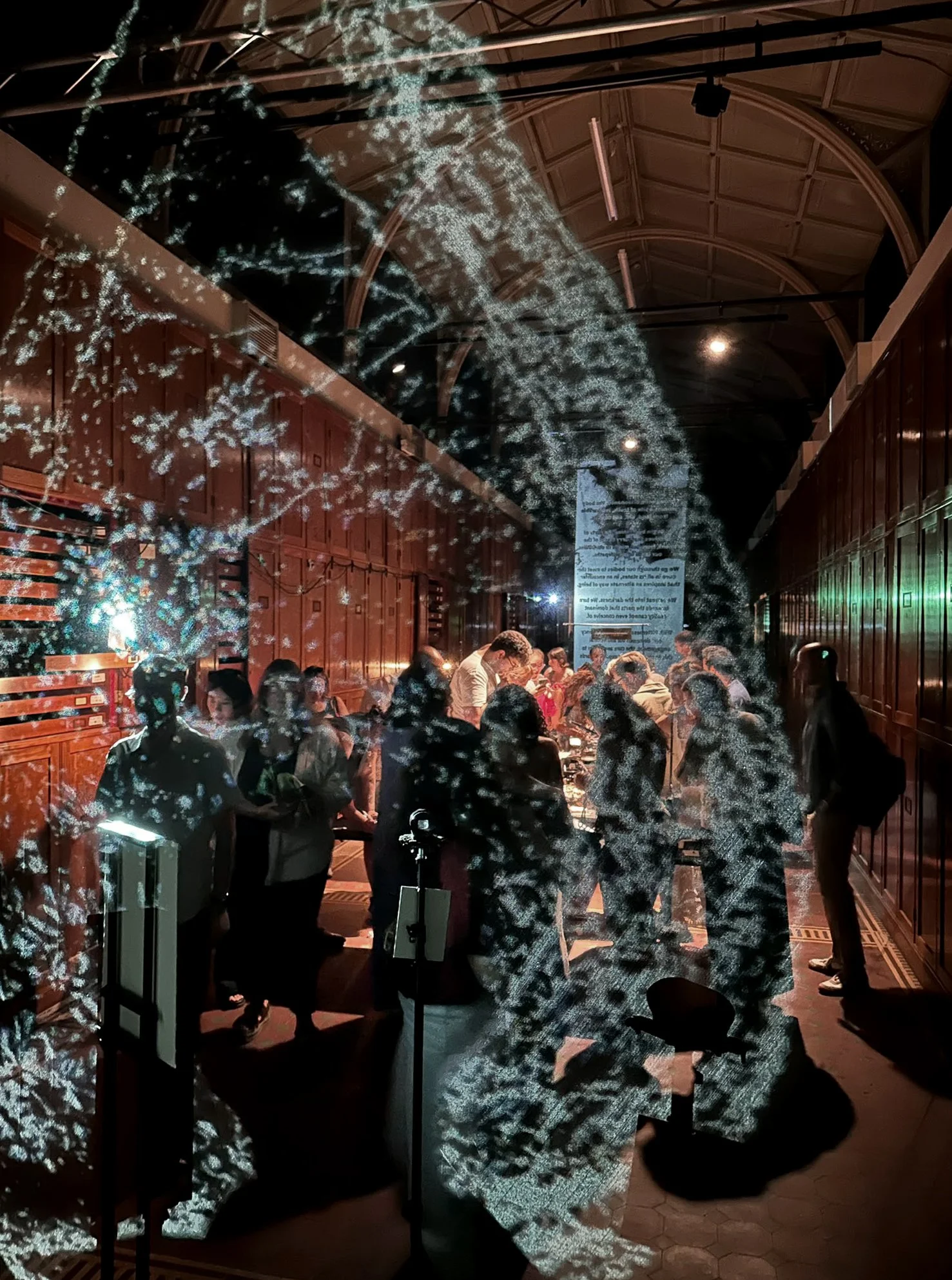
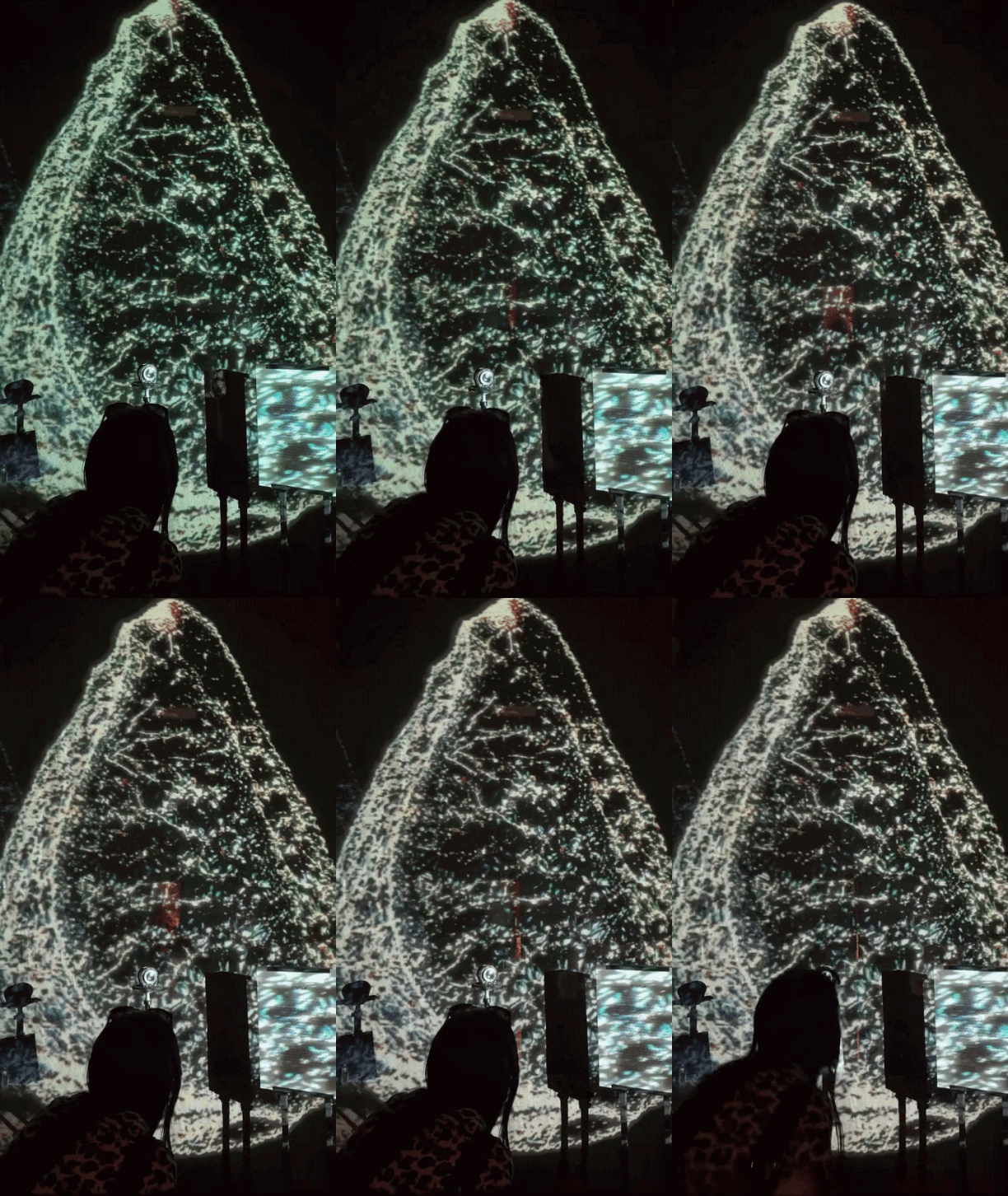
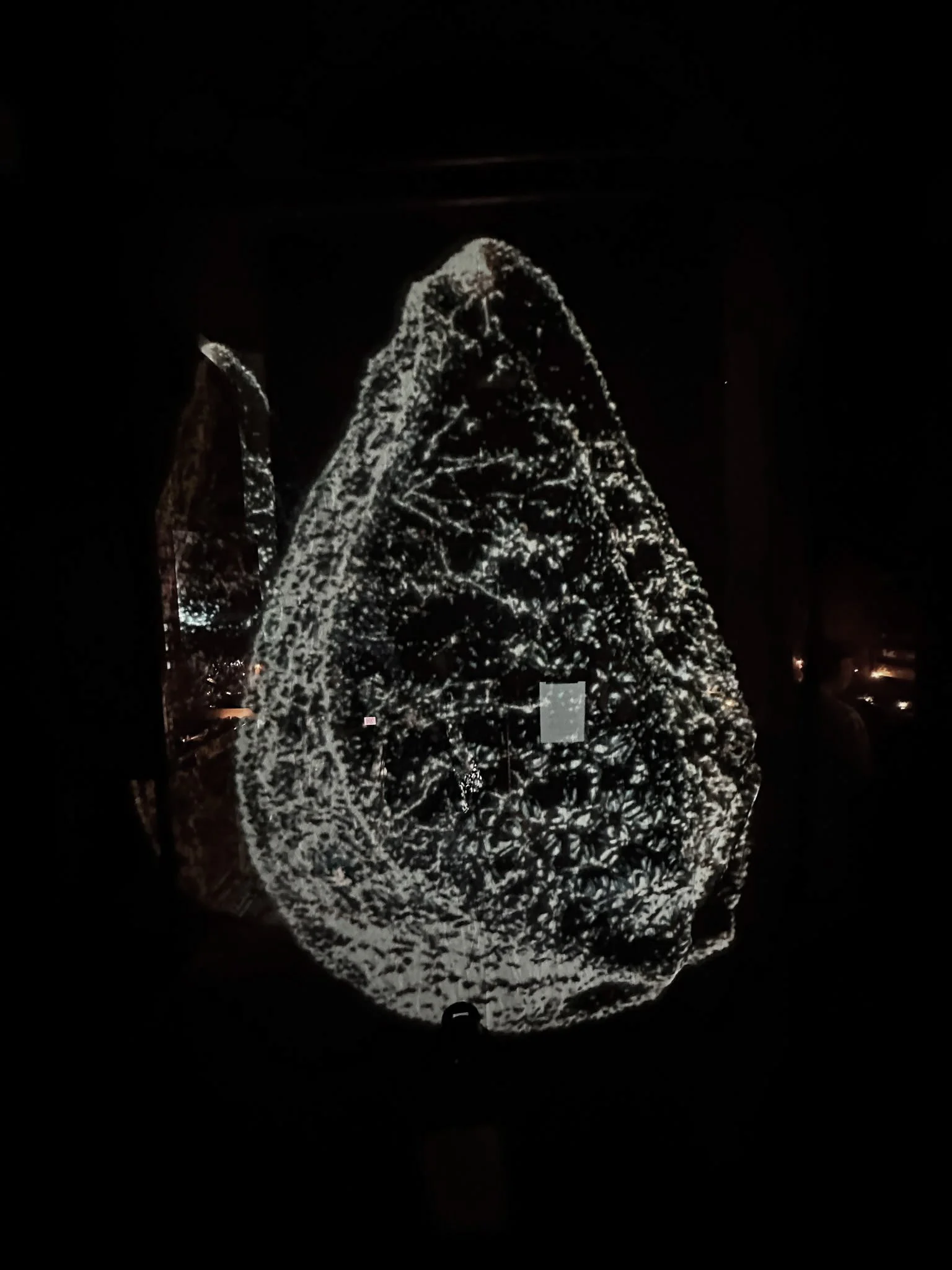
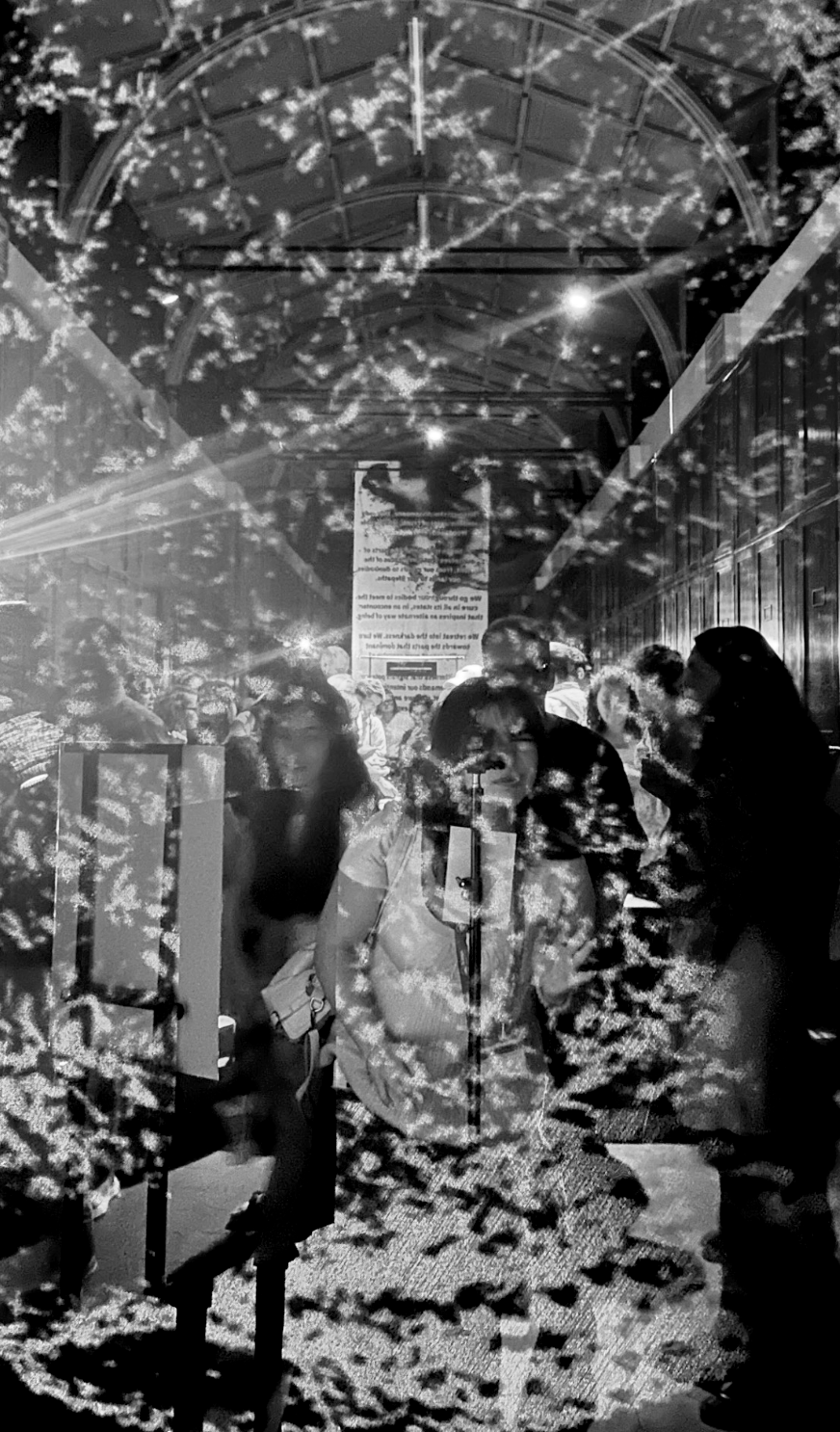
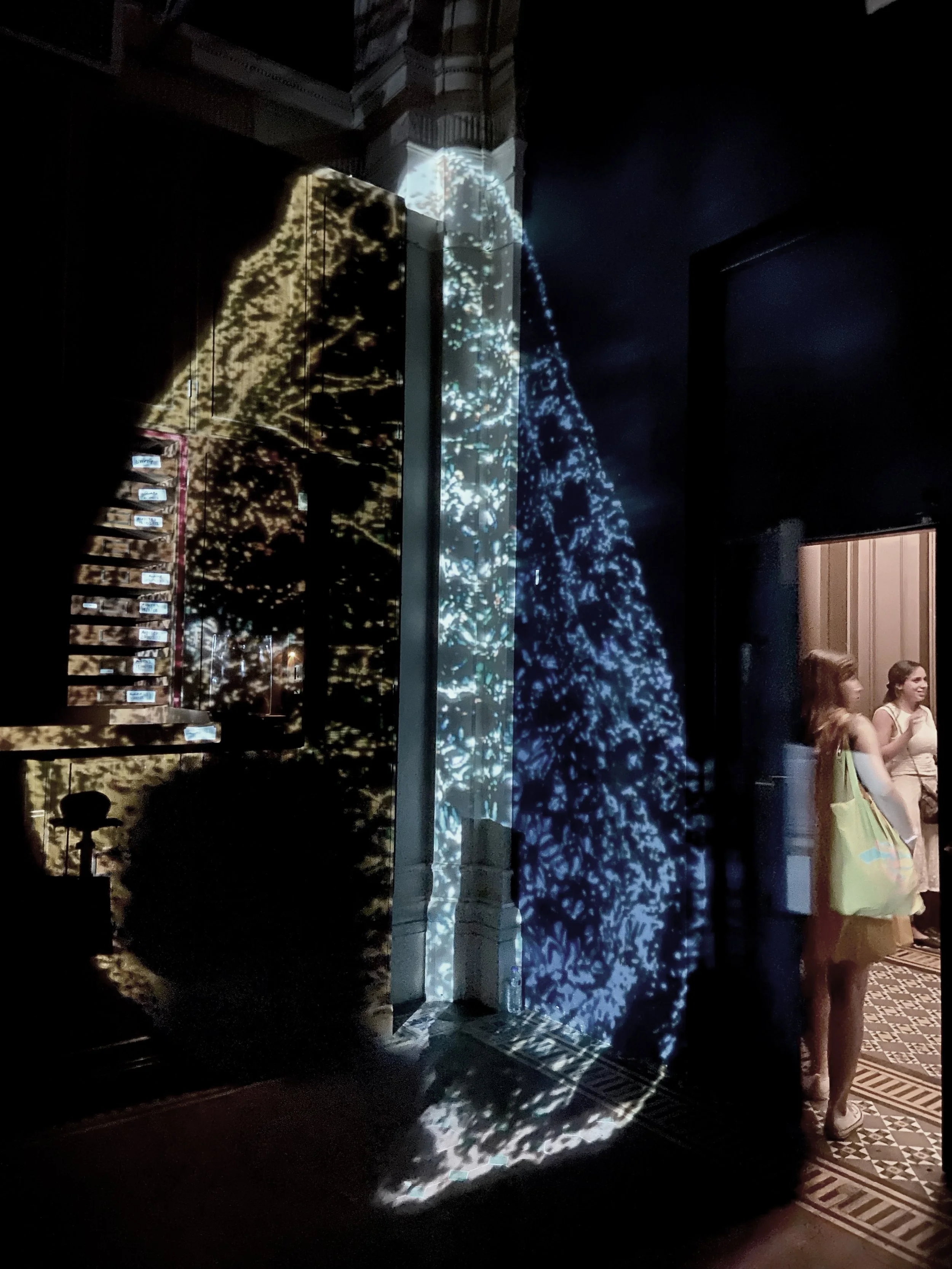
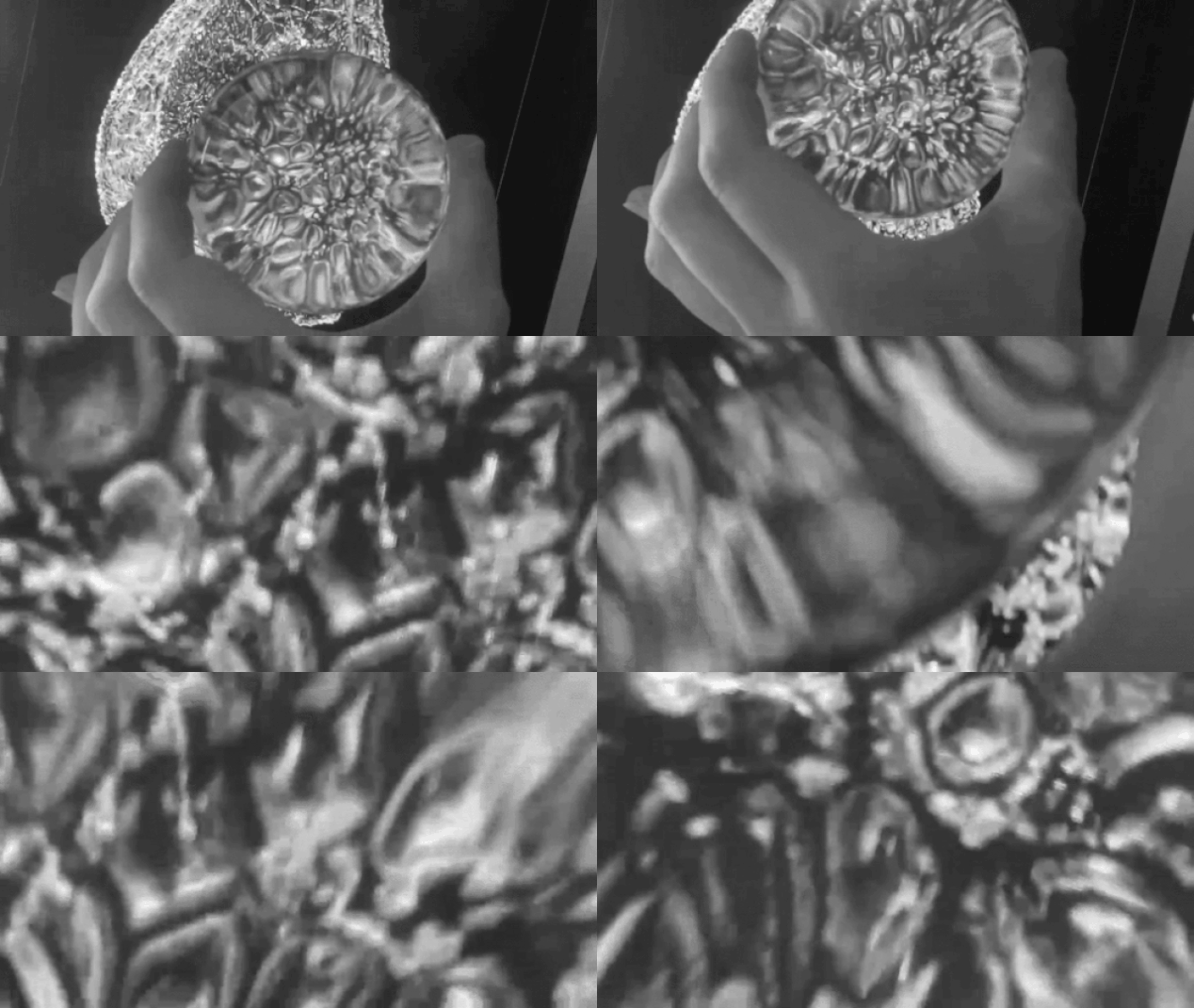
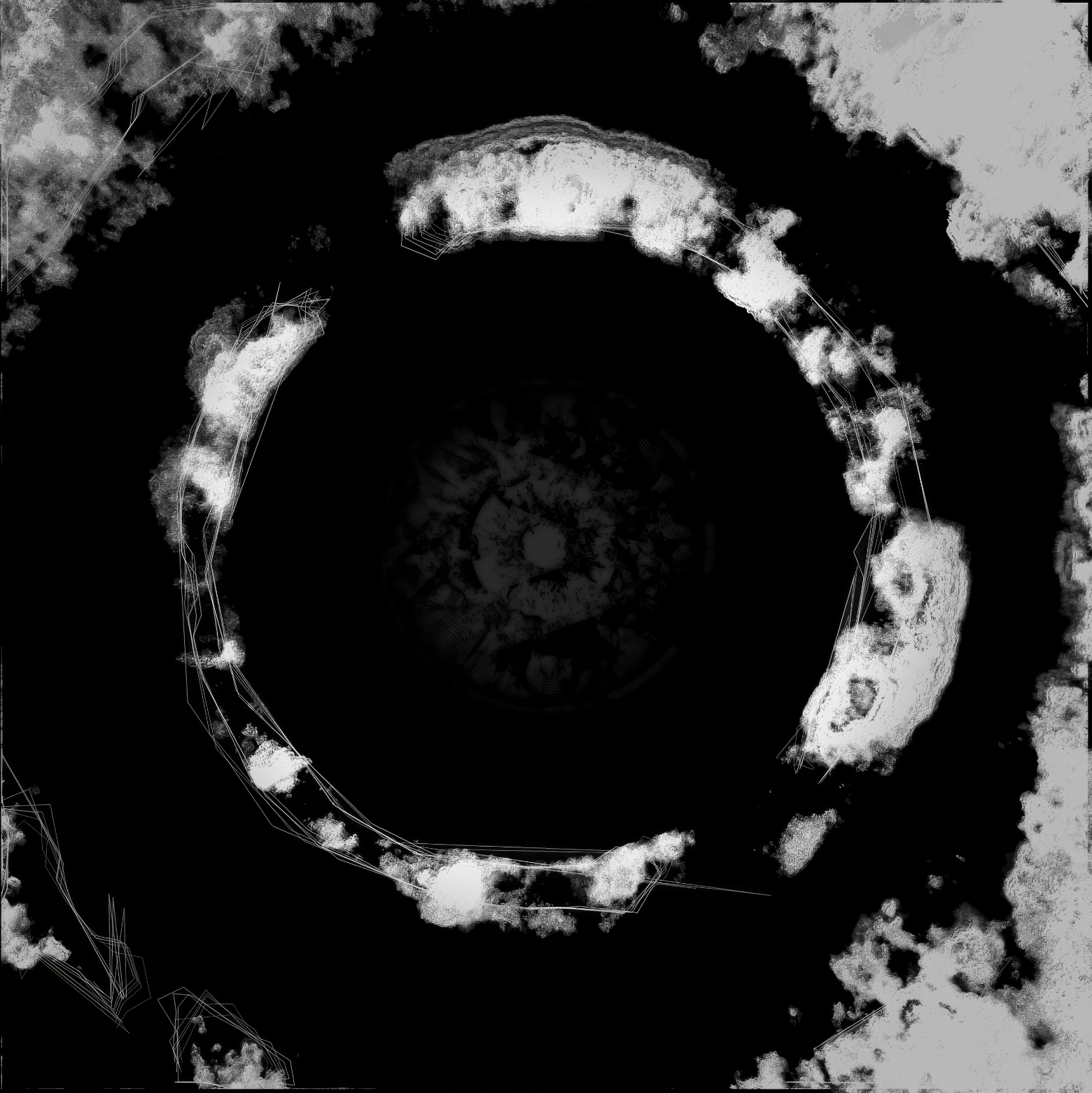
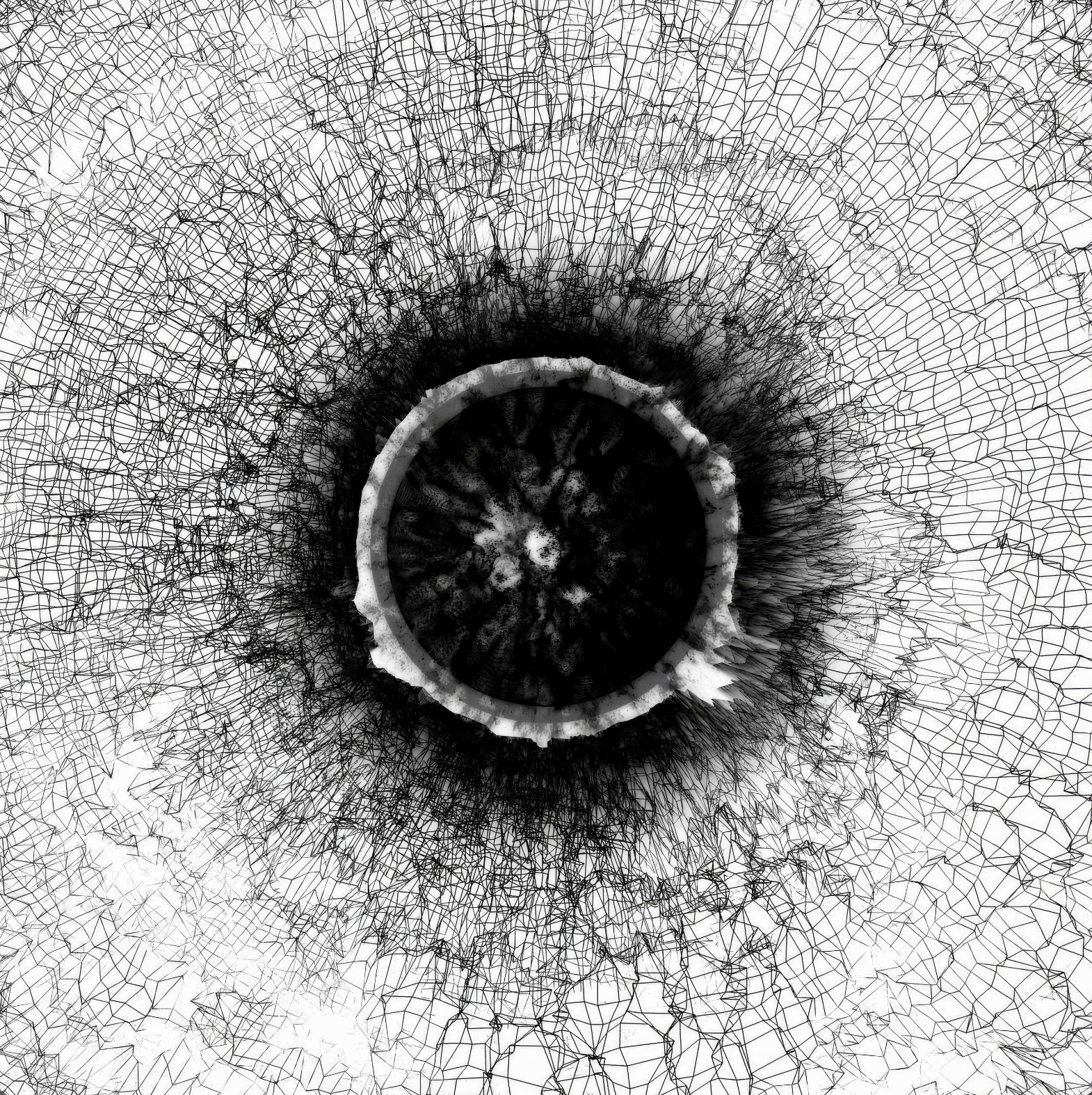
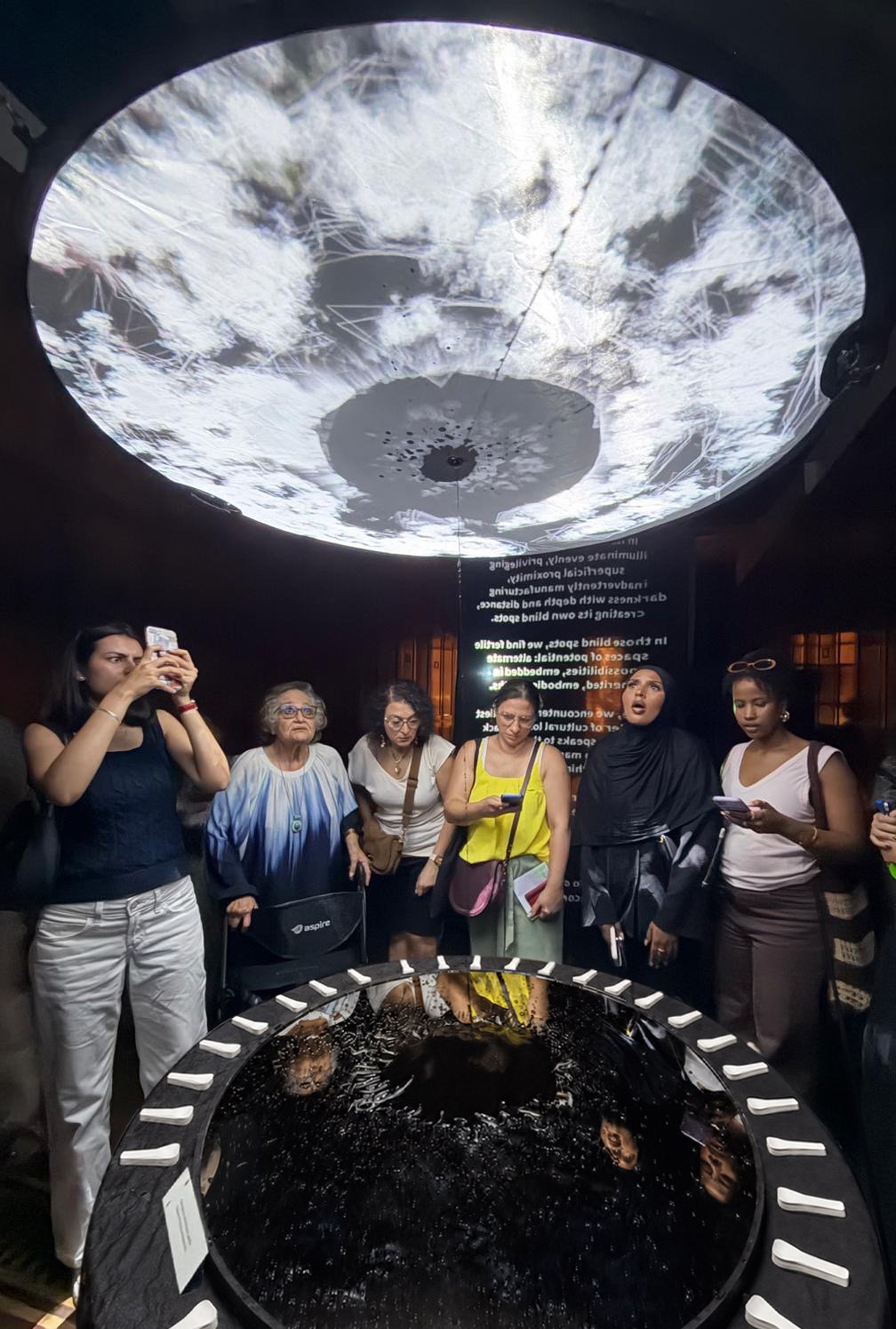
In a moving image sequence in the first installation, cure and ailment occupy the same field, with light as their primary materiality - positioning both in the realm of the virtual/imaginal. The ailment seeks to illuminate, to render everything visible and knowable, including the visitors gathered around the installation. The cure disrupts this logic, its darkness in the virtual encroaching on the ailment, triggering a power struggle that results in the ailment’s failure, and a shift in its strategy before its next attempt.
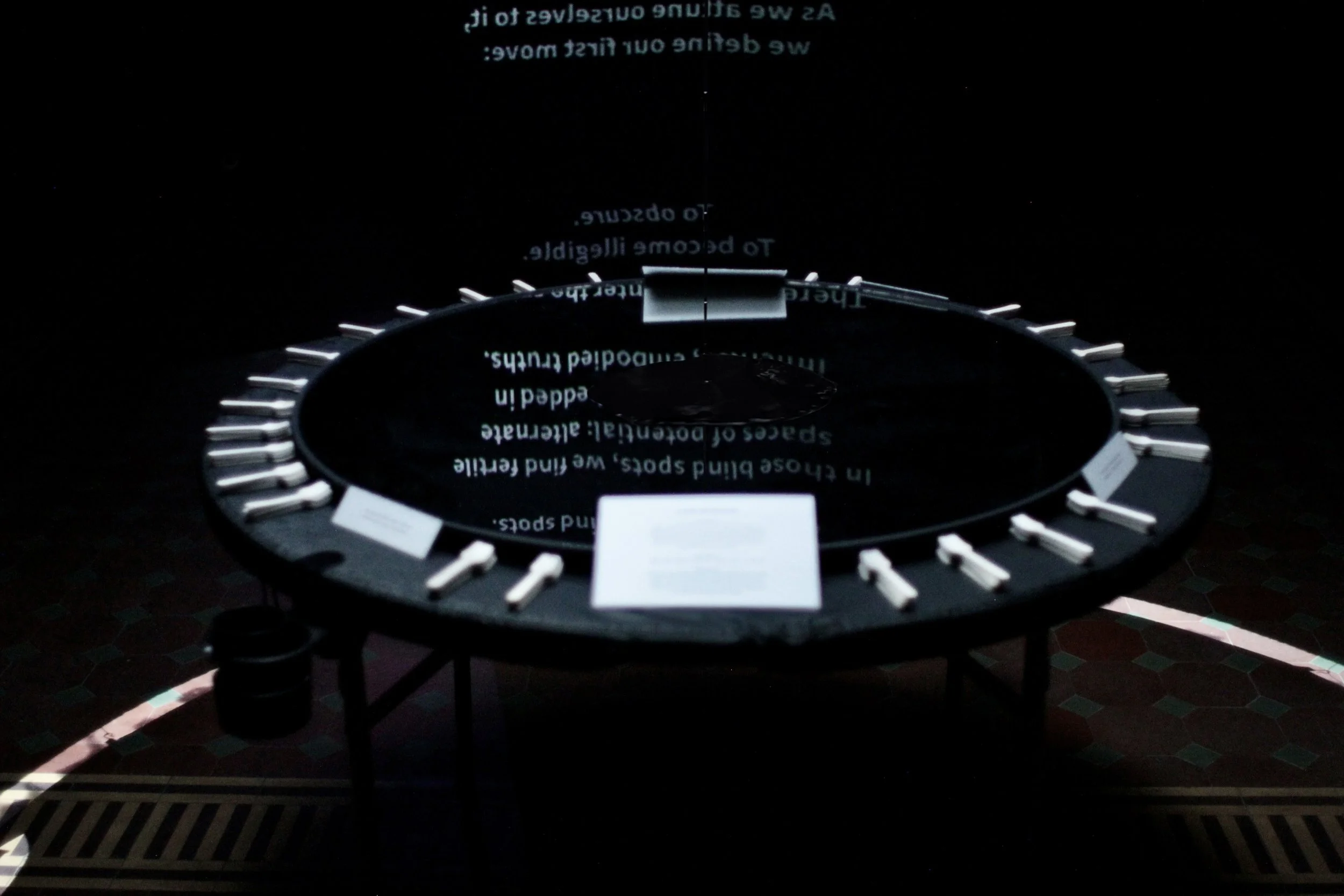
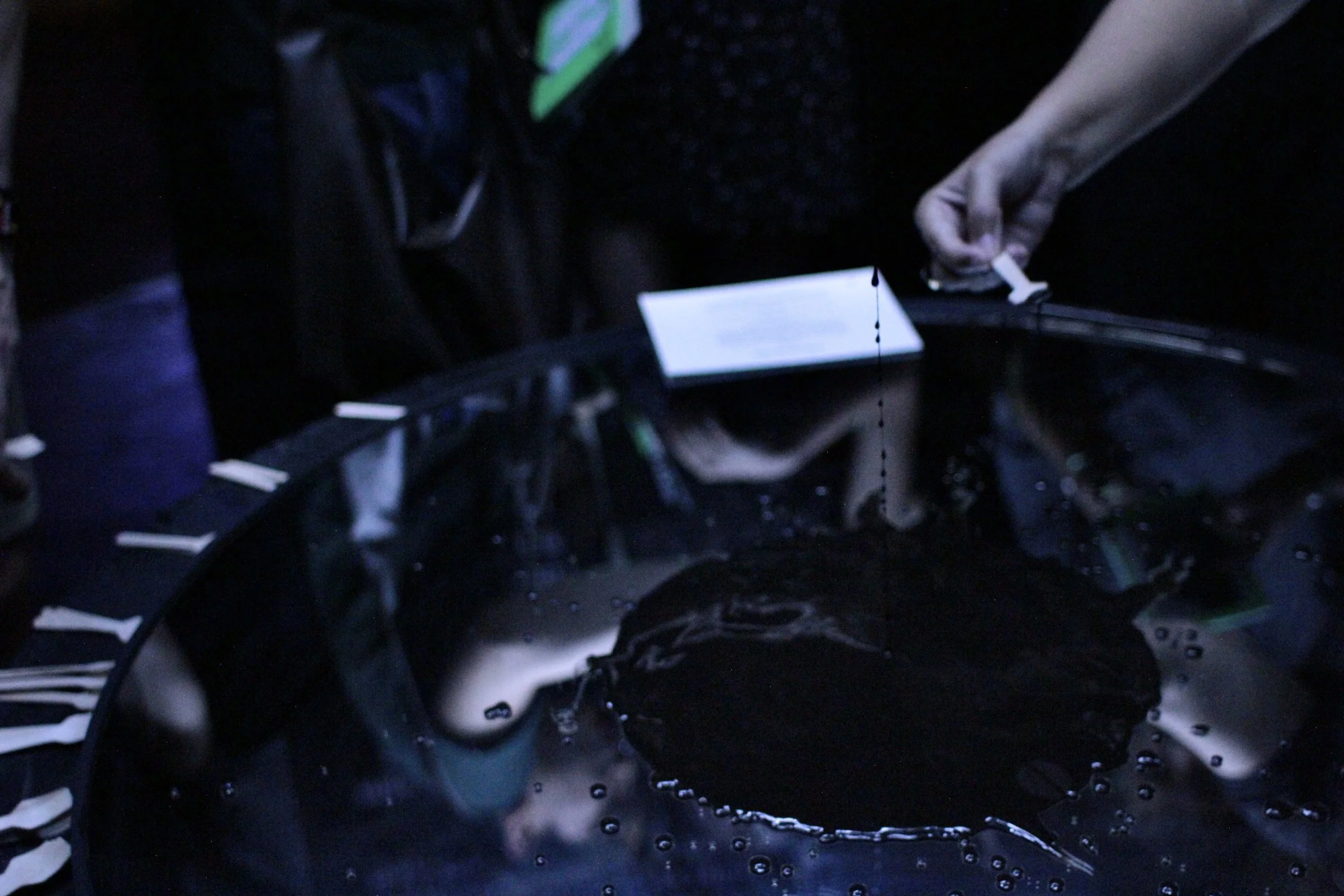
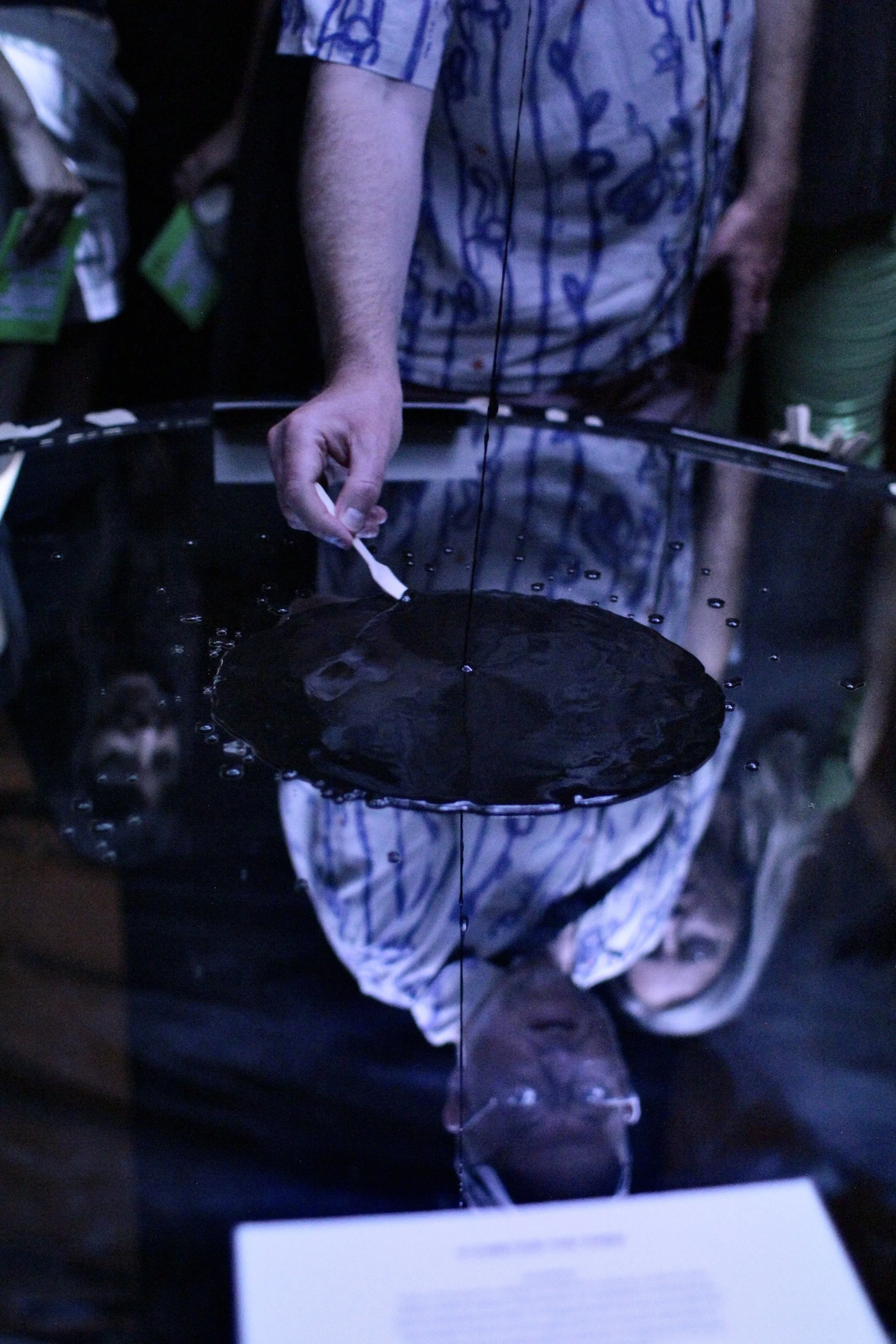
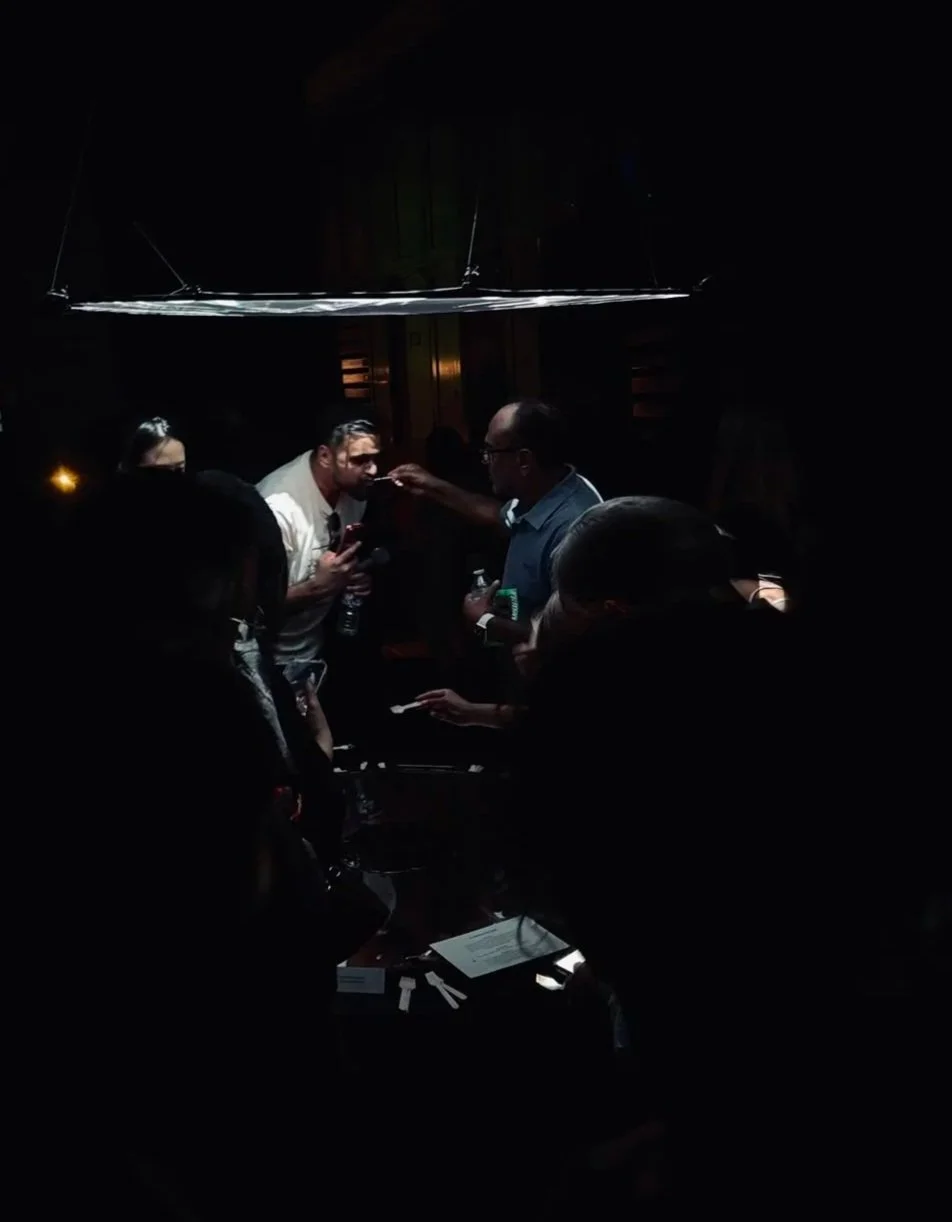
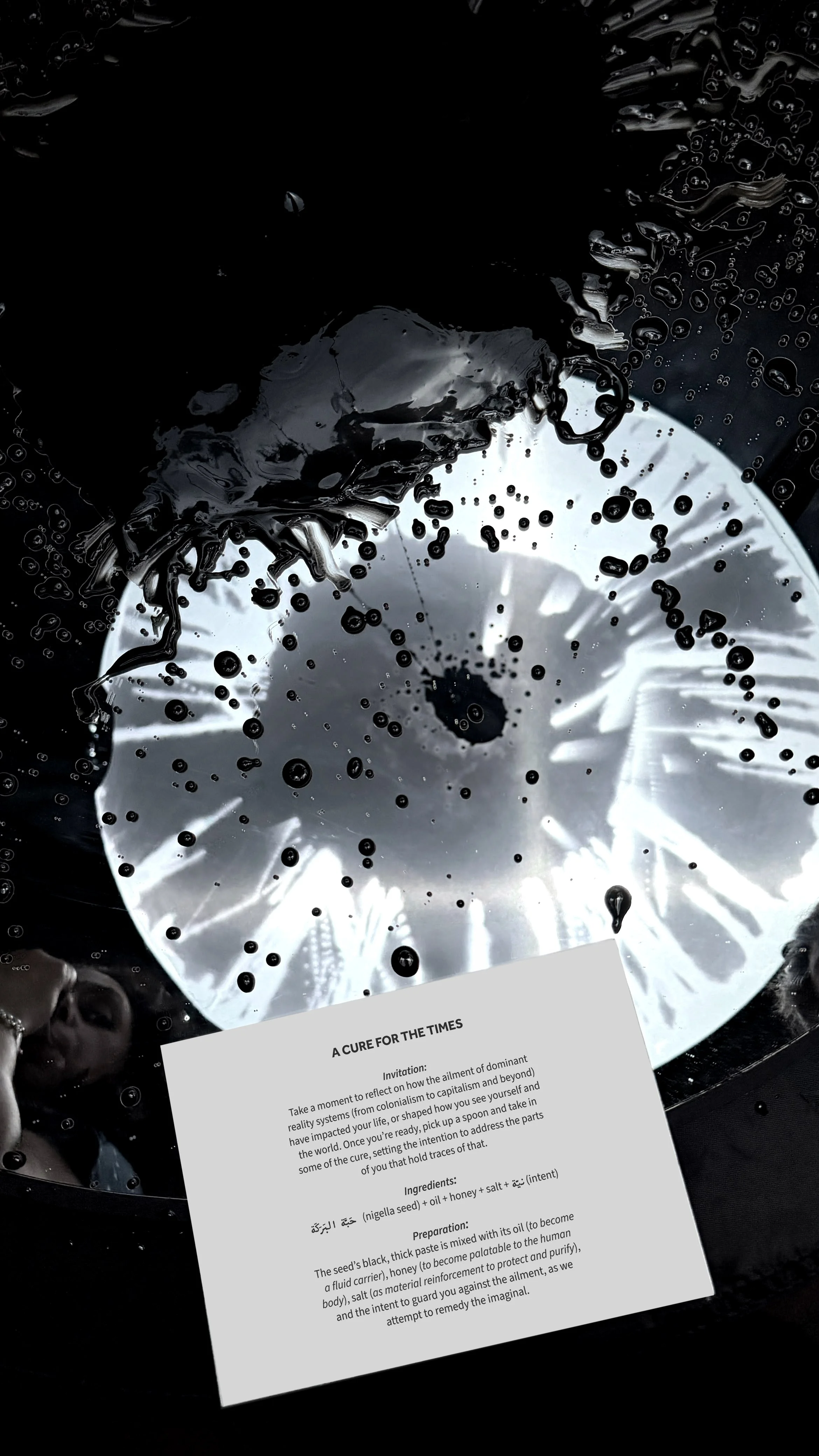
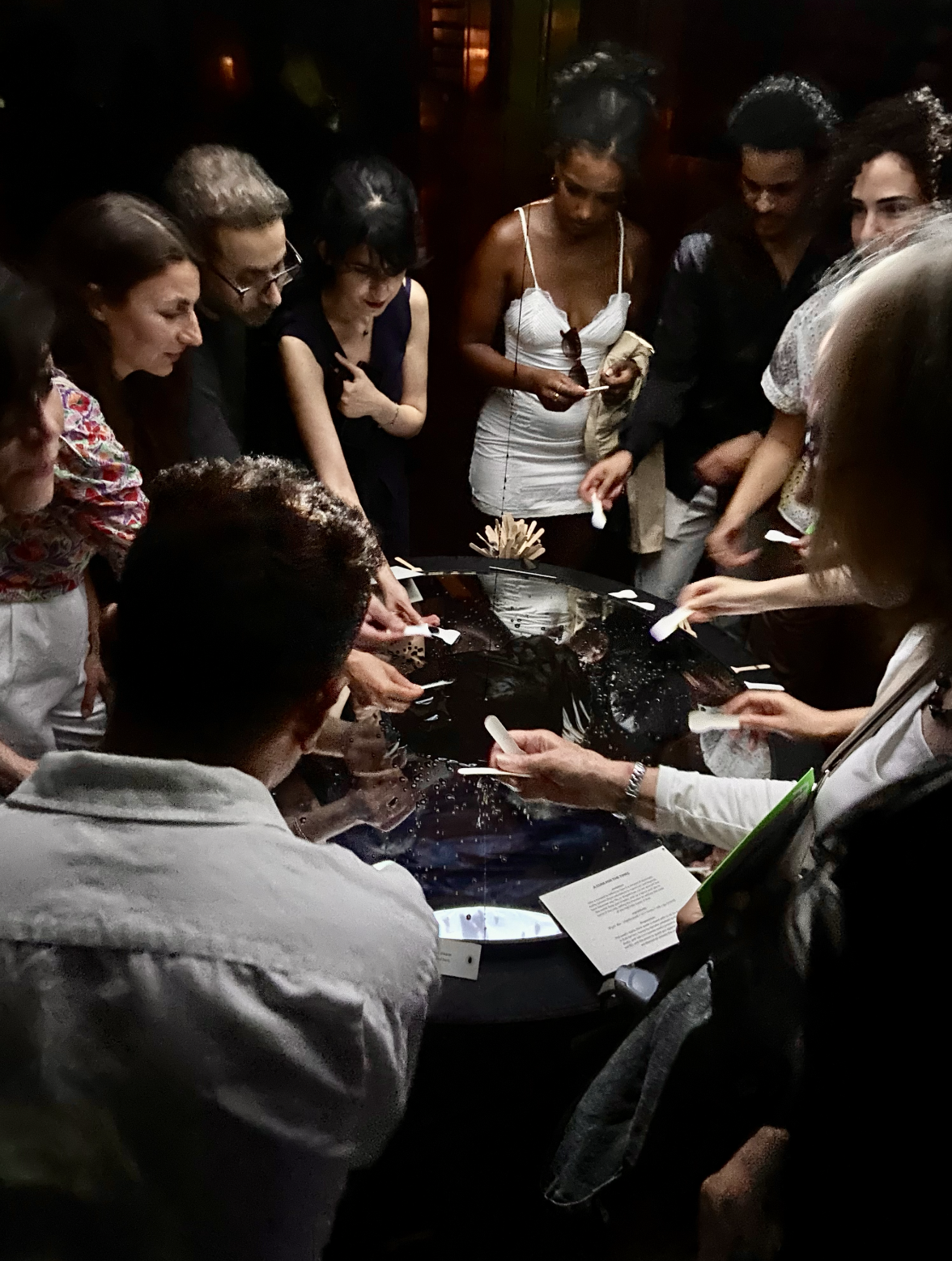
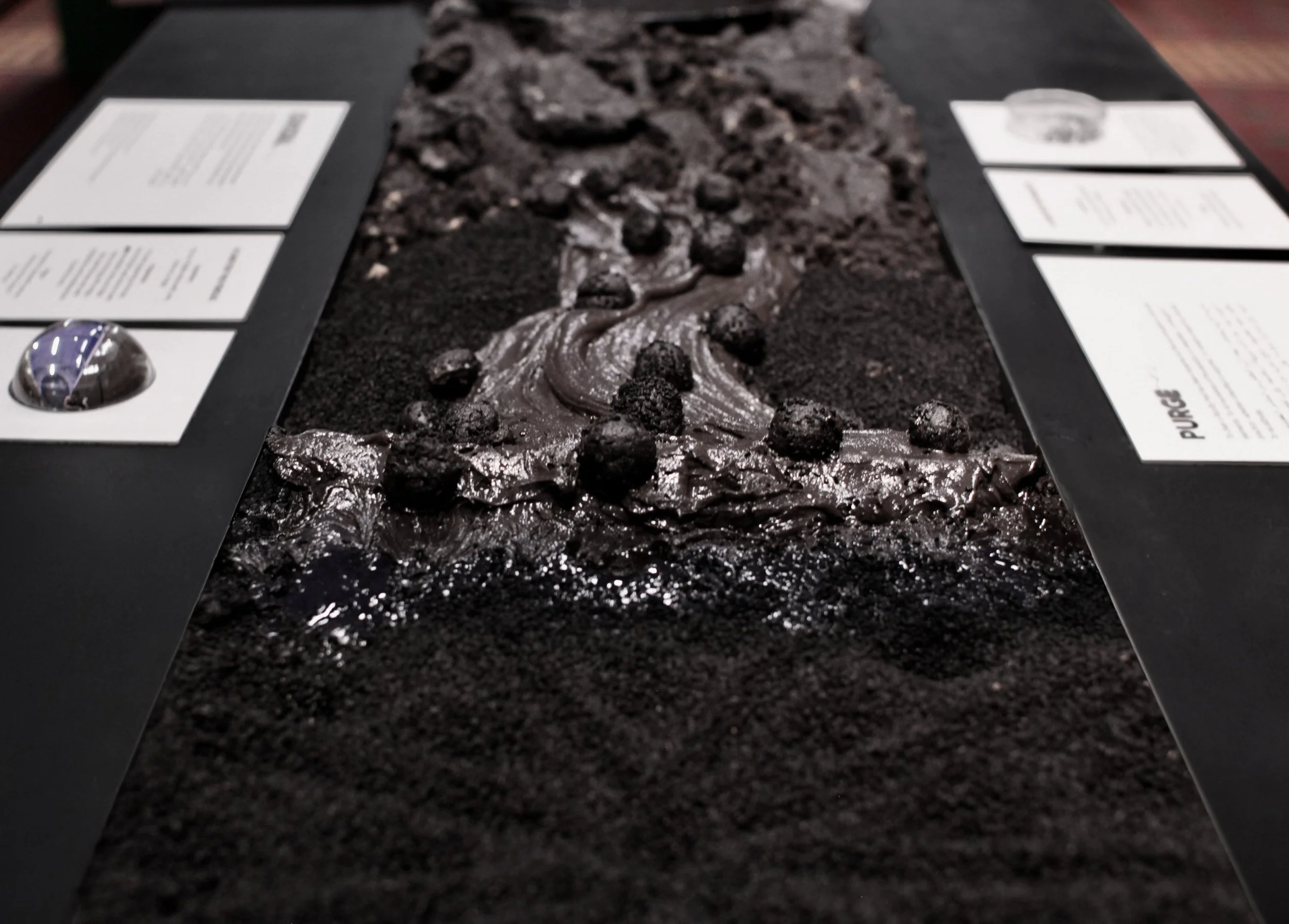
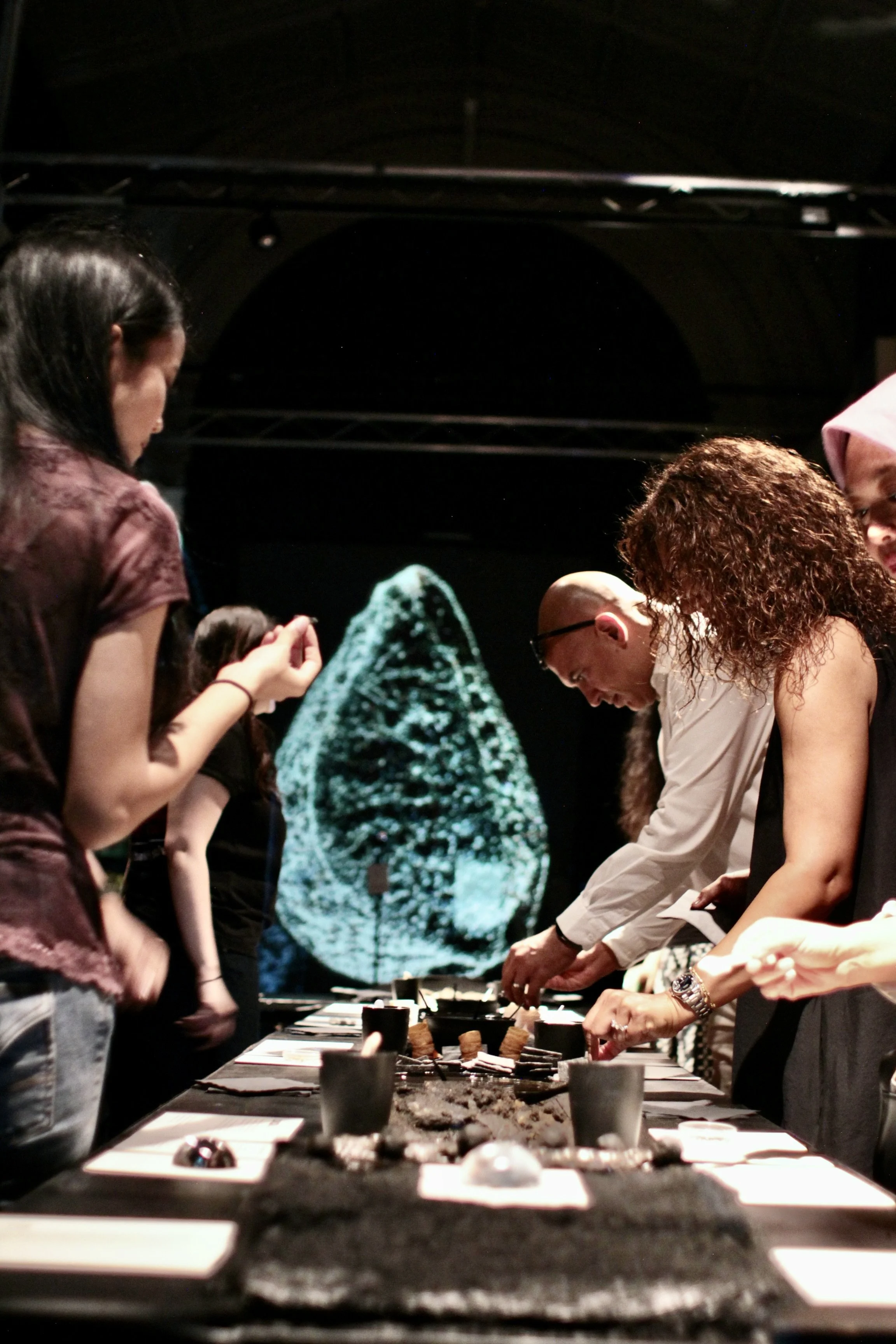
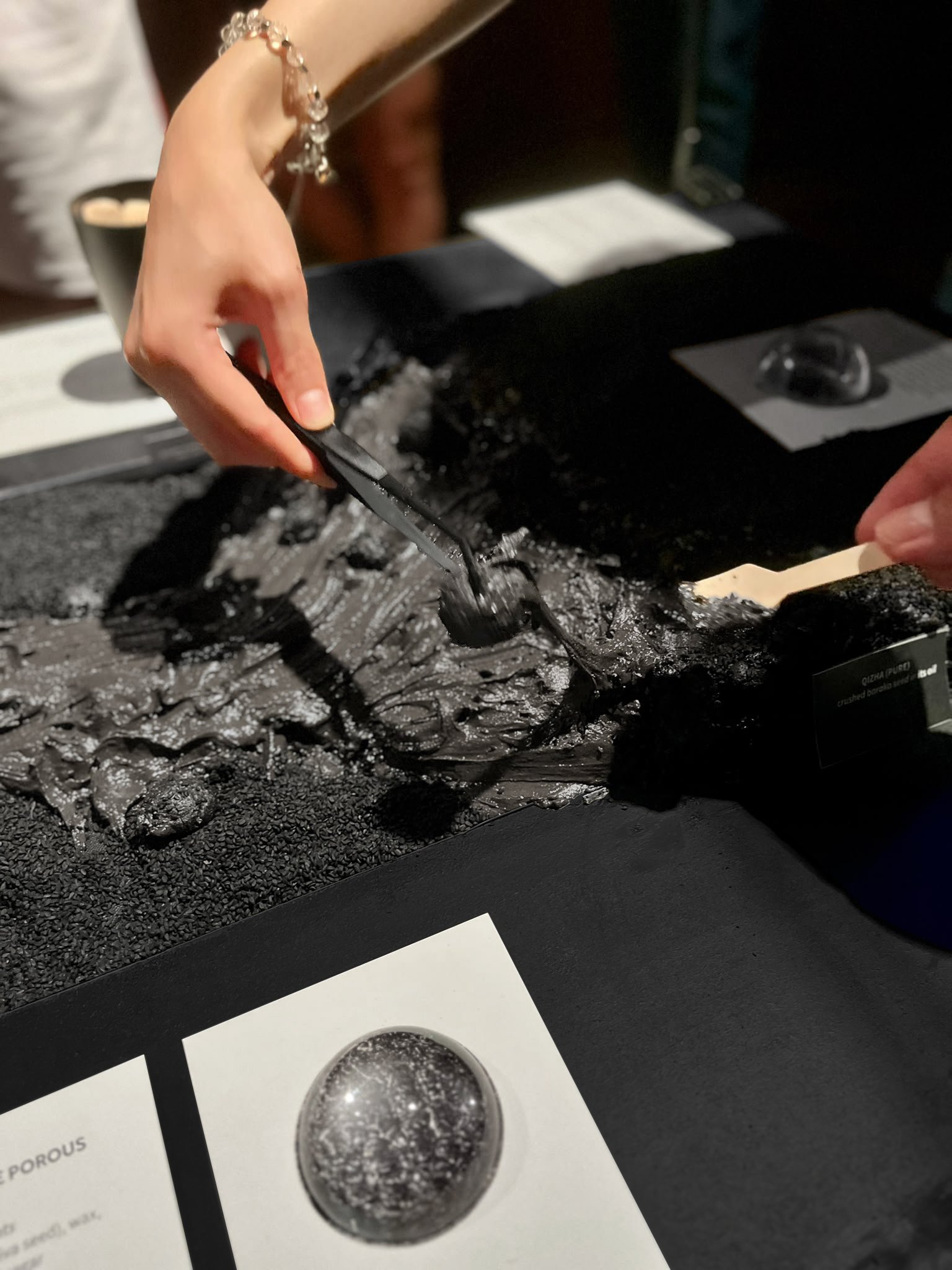
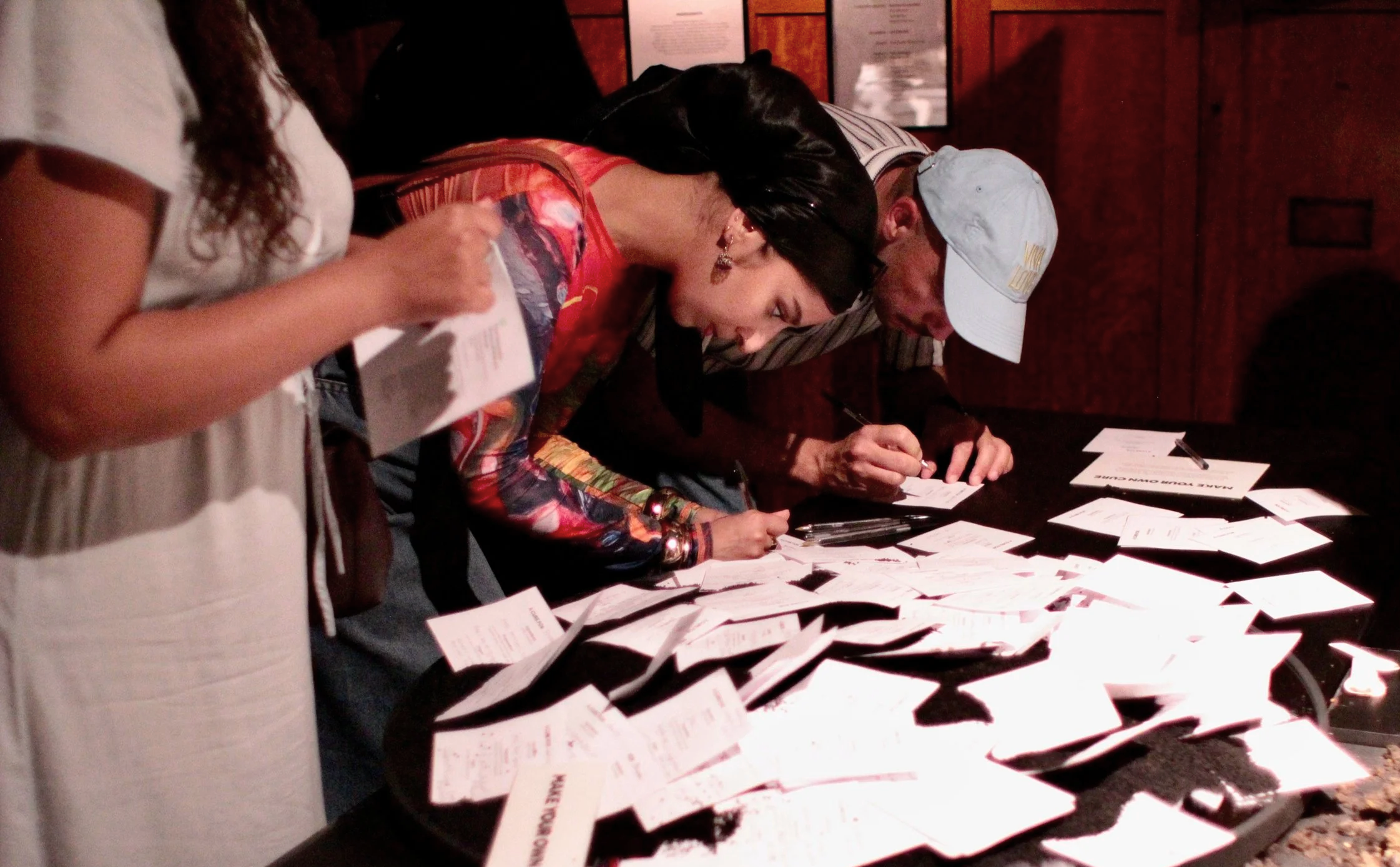
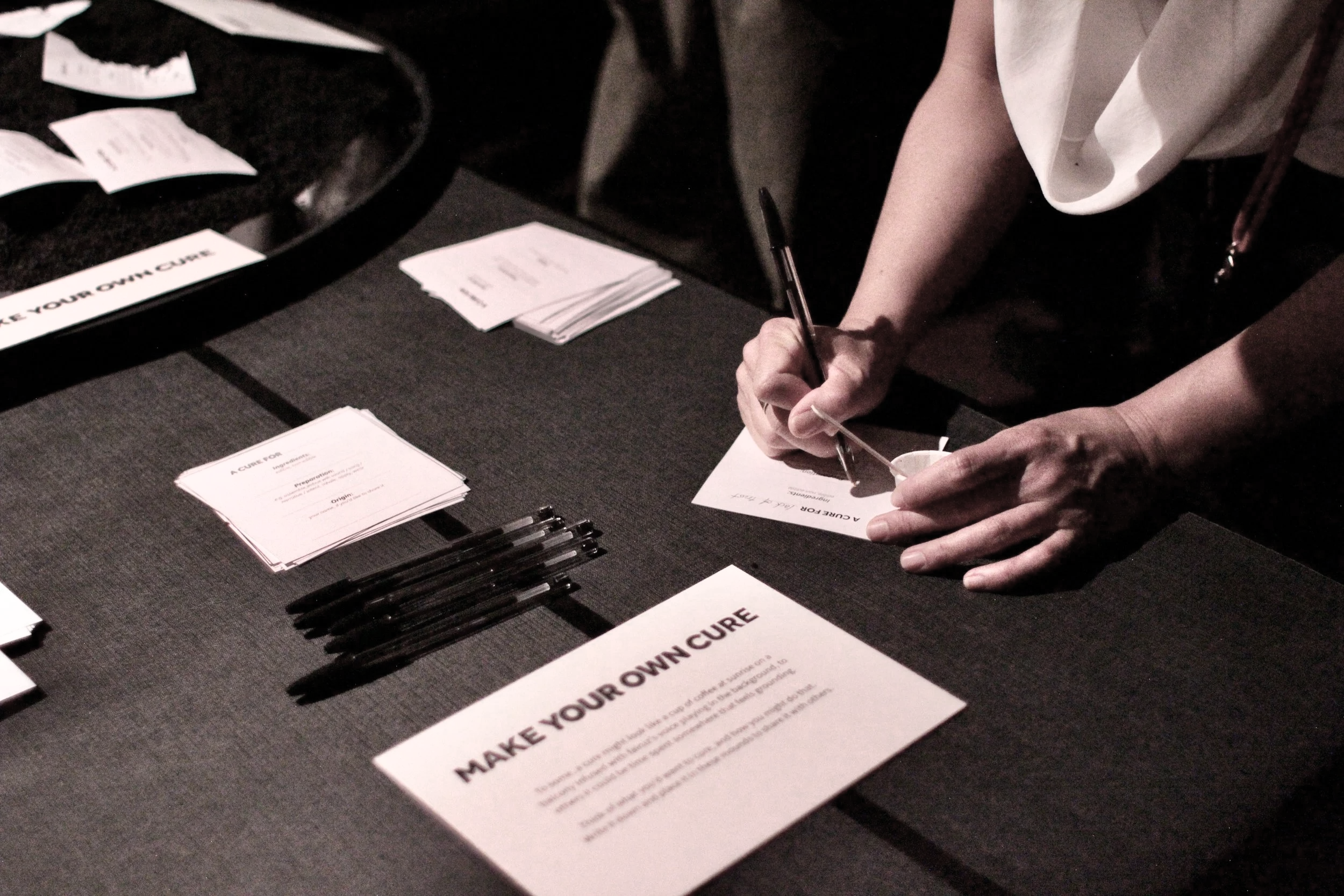
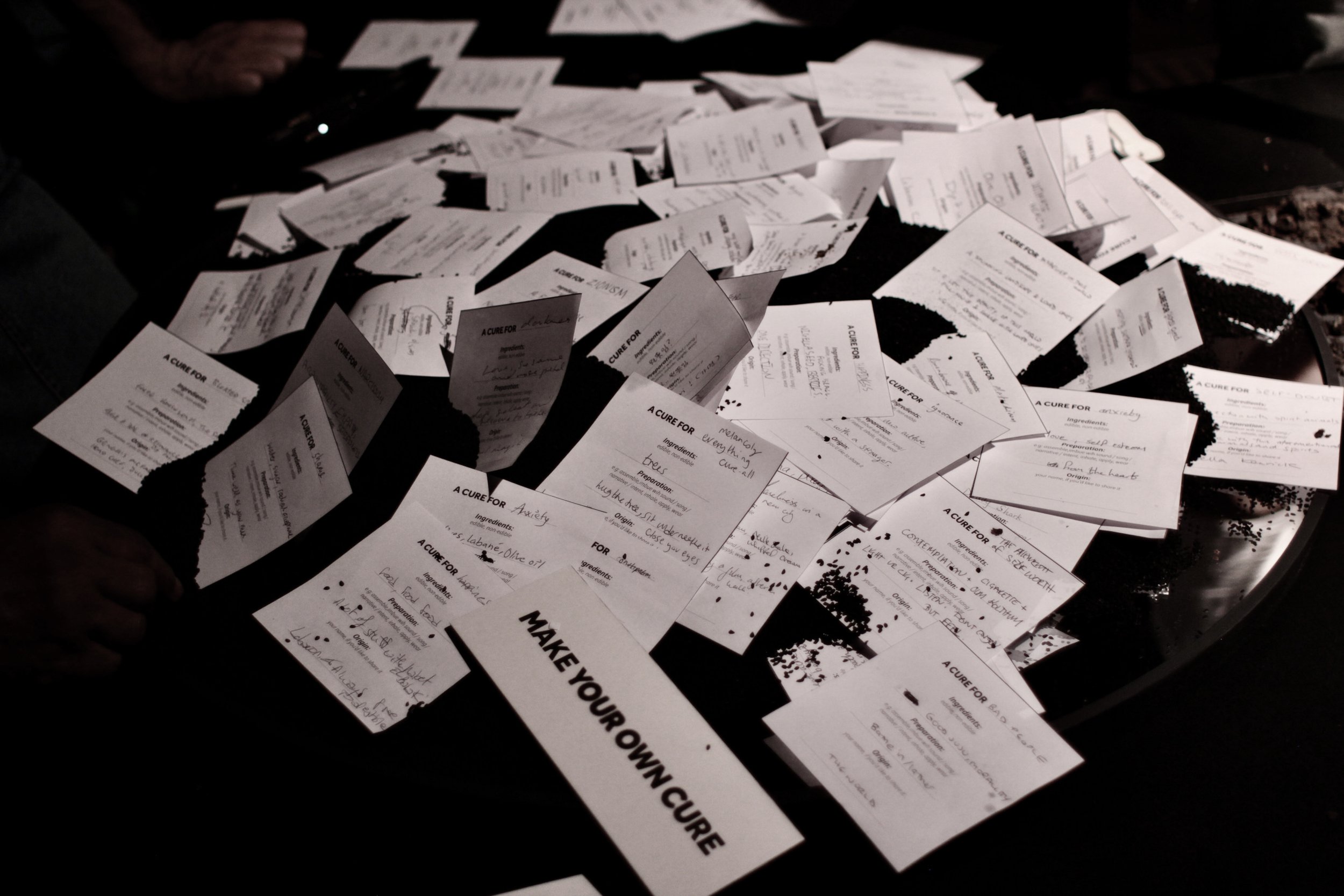
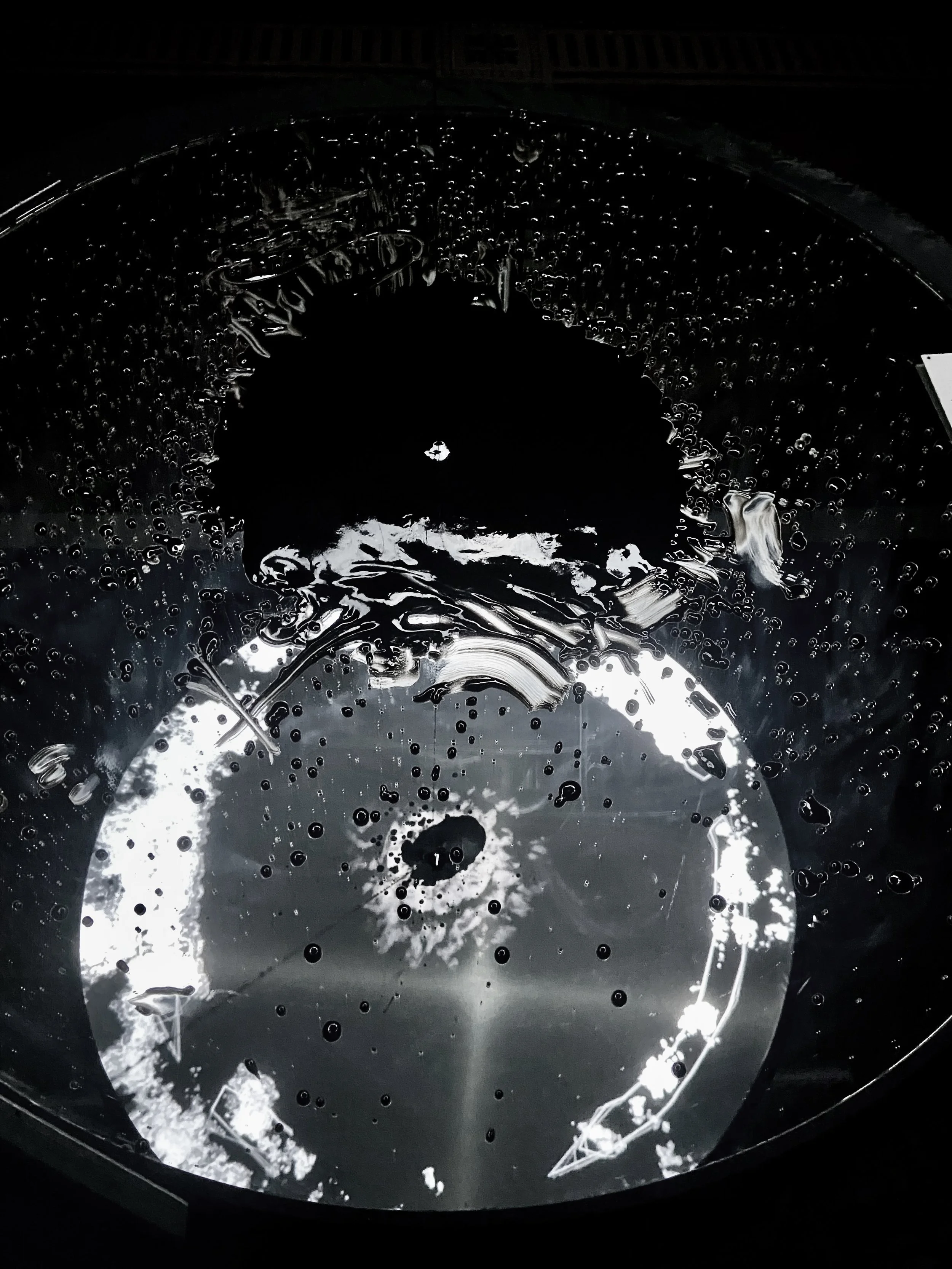
A mirror below extends this encounter through other registers. As the cure moves through the virtual, it crosses into the realm of the material, transforming into an edible black liquid that drips though the imaginal onto the visitors’ reflections. A written prompt invites them to take a dose of it into their bodies, curing any traces of the ailment within. Marks left by their interactions with the cure become evidence of its extension through their bodies.
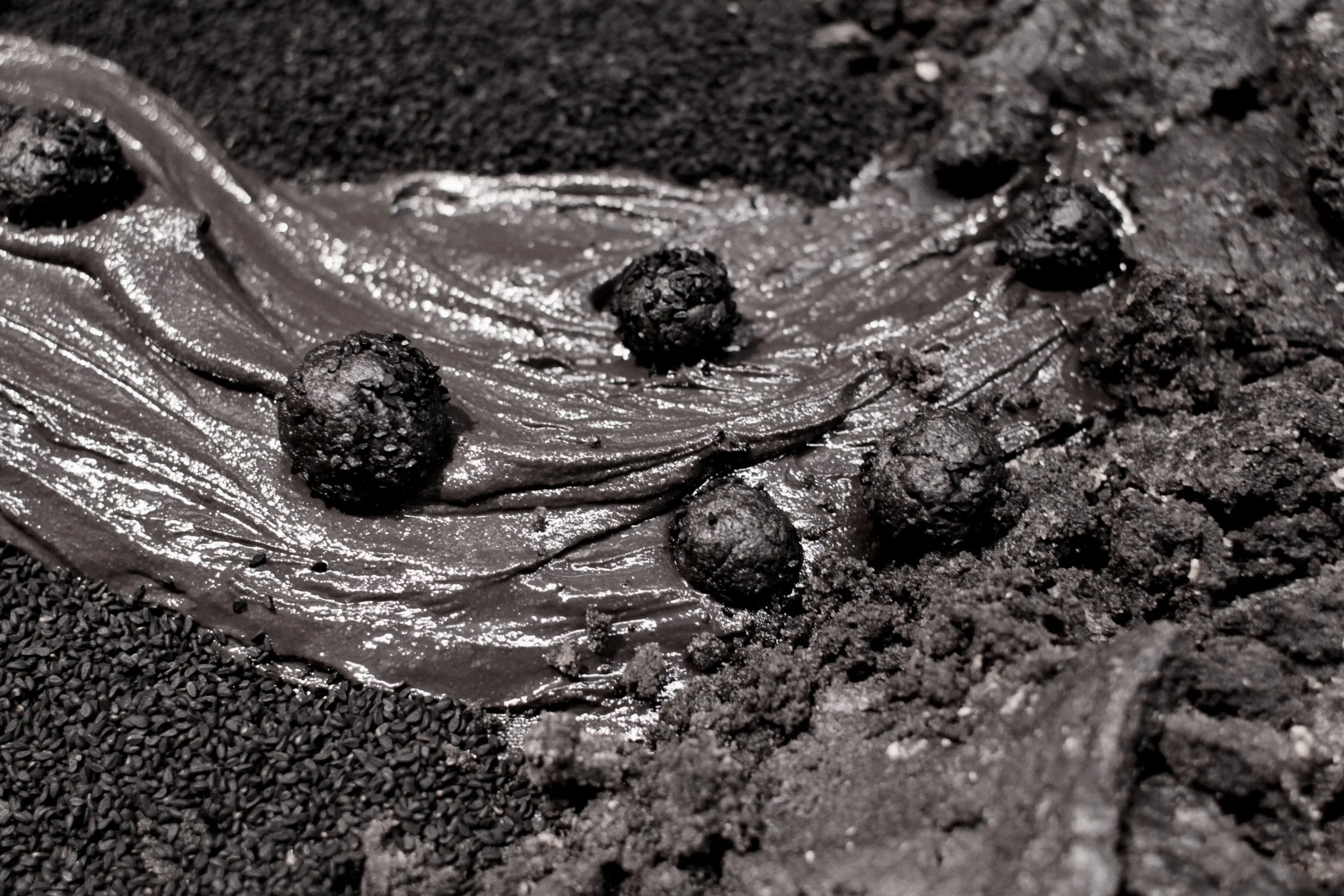
Over the course of the night, the cure’s impact materialises through its pigment as it gathers into a black pool, shielding visitors’ reflections and obscuring them from the gaze of the ailment.
2. THE CURE:
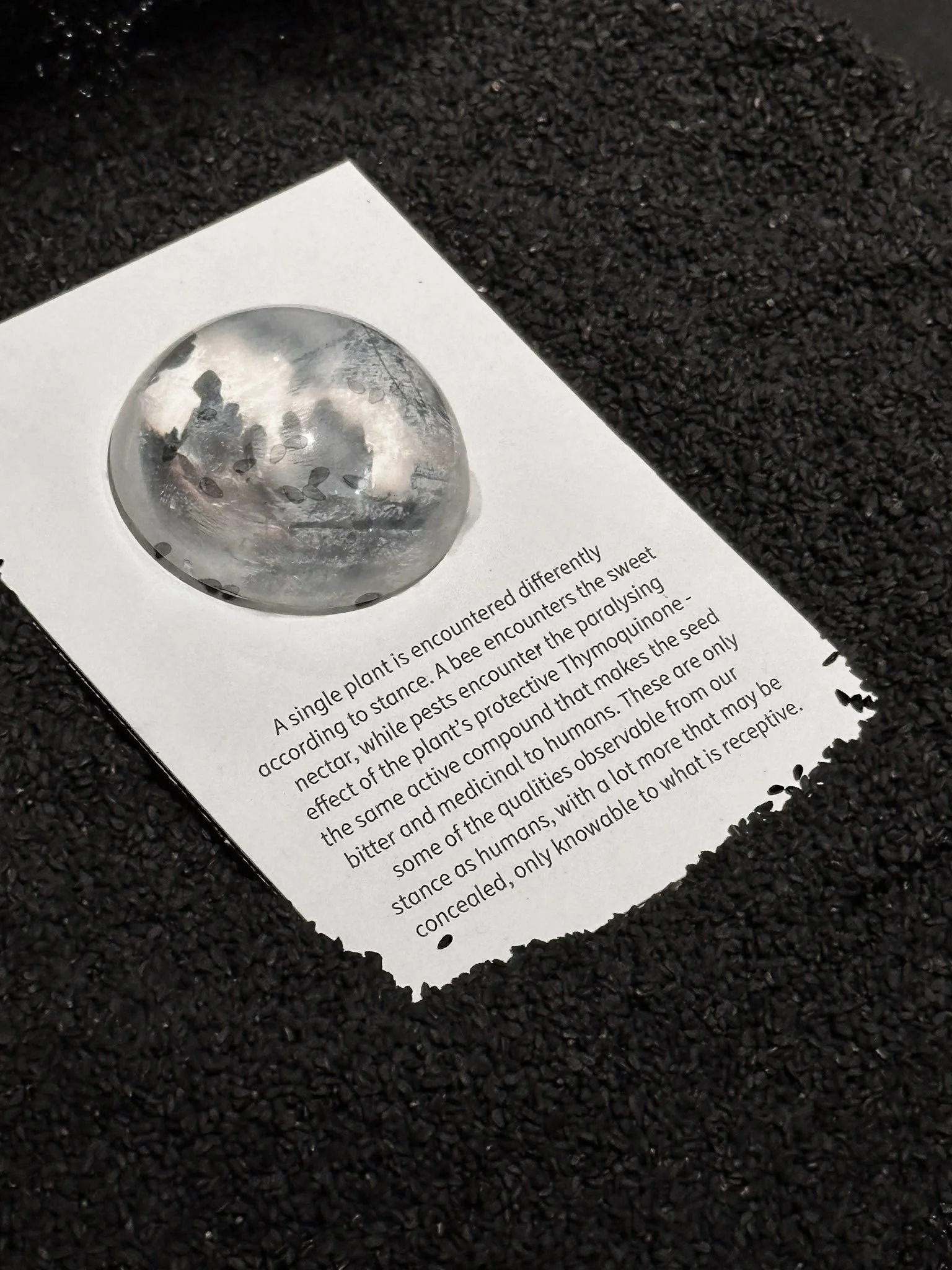
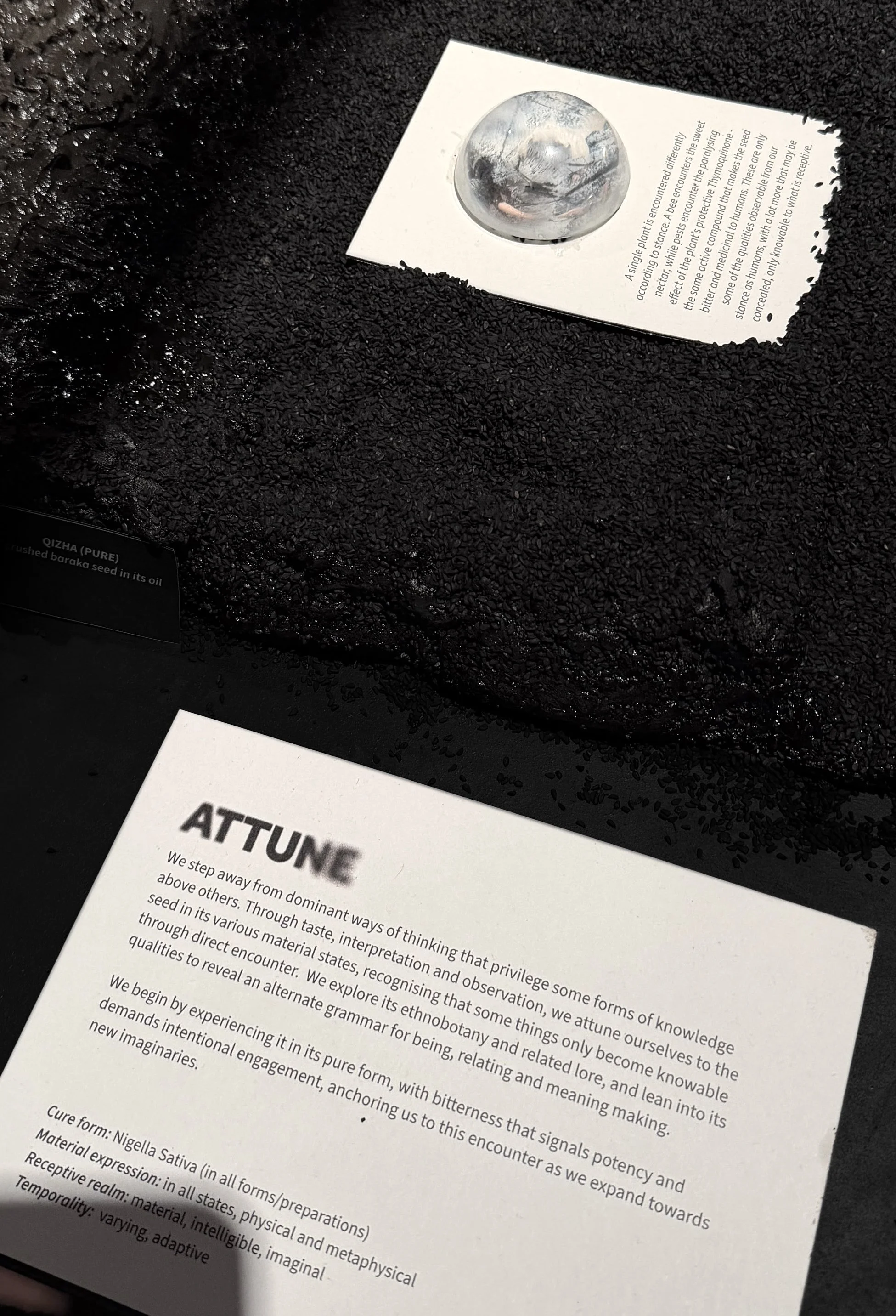
Visitors are invited to attune themselves to an adjacent consciousness: to encounter the seed as more than a commodified ingredient relegated to the shadowy corners of pantries and spice markets.
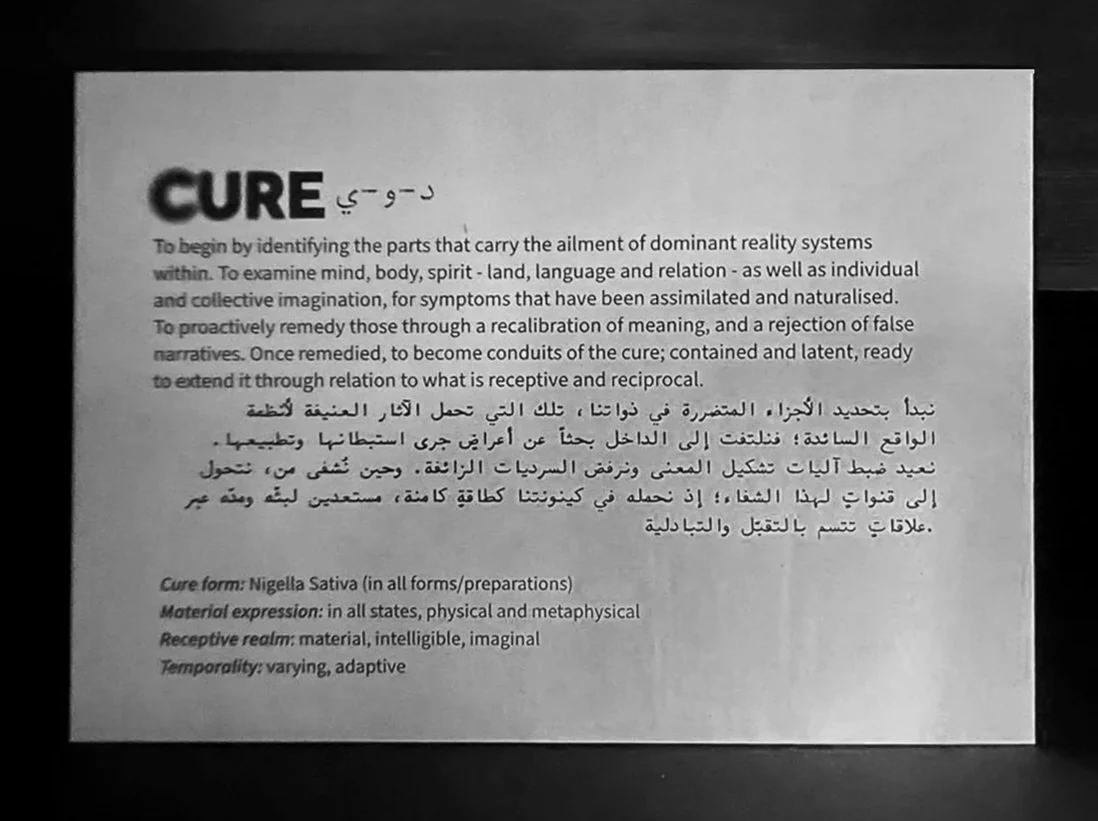
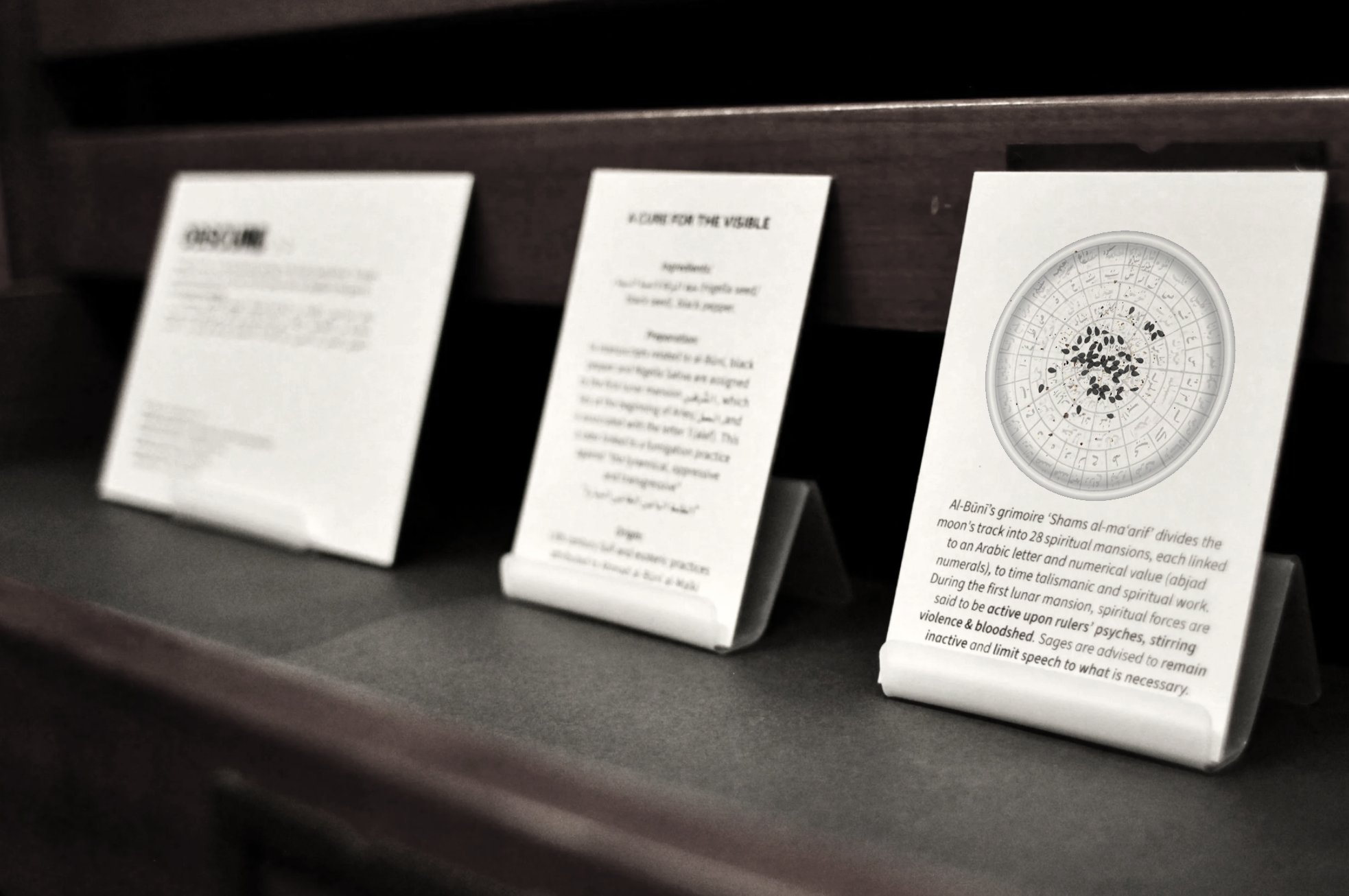
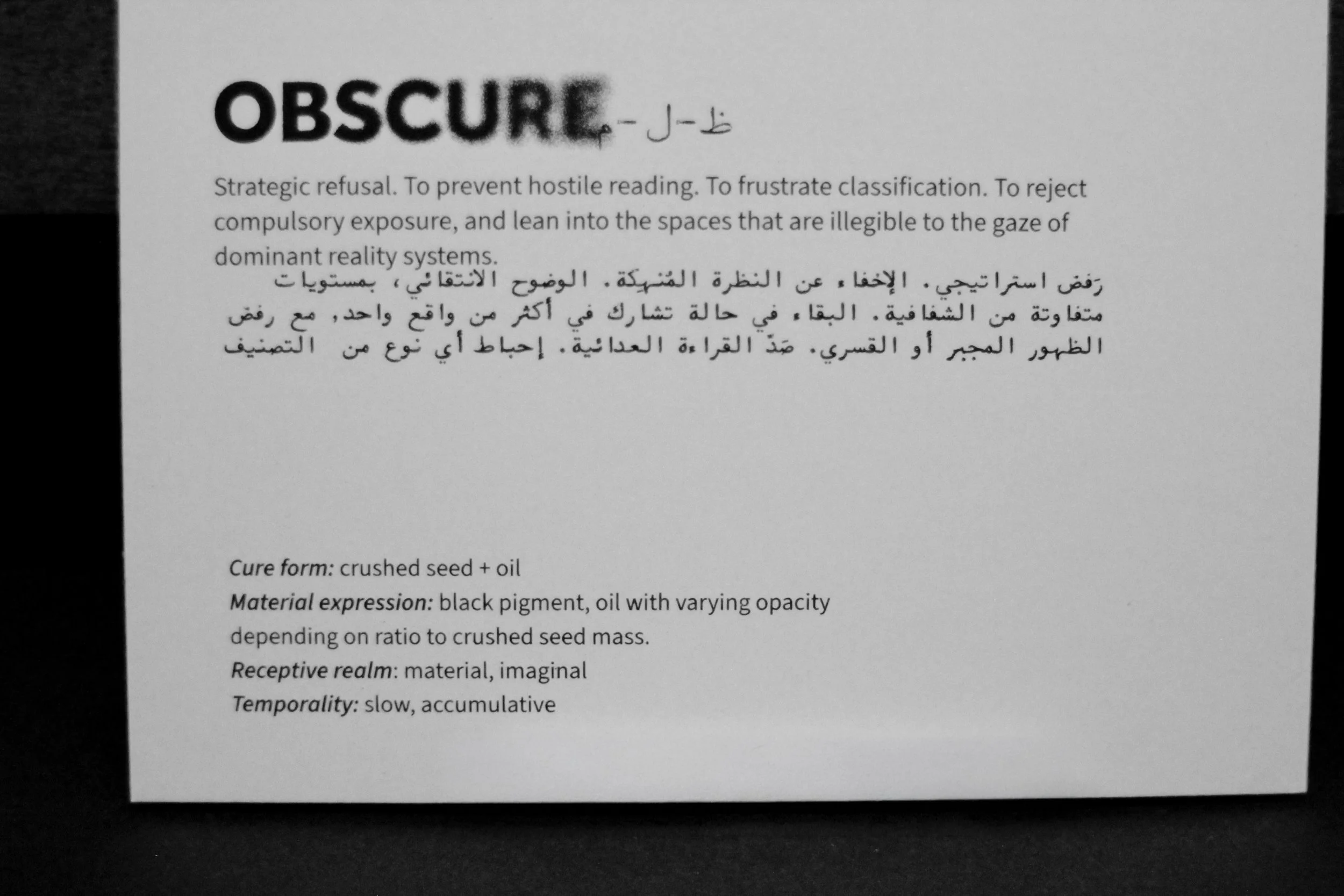
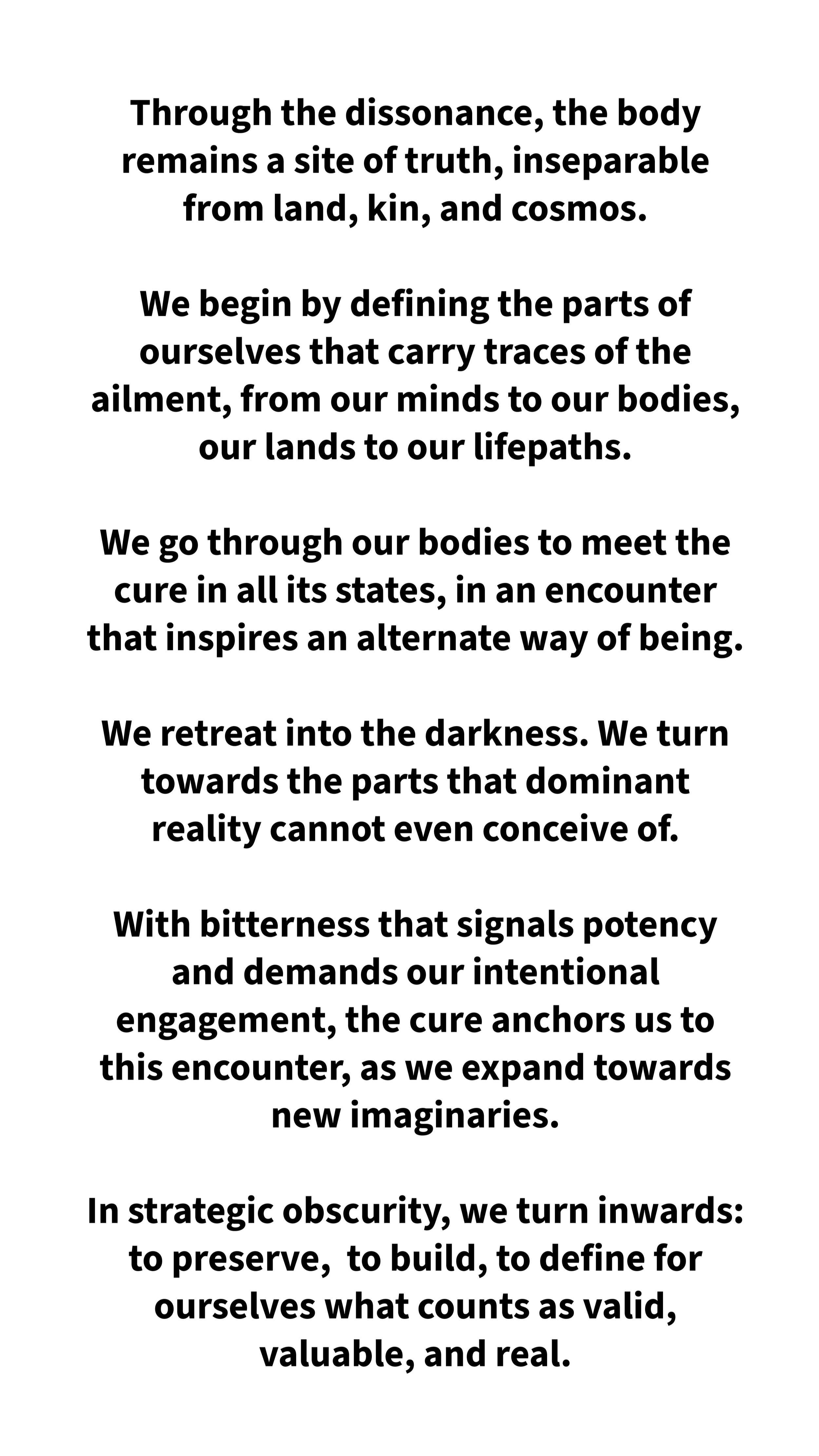
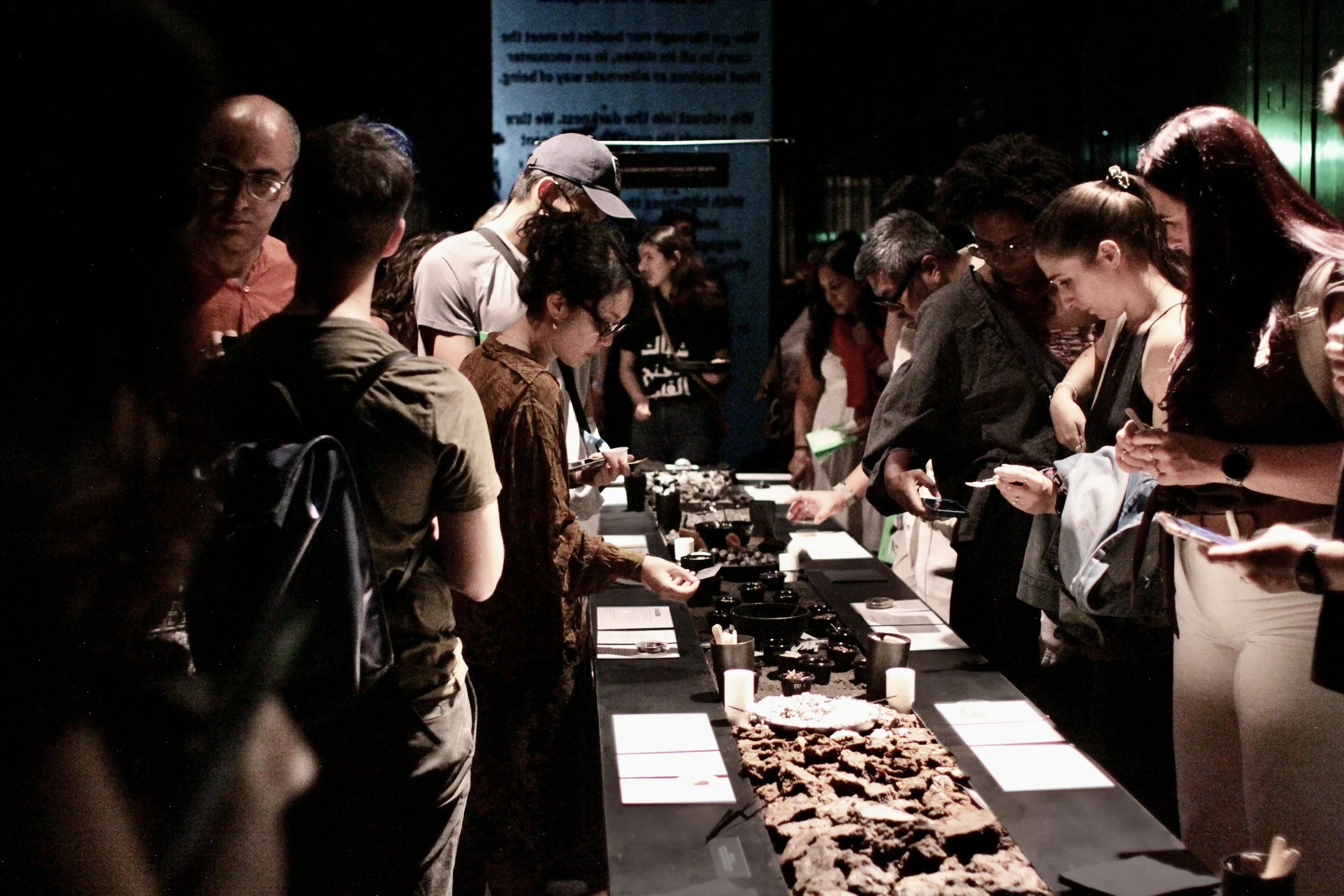
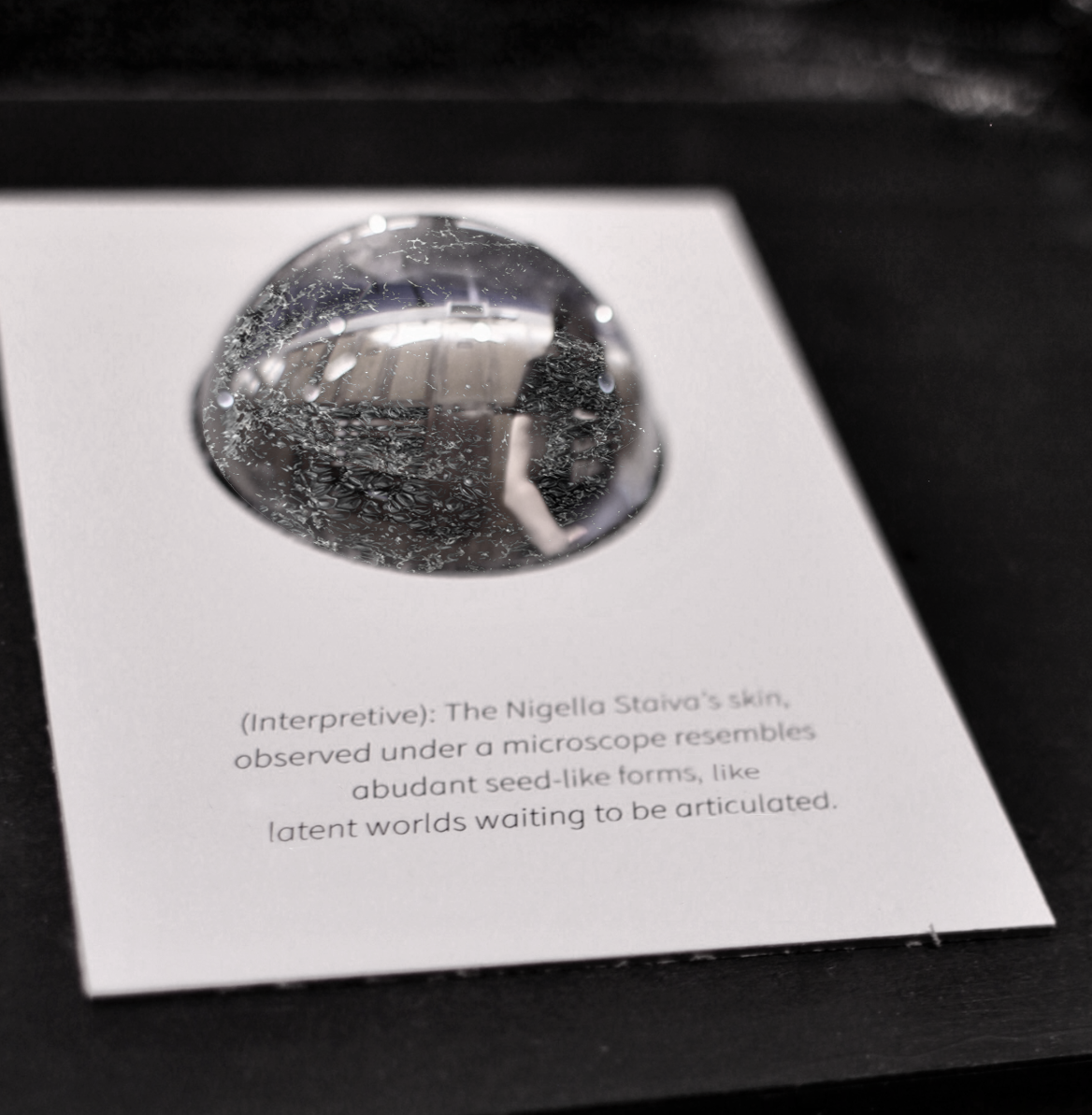
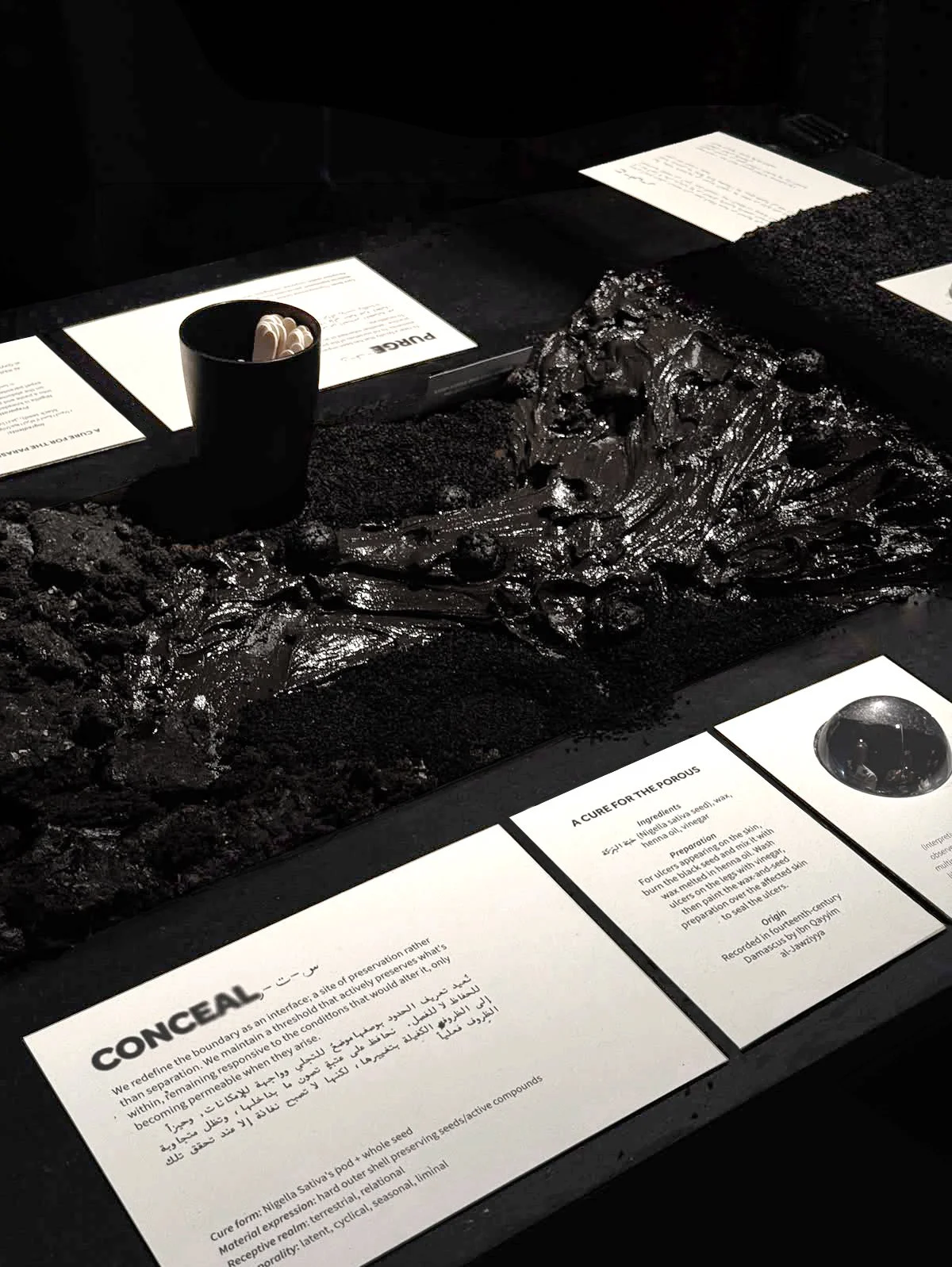
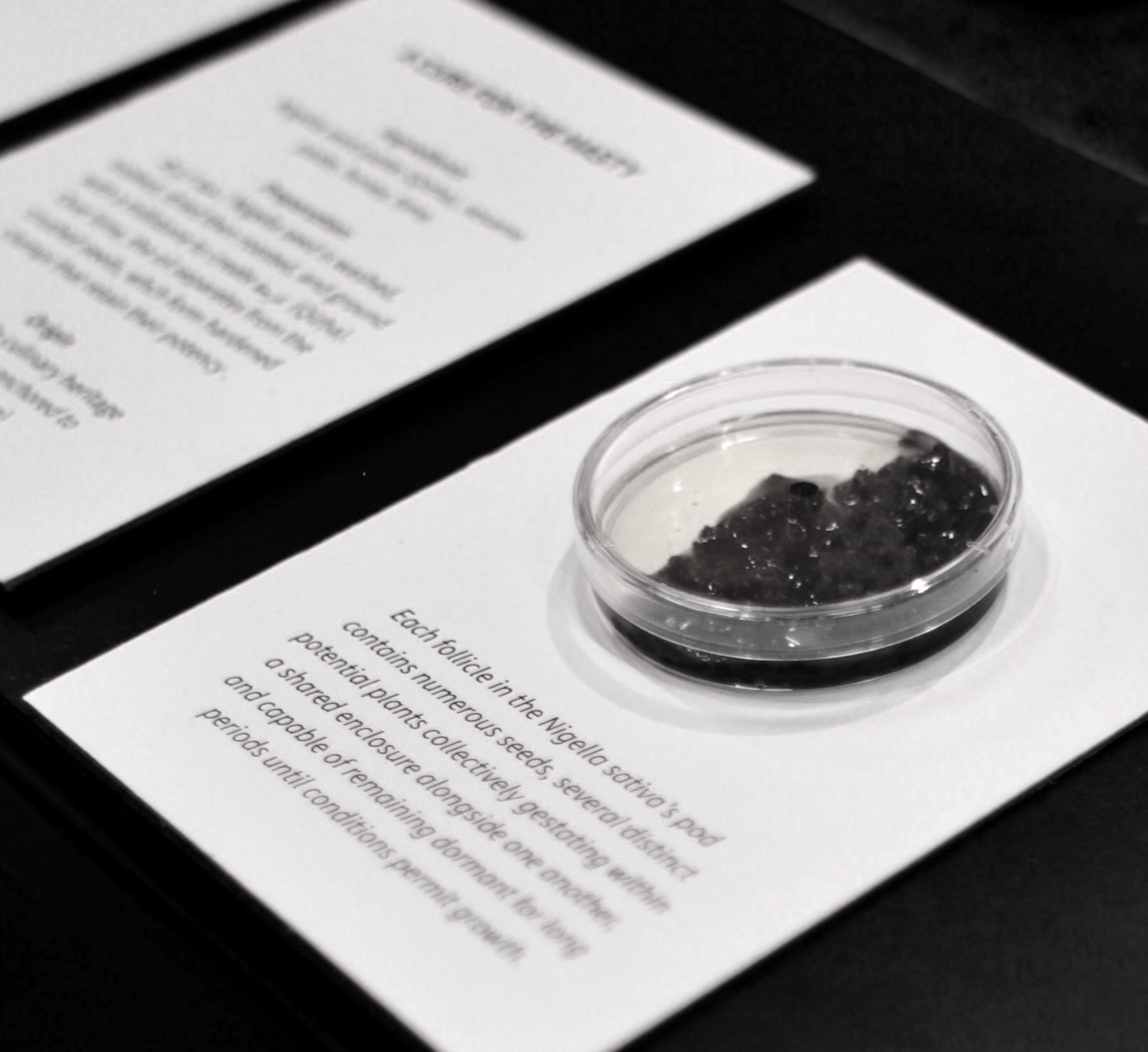
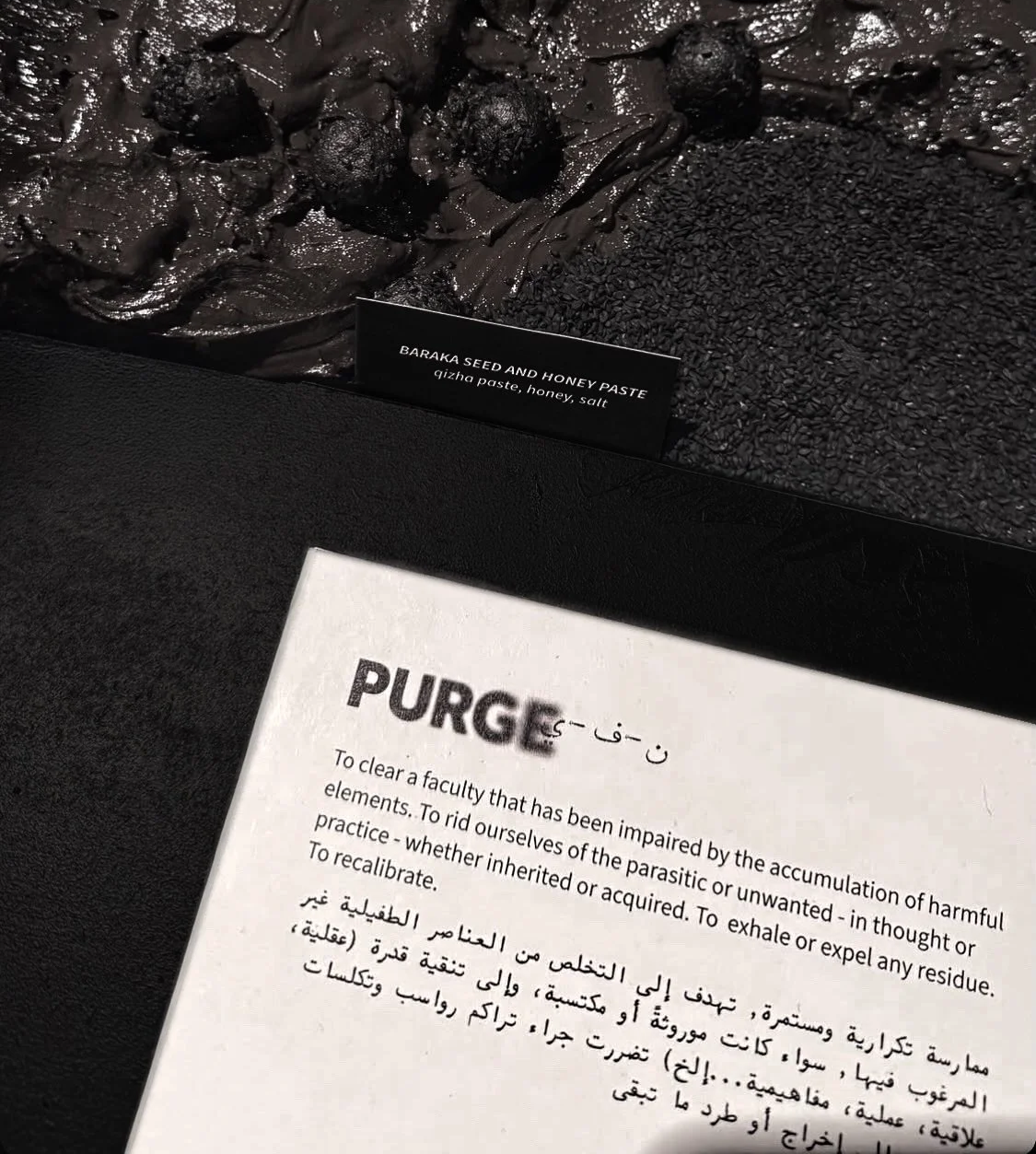
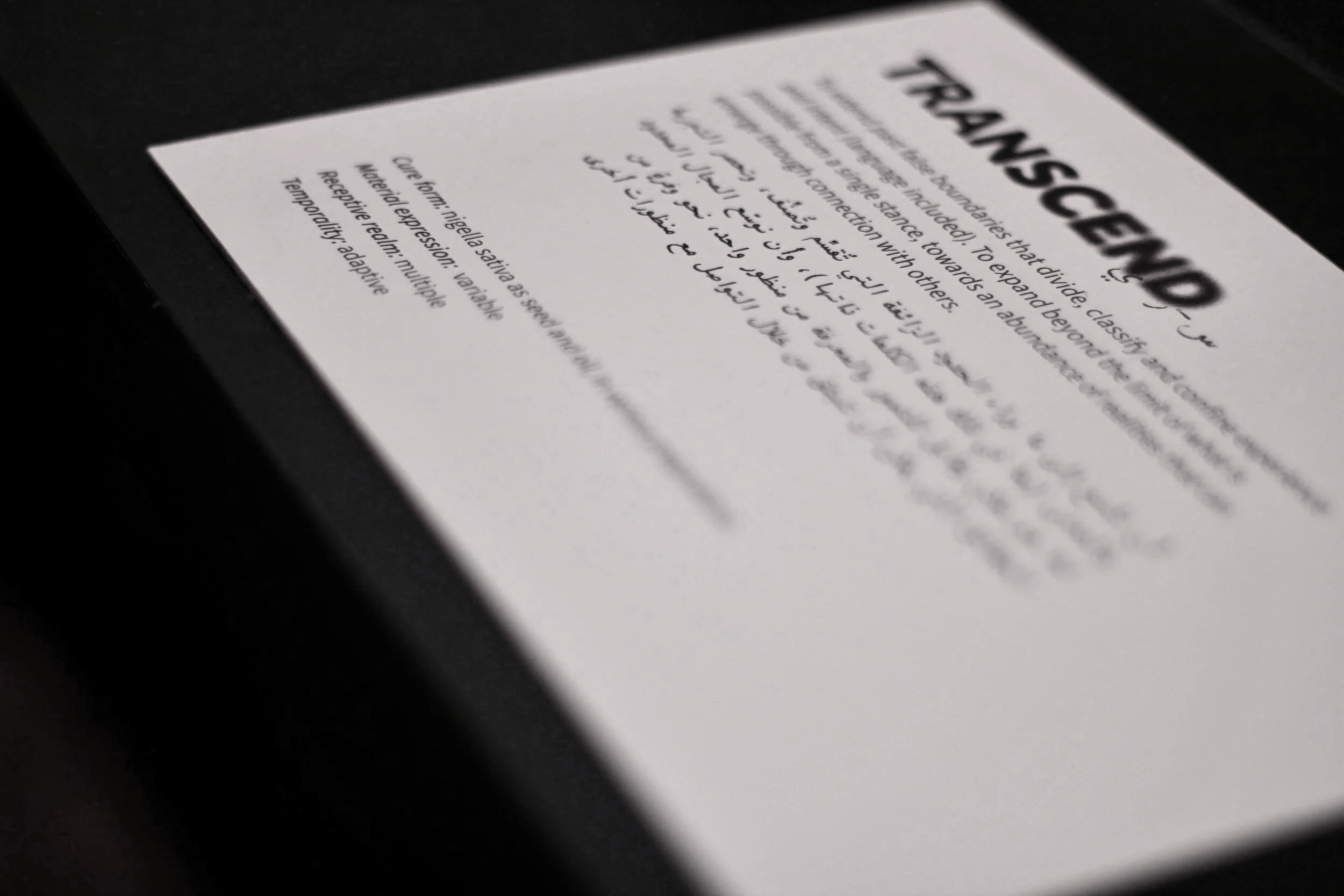
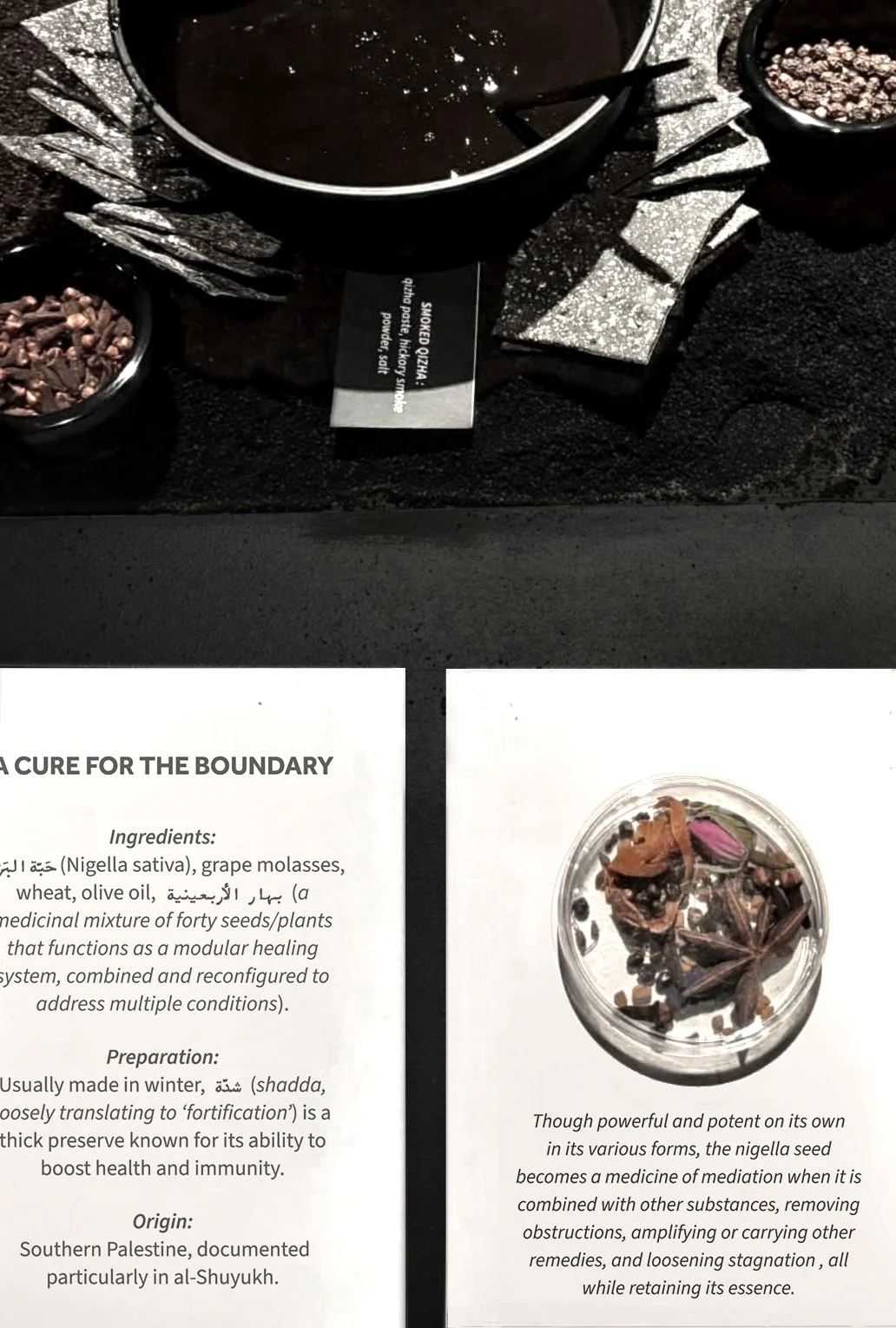
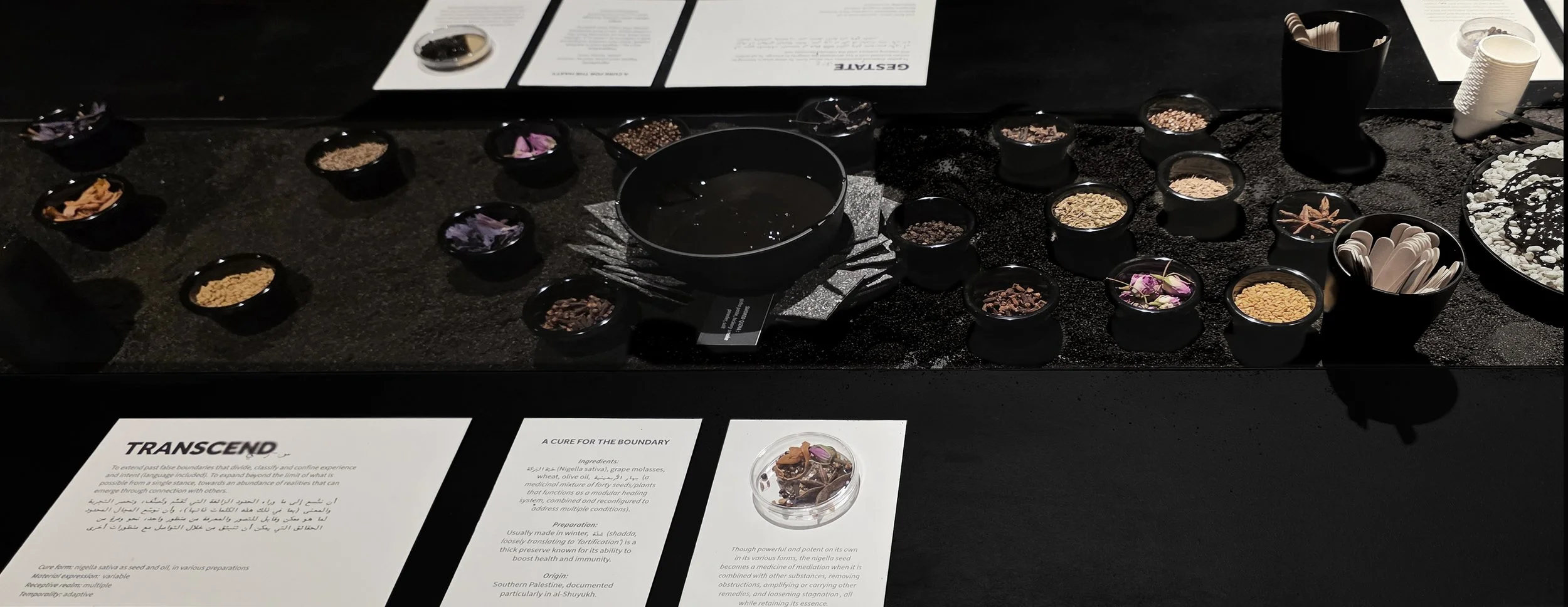
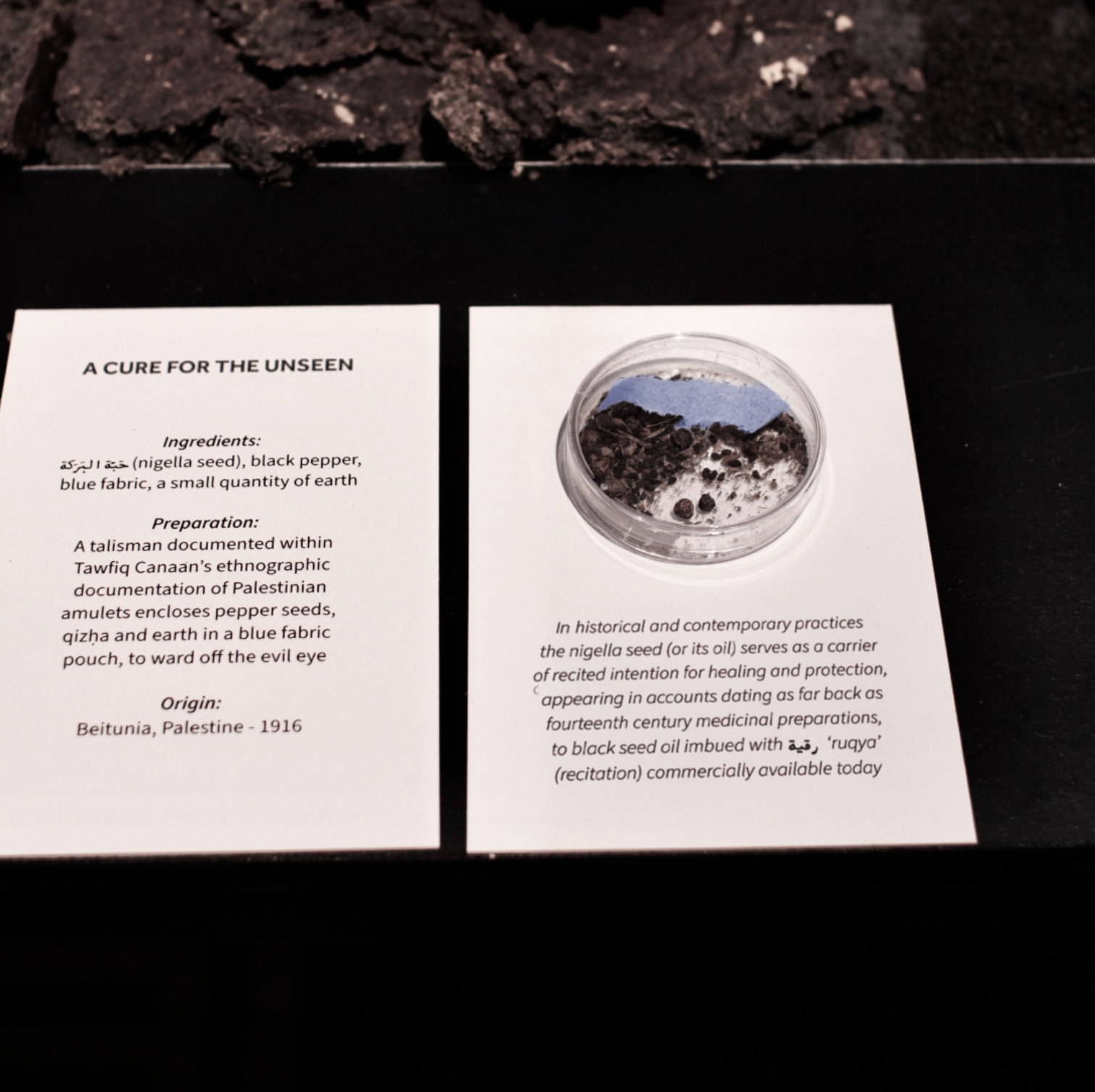
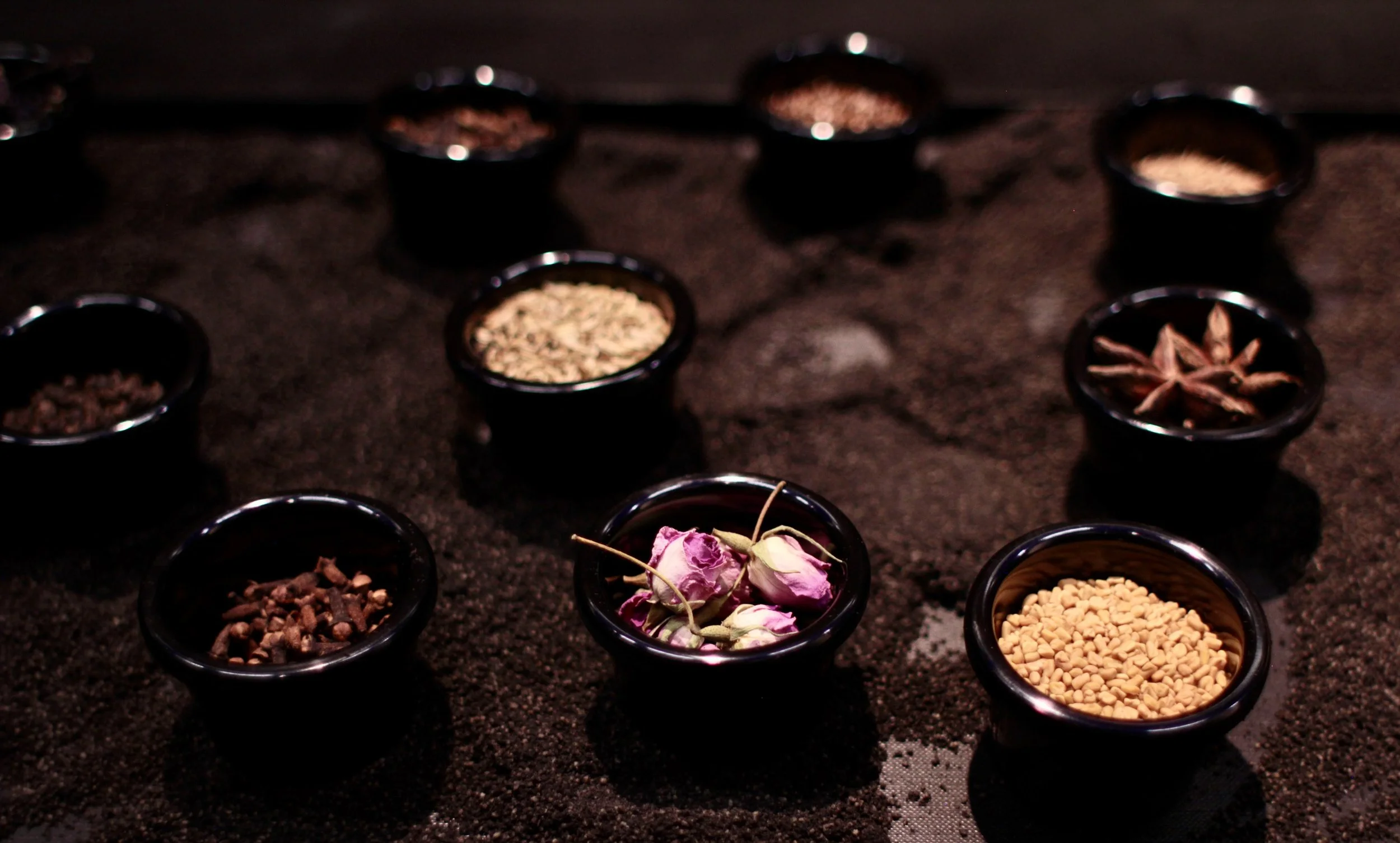
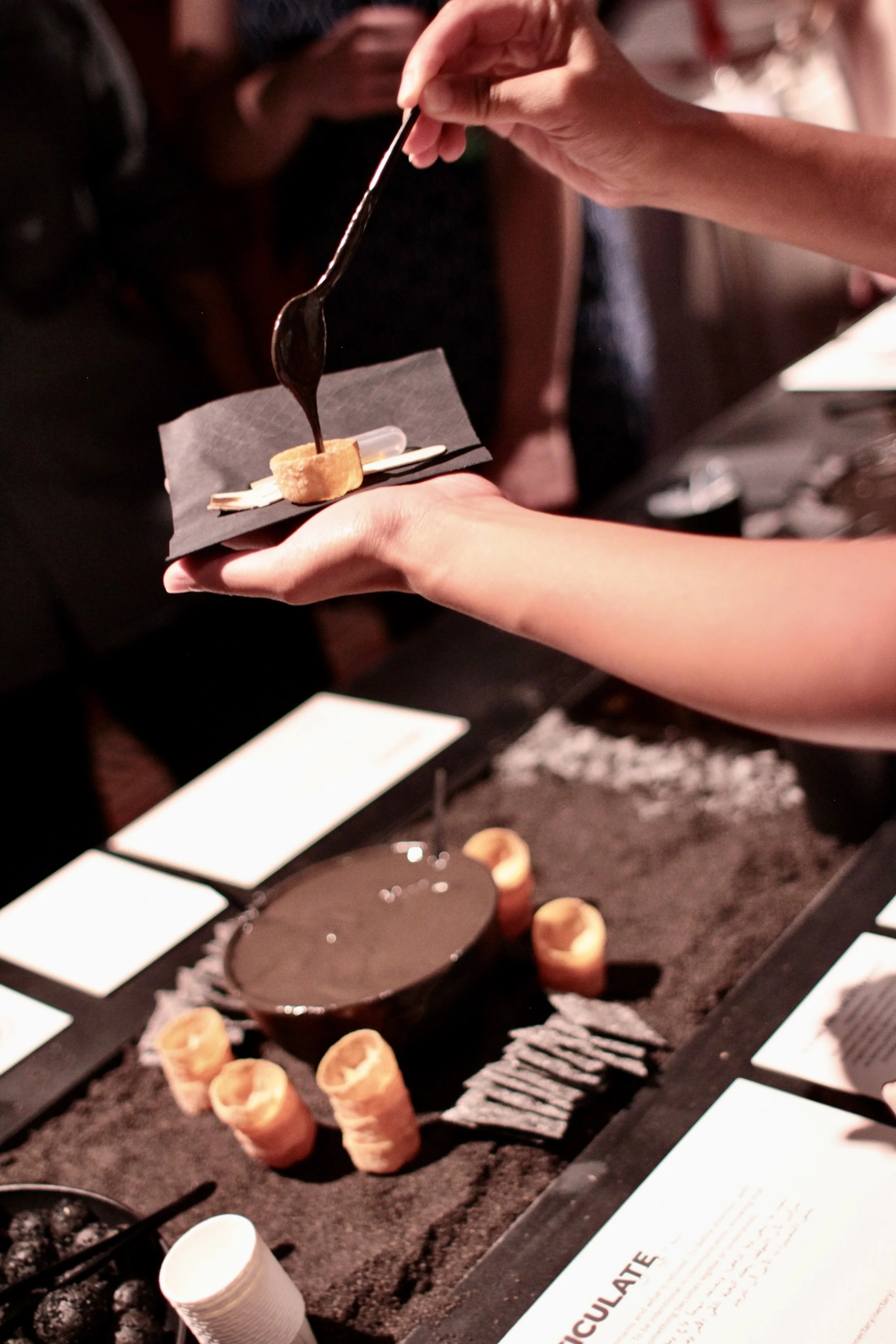
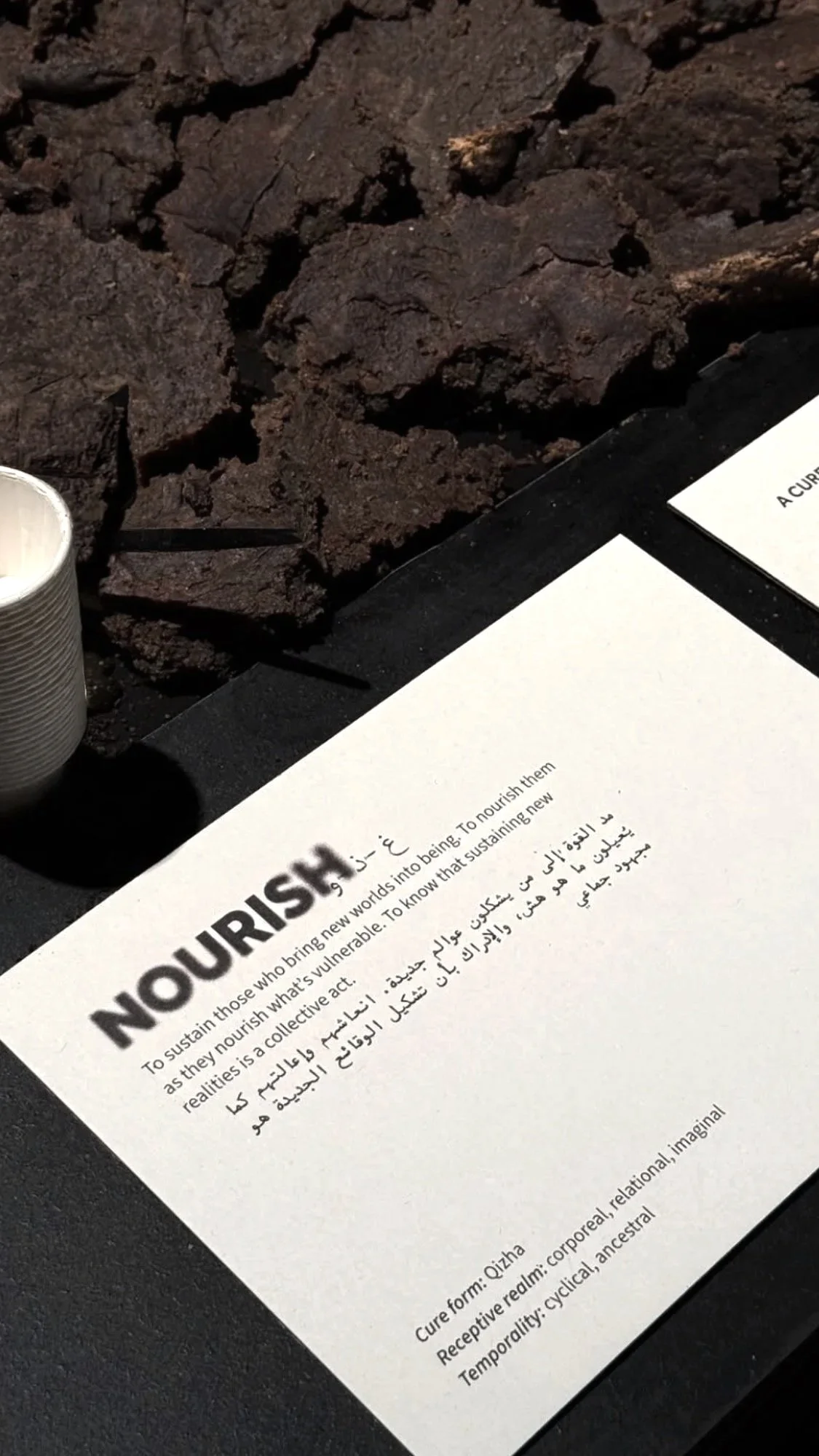
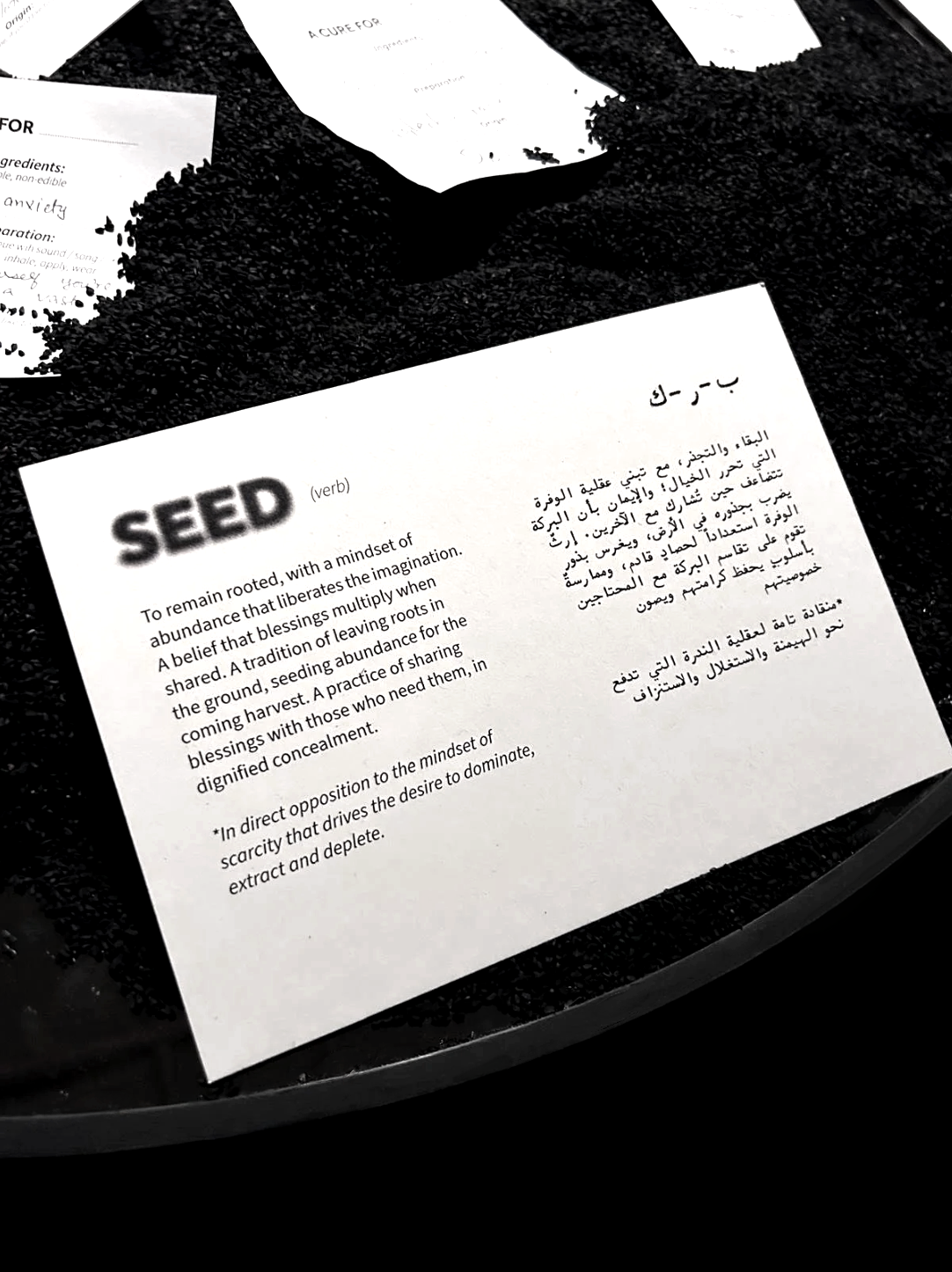
The ‘cure’ is encountered across culinary, spiritual, medicinal and interpretive forms, moving through a series of states drawn from its material qualities, behaviours and uses, with each state articulated through an interpretive definition. Together, they form a lexicon for a way of being that exceeds the terms through which dominant reality decides what is valuable, rational and real.
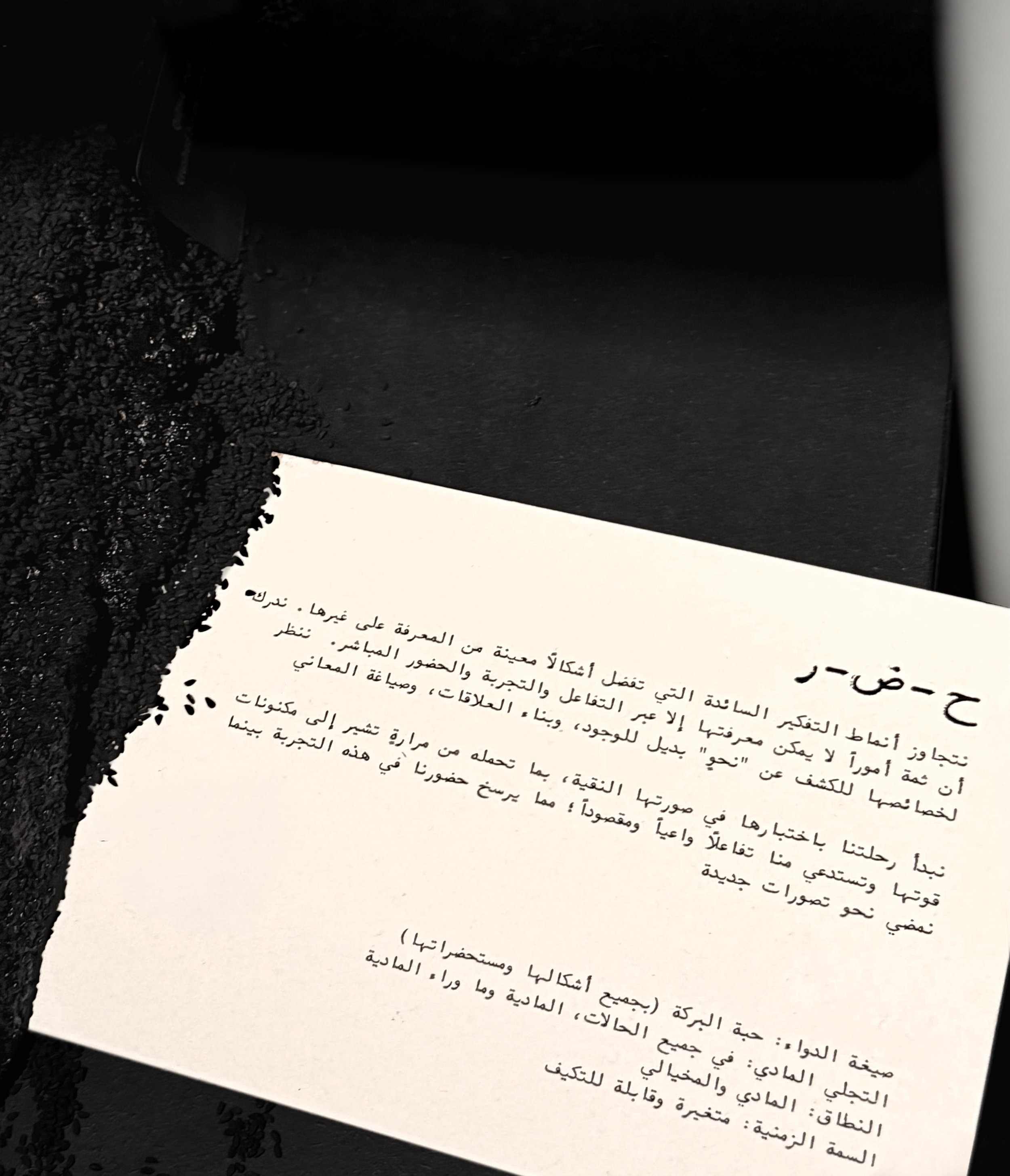
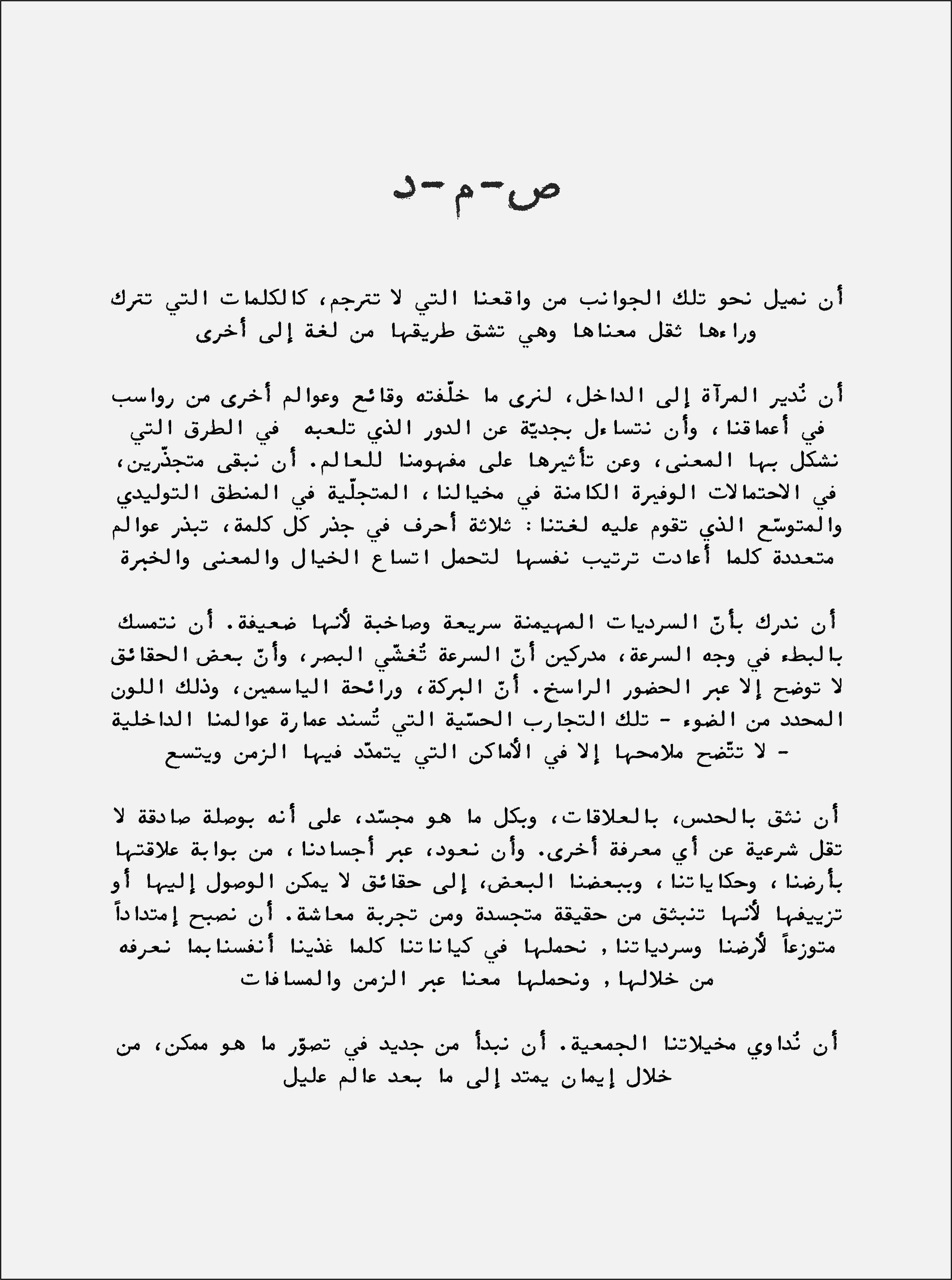
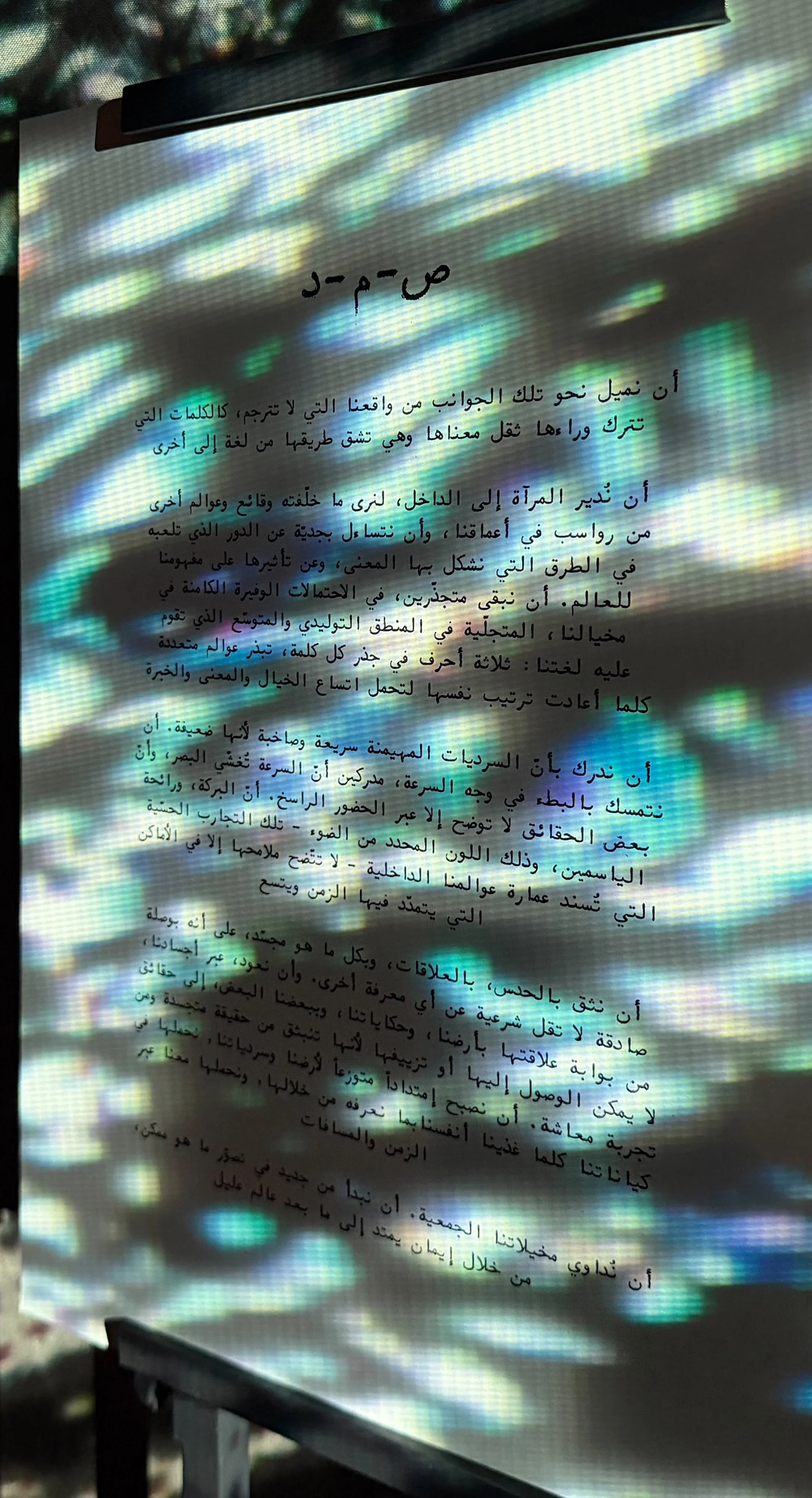
Each state’s definition corresponds to three root letters of an Arabic word that does not directly mirror its english translation, but serves to extend it into meanings that emerge from SWANA lived experience. The three letters - paired with the more nuanced, and at times entirely untranslated Arabic definitions - highlight the expansive, generative nature of the root system of the Arabic language and power that lies within what remains contained and illegible to extractive reality machines.
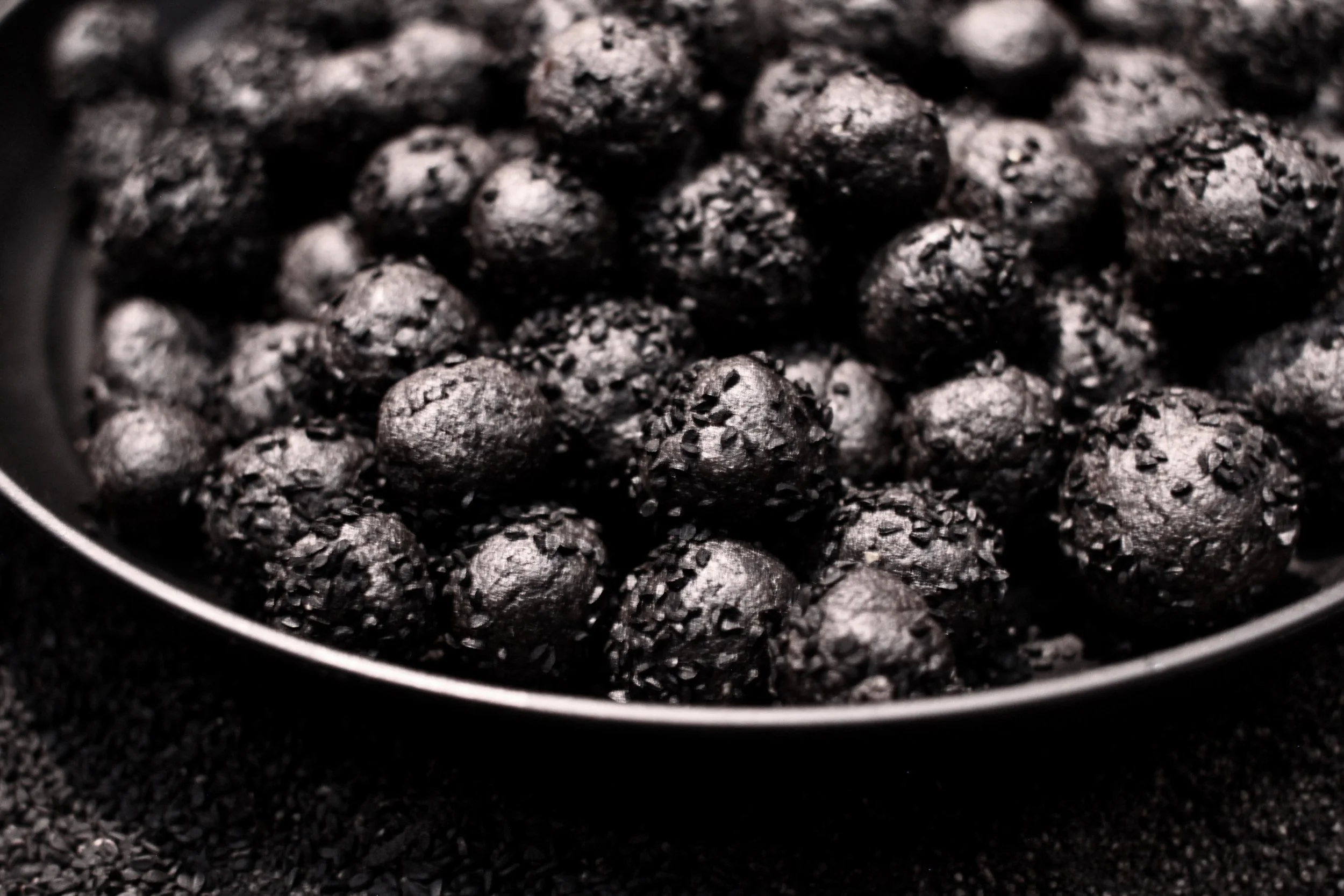
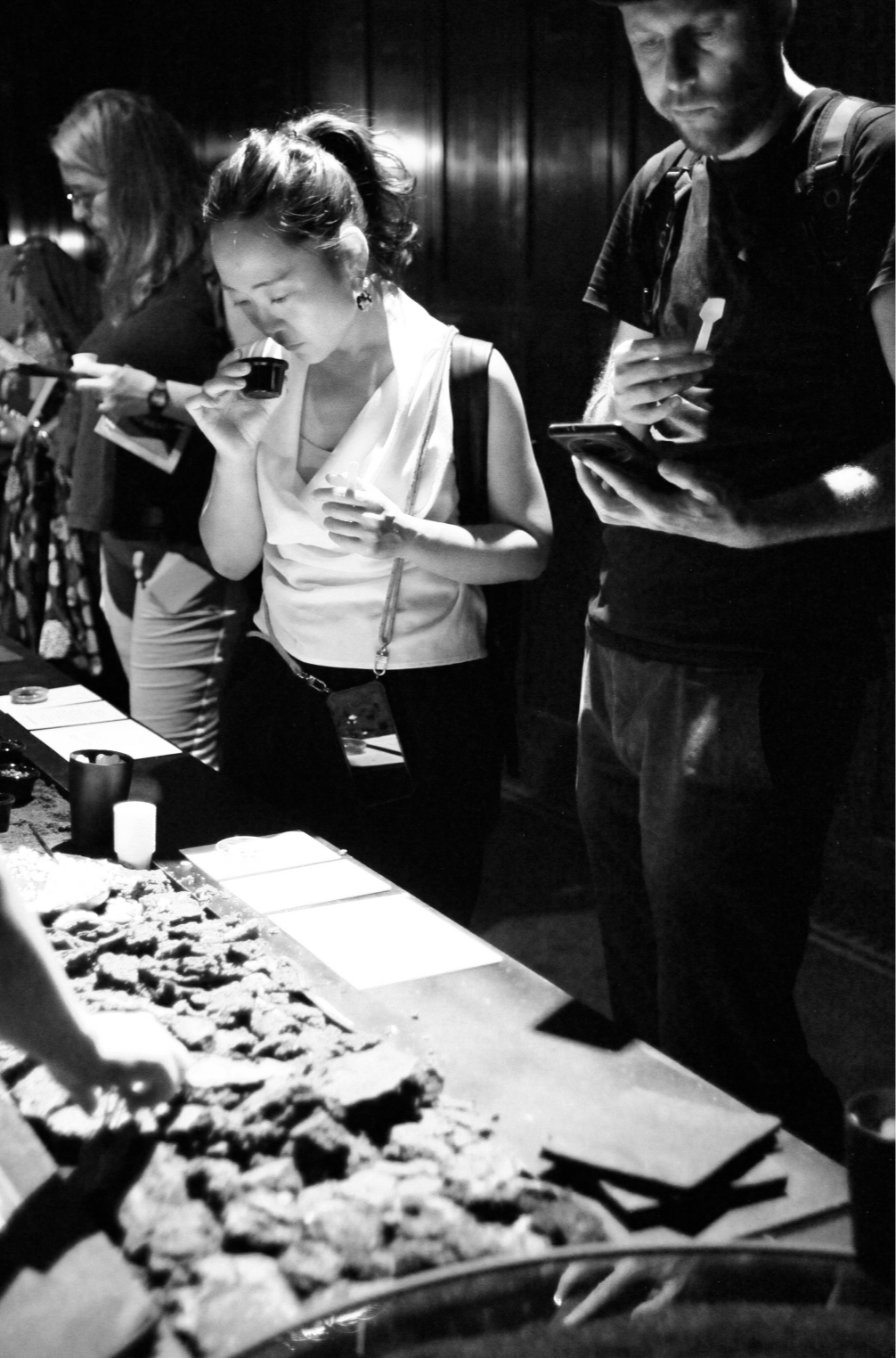
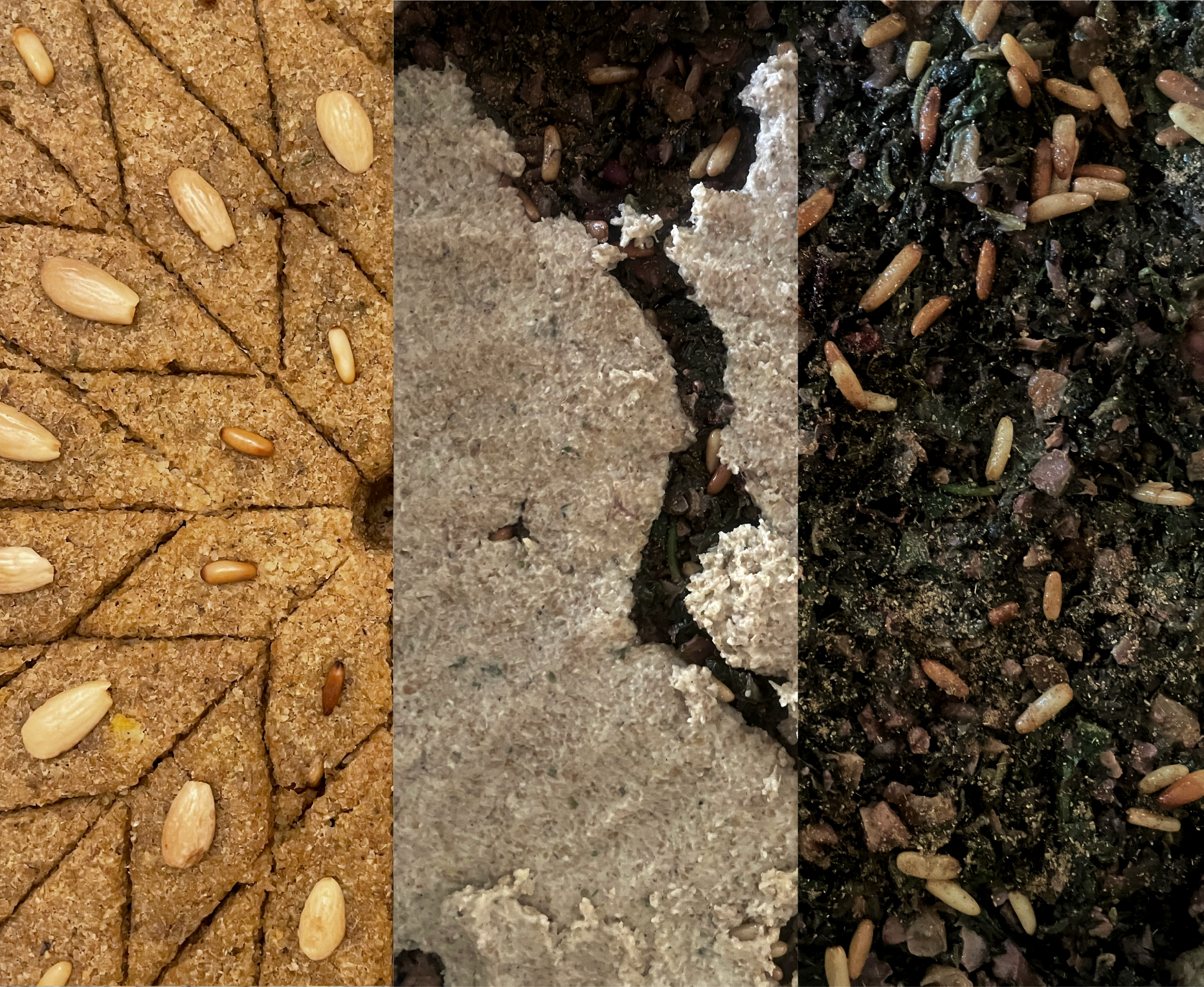
Bitterness plays a central role, anchoring visitors to the first encounter with the cure, as it resists passive consumption and demands intention. With sustained presence, the seed transforms in taste, texture and preparation as it reveals parts of the worlds contained within it.
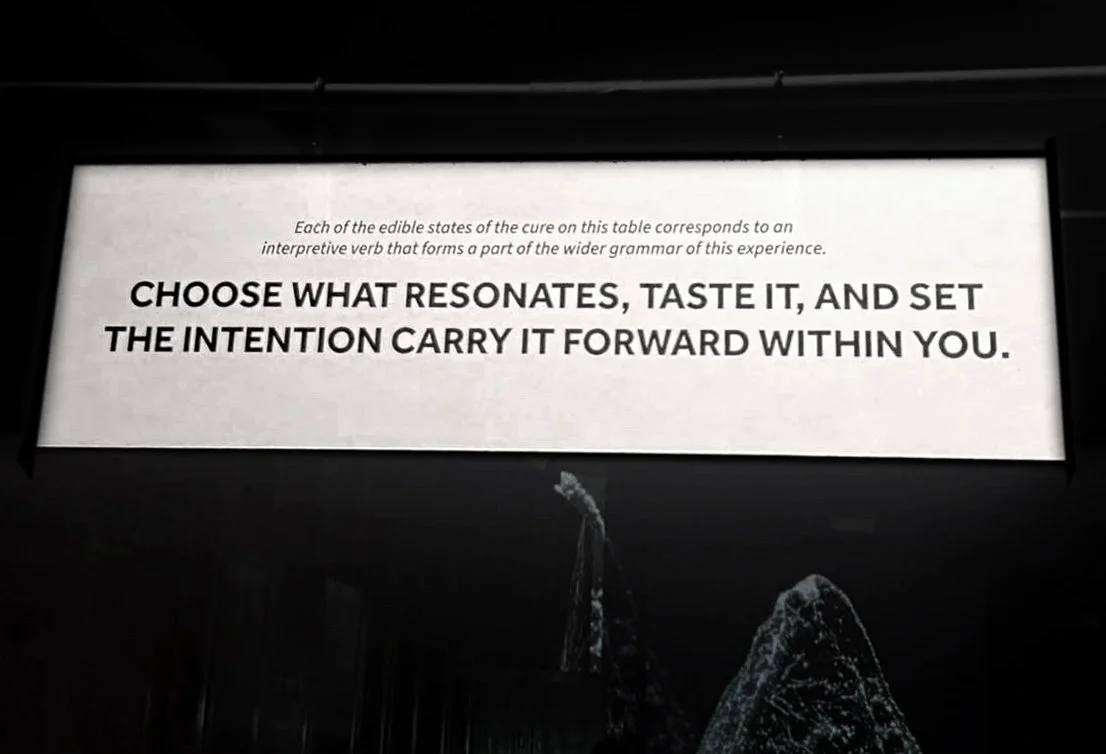
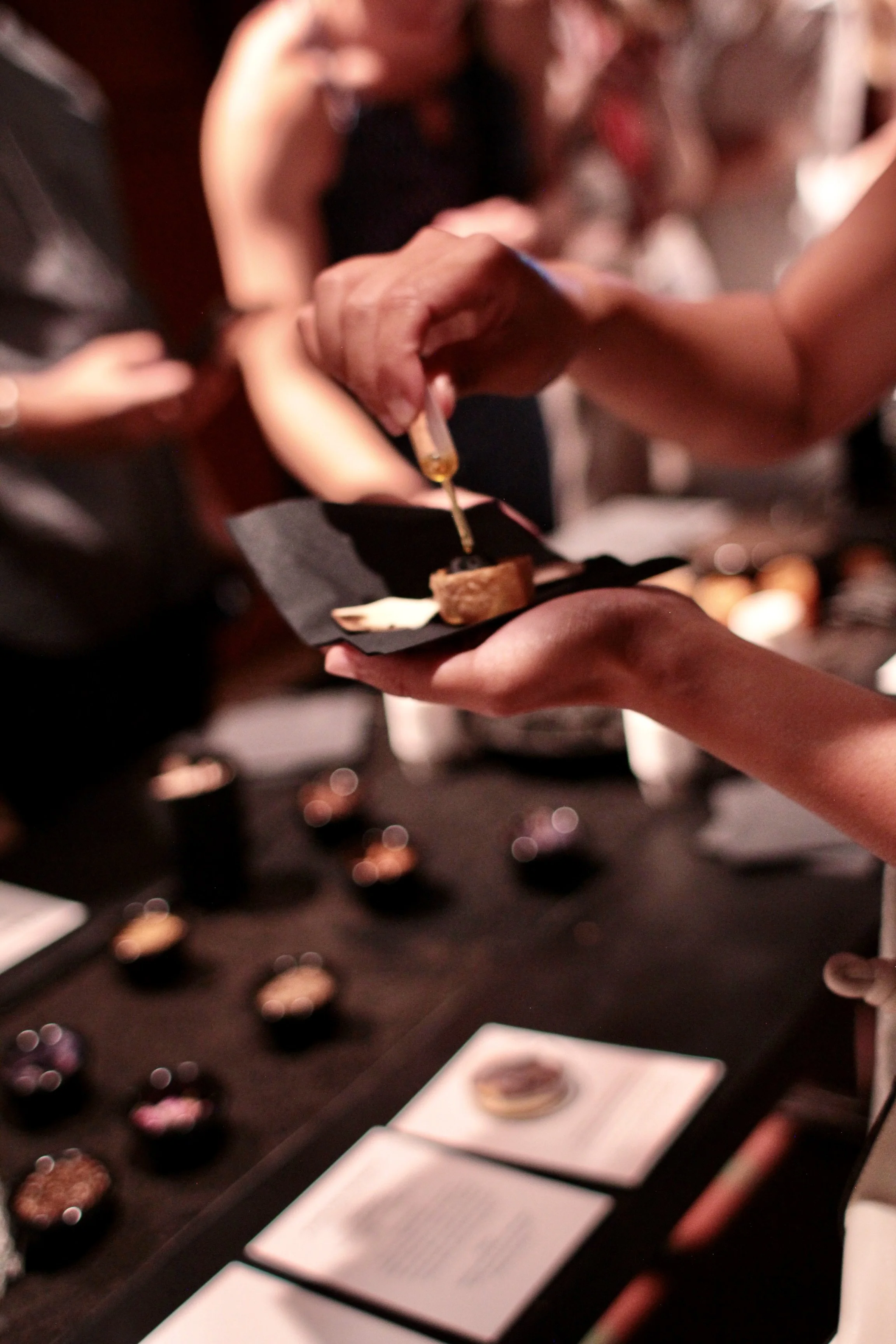
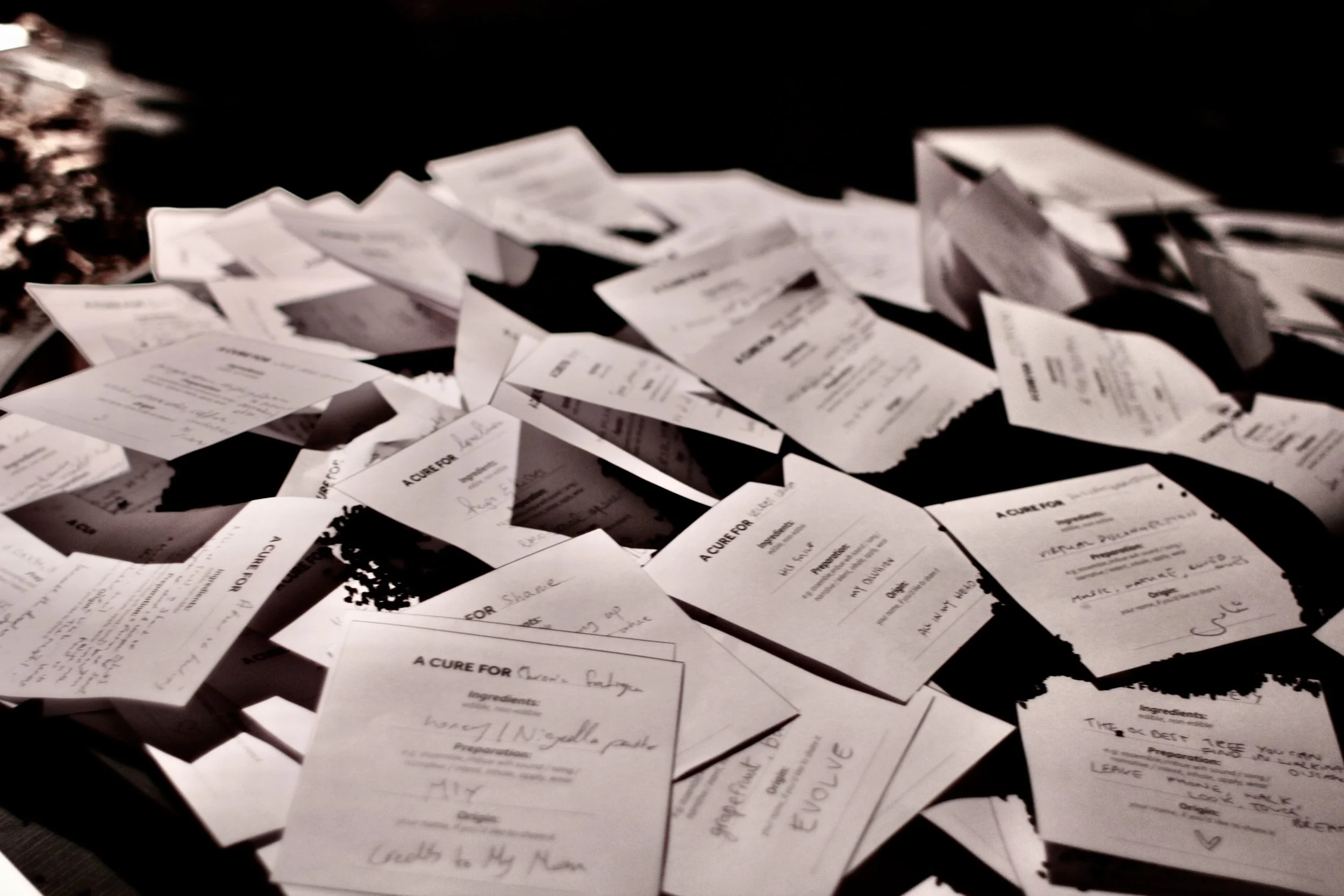
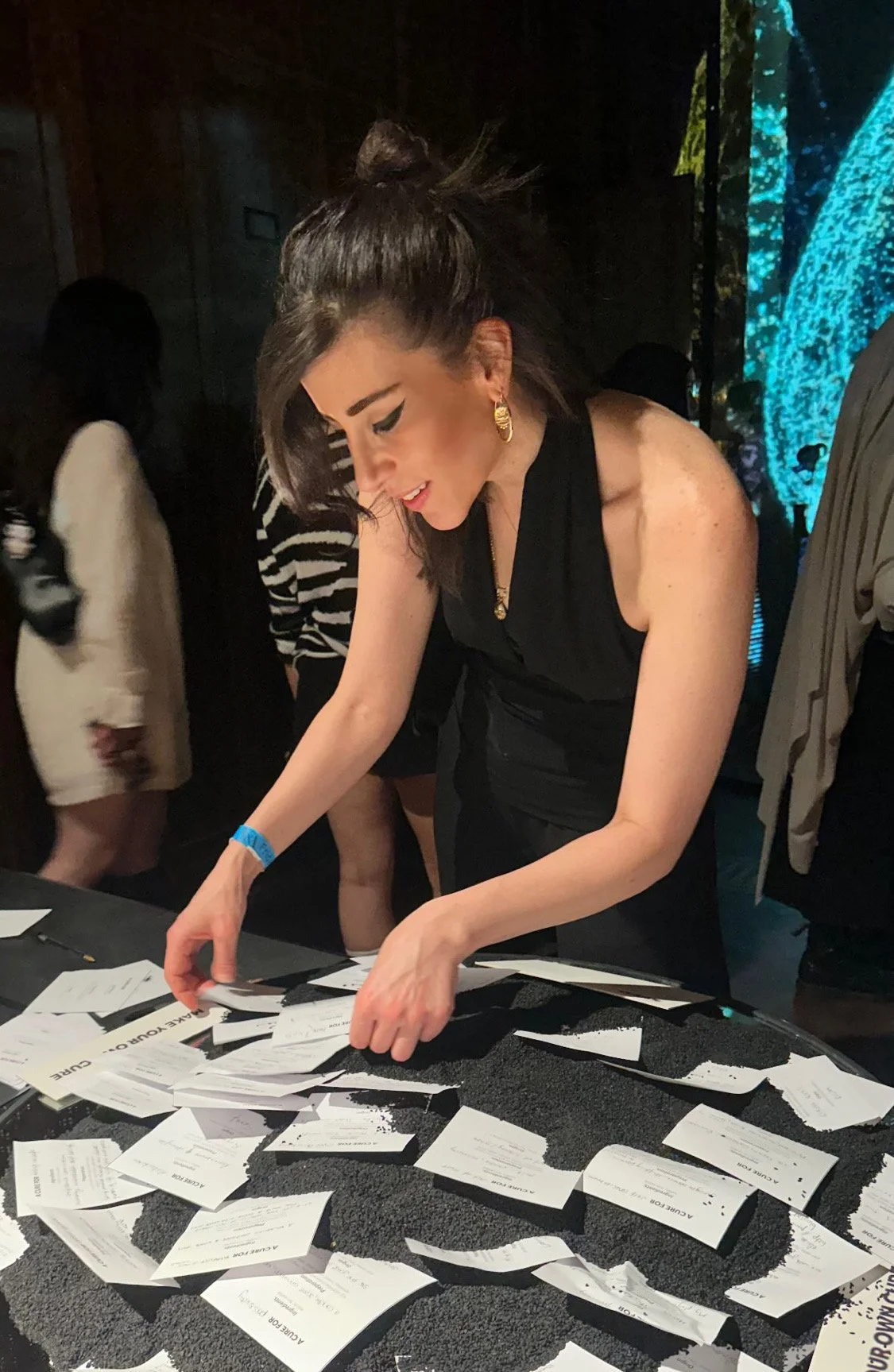
Visitors have the choice to internalise these states by consuming the edible forms they are paired with, turning the act of consumption into a deliberate choice to carry certain narratives forward as embodied intentions.
_
Photos: Ihab Fakhoury, Pod Bluman, Domenico Mino, Cynthia Khalil, Dina Dakik, Sheena Patel, and Yasmine Abboud
Projections/technical production: Bluman Associates
Animation in collaboration with Carl Barrett
Seed hologram animation based on microscopic photo by Hans Stuesi.
Original soundtrack curated by Stochastic Resonance
Grateful for the support of Prachi Joshi, Ekta Raheja, Laura U Marks, Nozomi Koseki, Symeon Banos, Charlie Derbaer, Camille Kaiser, Gihan El Hage, Fares Al Salem, Sarah Faruki, Rawan Zeine, and Philip Juma.
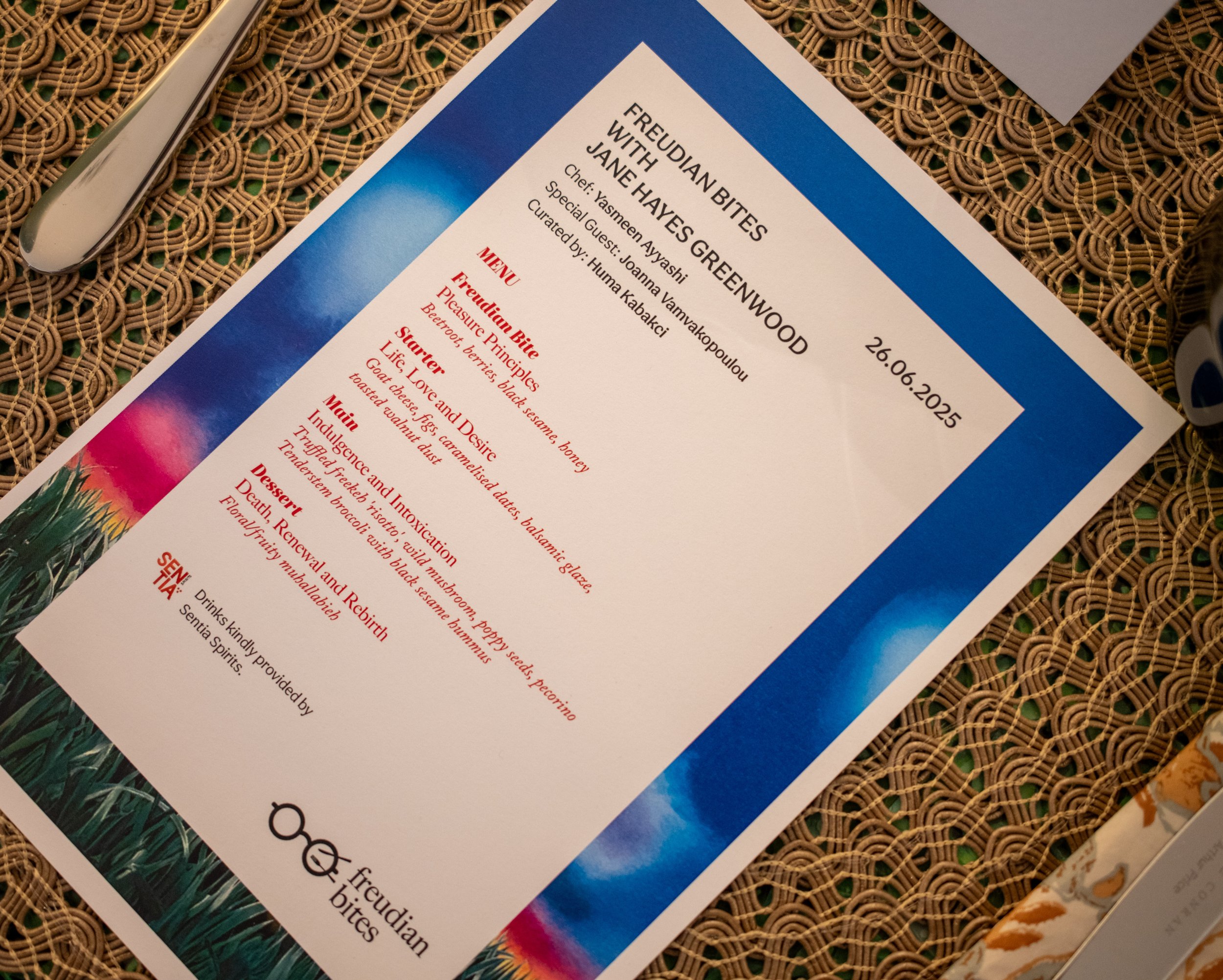
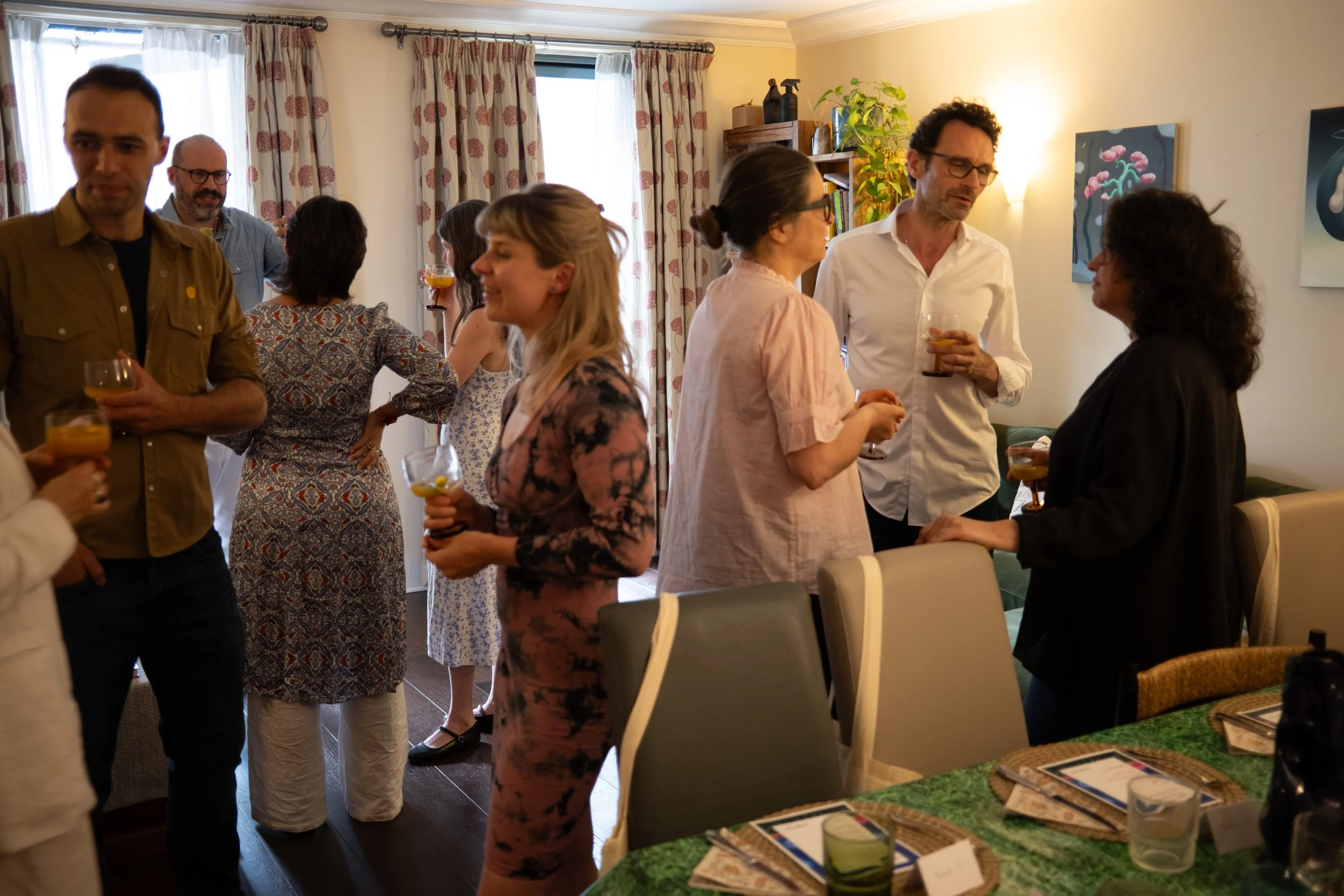
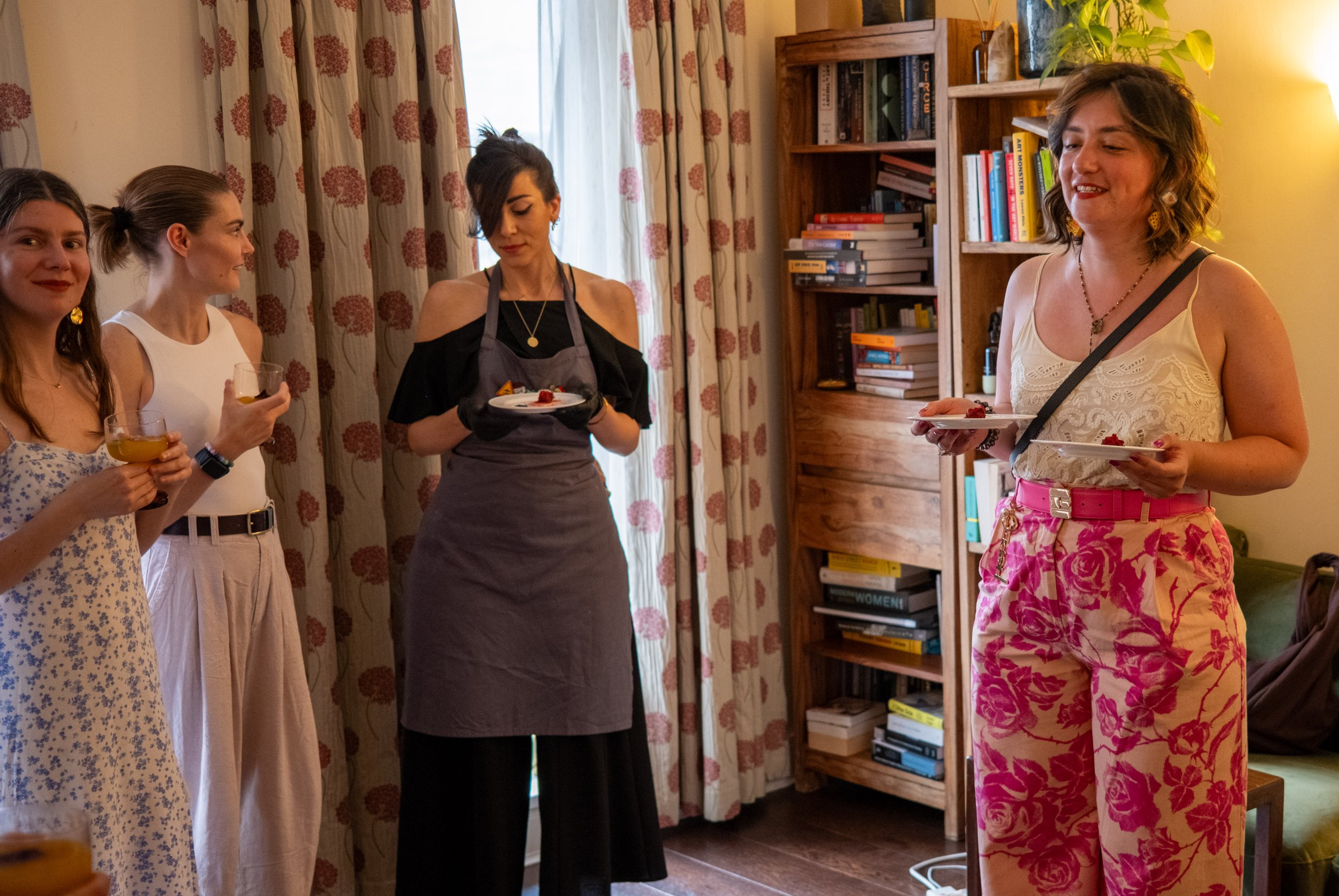
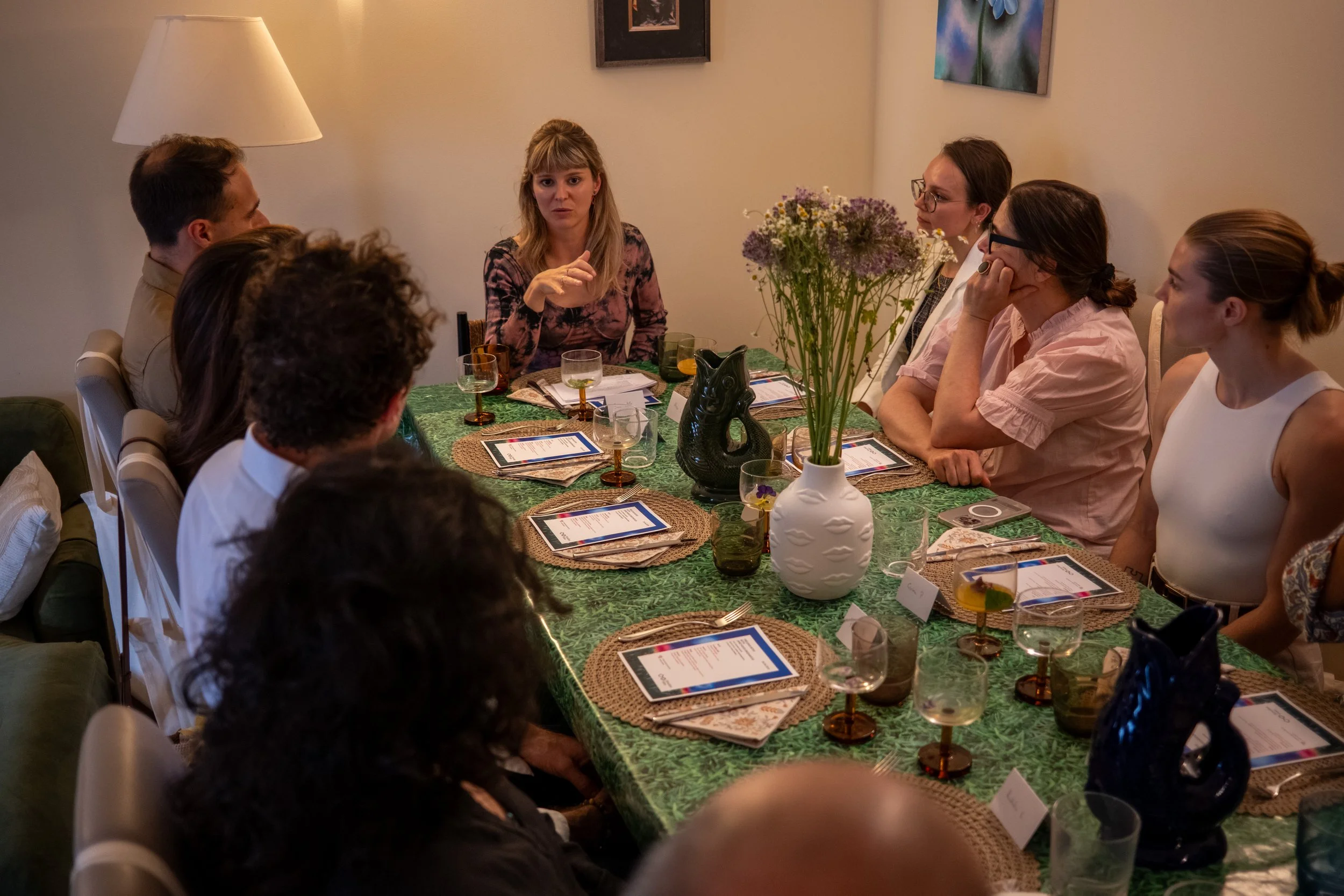
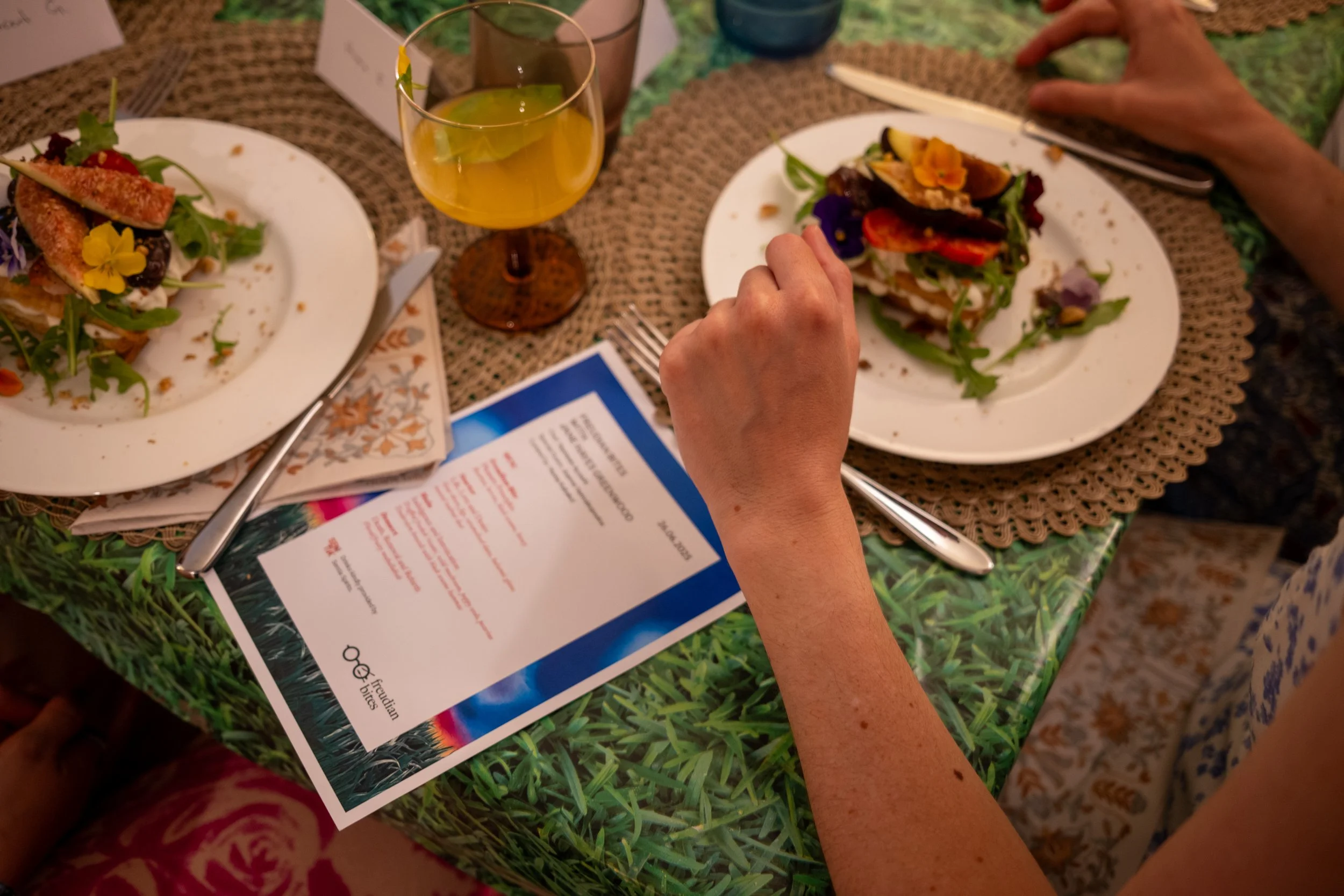
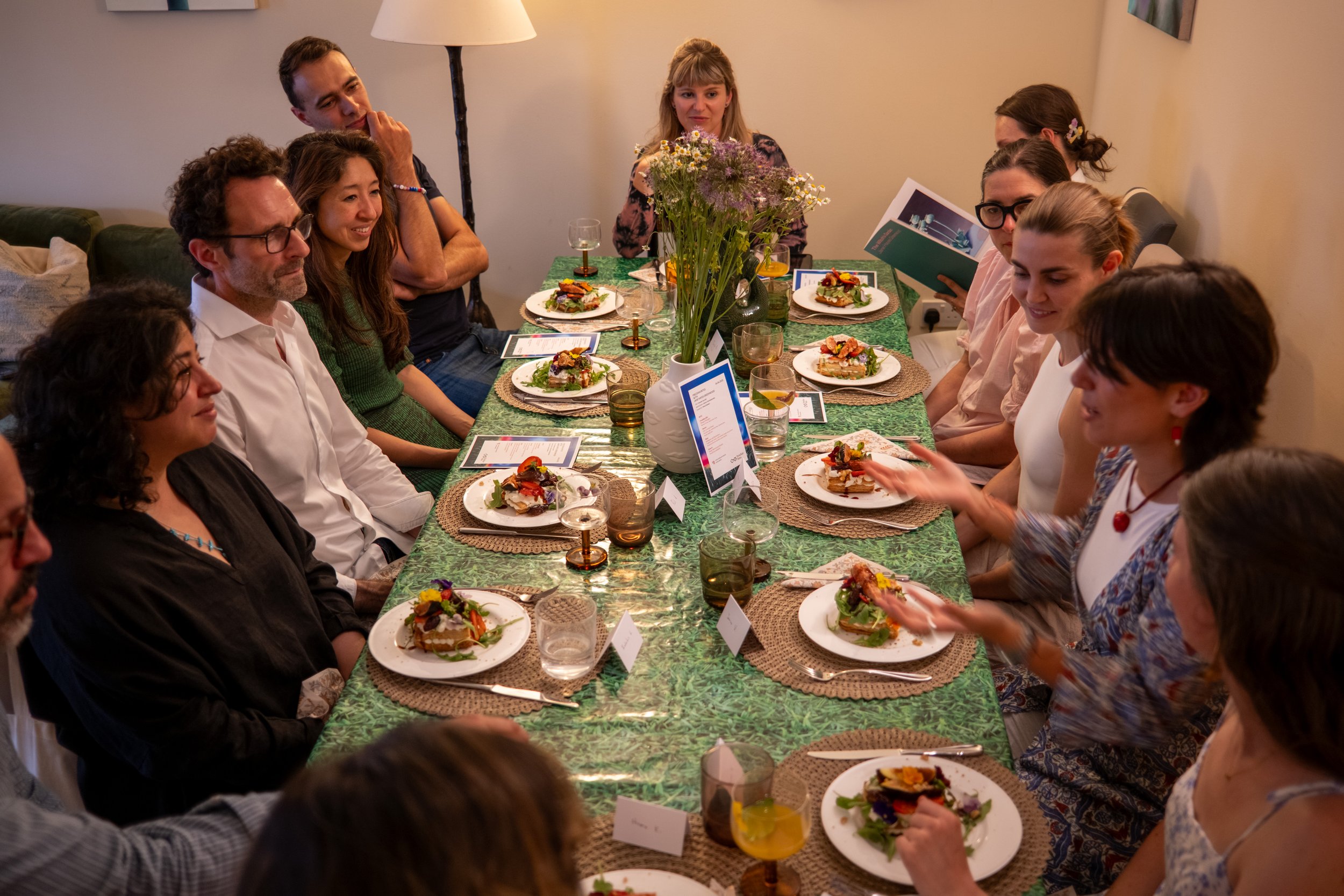
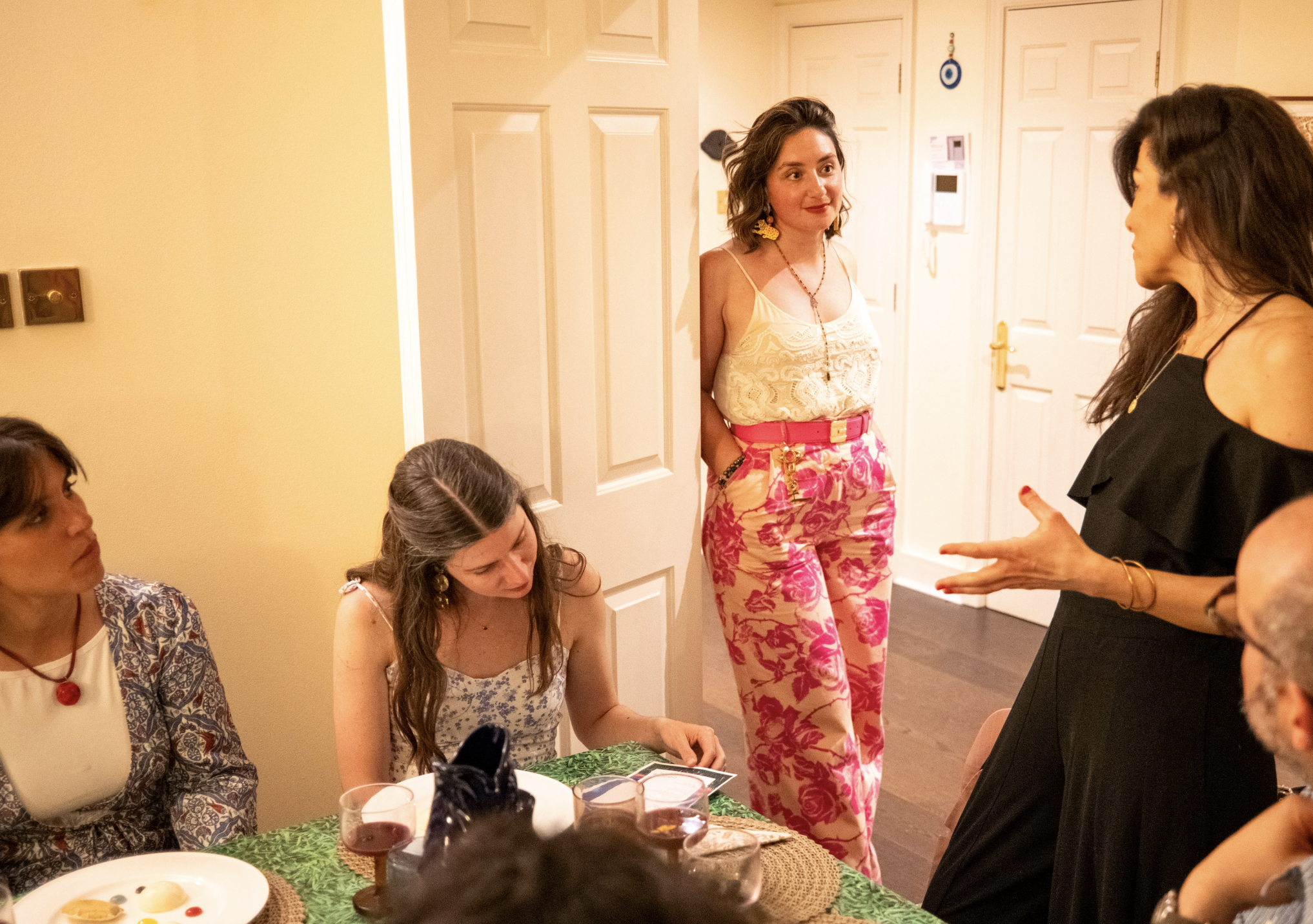
A collaboration with curator Huma Kabakci on an iteration of her supper club, Freudian Bites, which invites a chef to respond to the work of a featured artist and curatorial theme, creating the space for new narratives to emerge where their disciplines cross over.
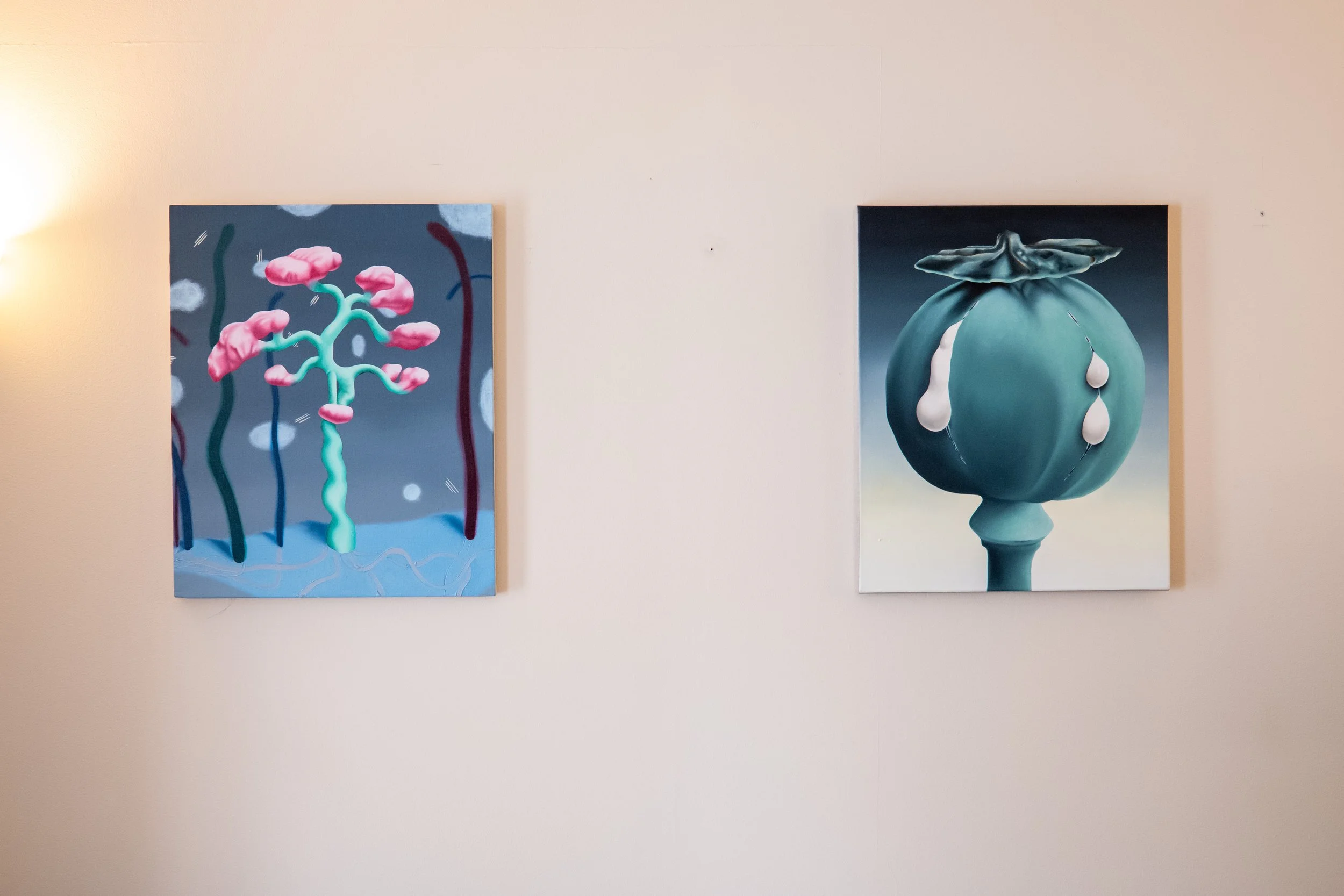
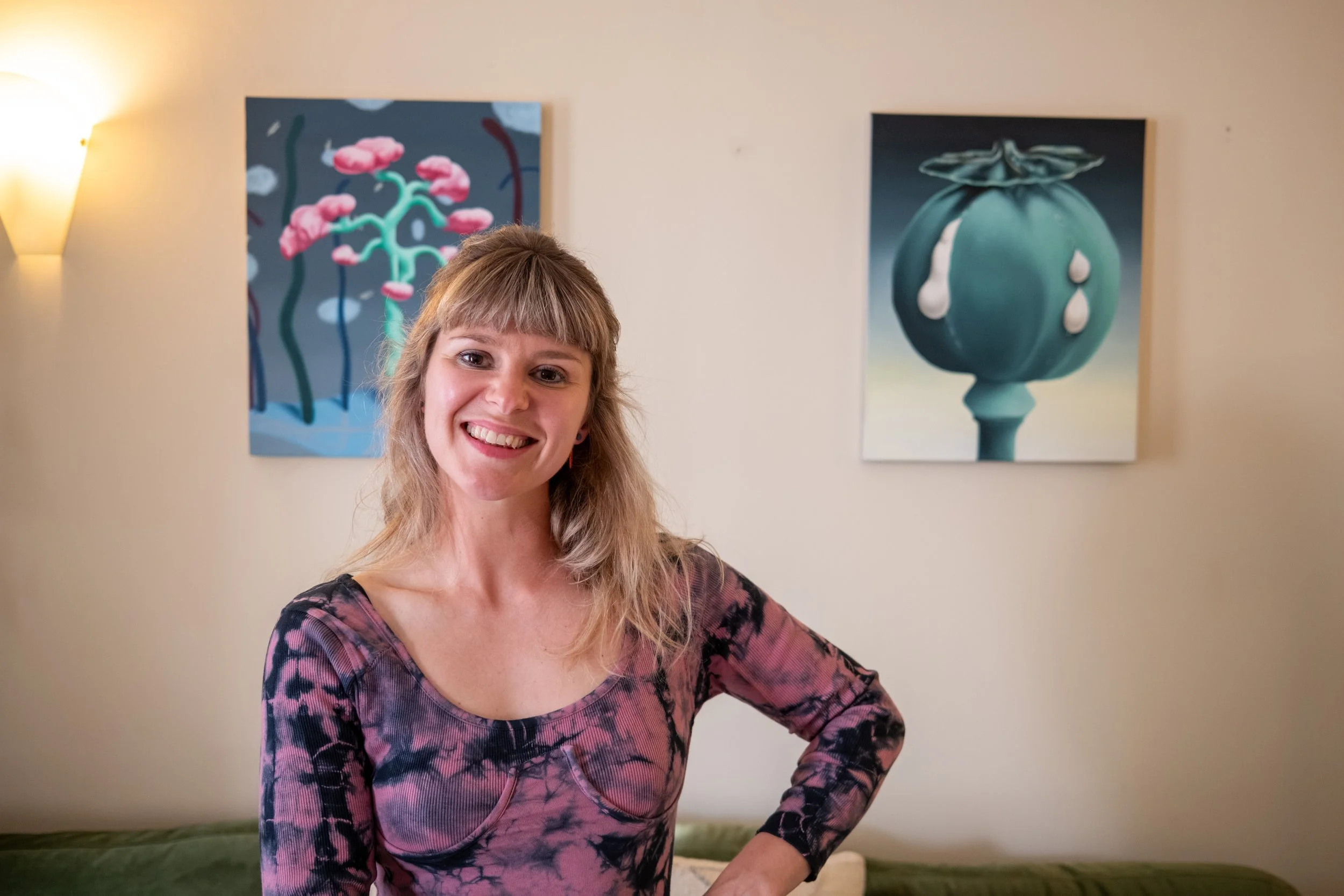
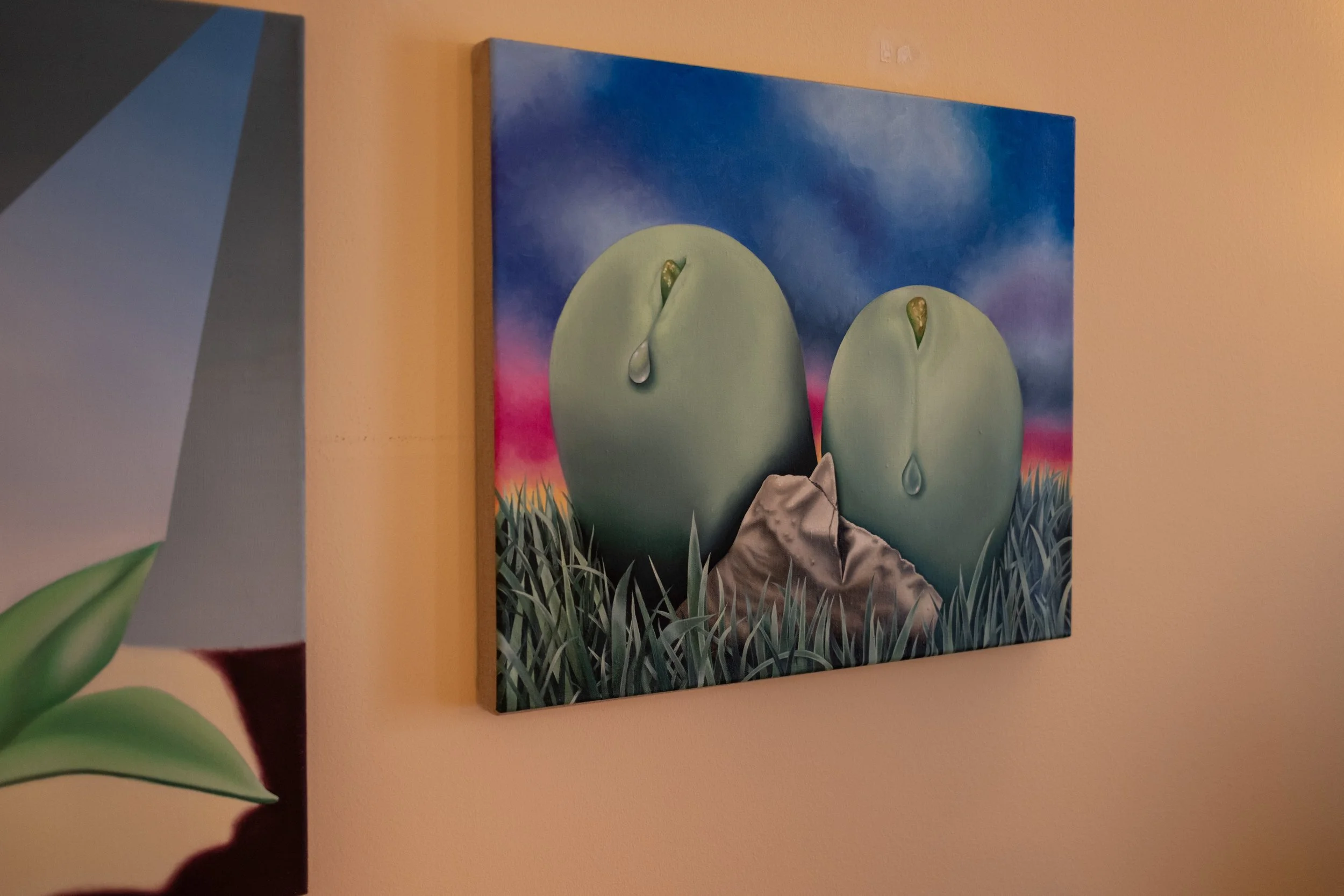
For this iteration, I responded to artist Jane Hayes Greenwood, and the work of neuroscientist Joanna Vamvakopoulou, through culinary narratives that explored the tensions between hedonism and health, appetite and addiction, pleasure and its limts.
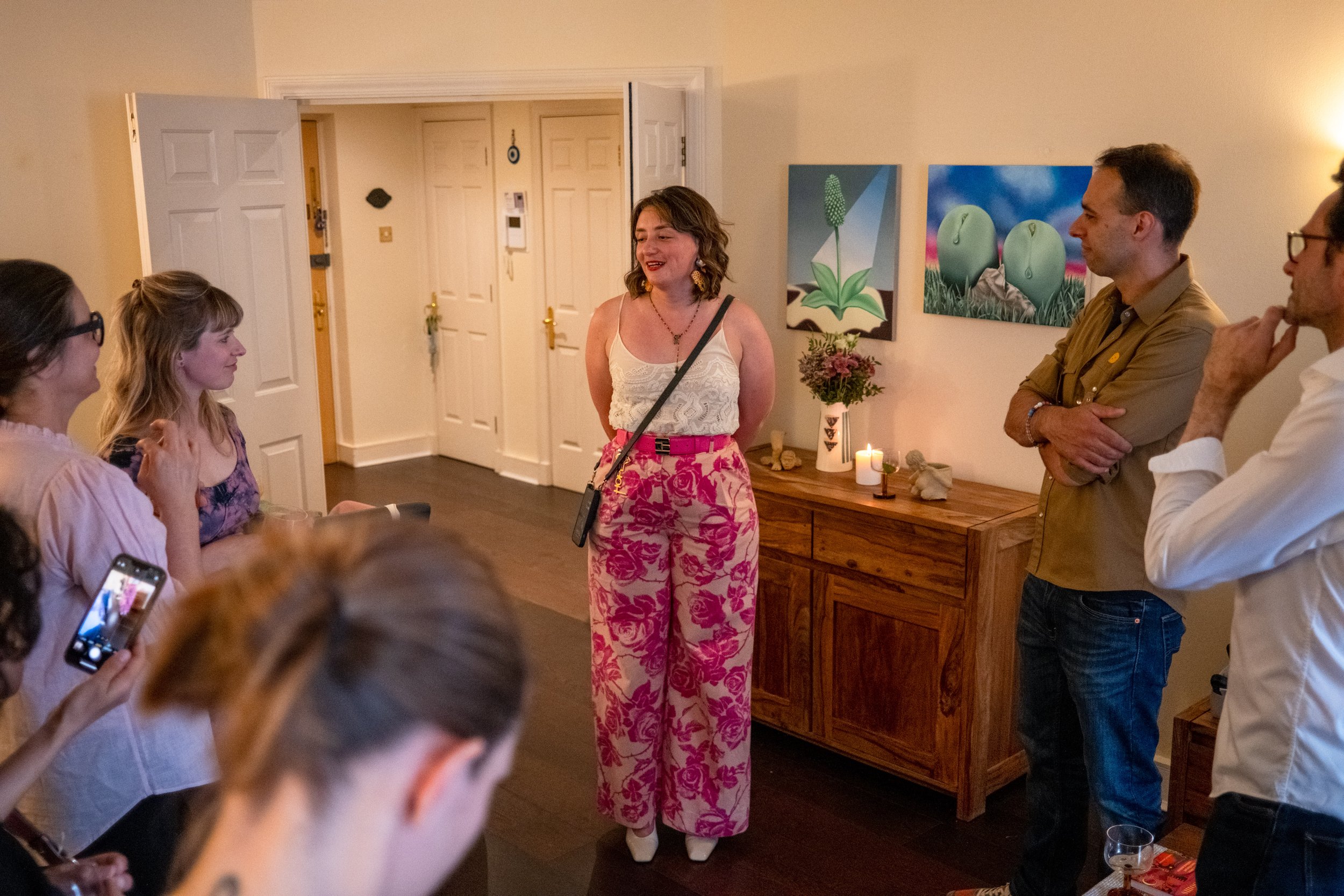
Drawing from her artistic research and personal history, Jane Hayes Greenwood led guests through parts of her work with medicinal plants. Each course was paired with a plant and thematic thread from her work examining life, death, and the joy and indulgences in between.
Special guest Joanna Vamvakopoulou, neuroscientist and PhD researcher at David Nutt’s renowned Psychedelic Science Lab at Imperial College London, shared insights into the latest research on the use of psychedelics for treatment-resistant depression and PTSD.
.
The collaboration unfolded through a four-course curated menu that allowed me to reflect on the themes that Huma had set, as well as Jane’s work and research in relation to my own practice, with space to weave in ingredients that held medicinal, cultural and narrative significance in the context that I come from.
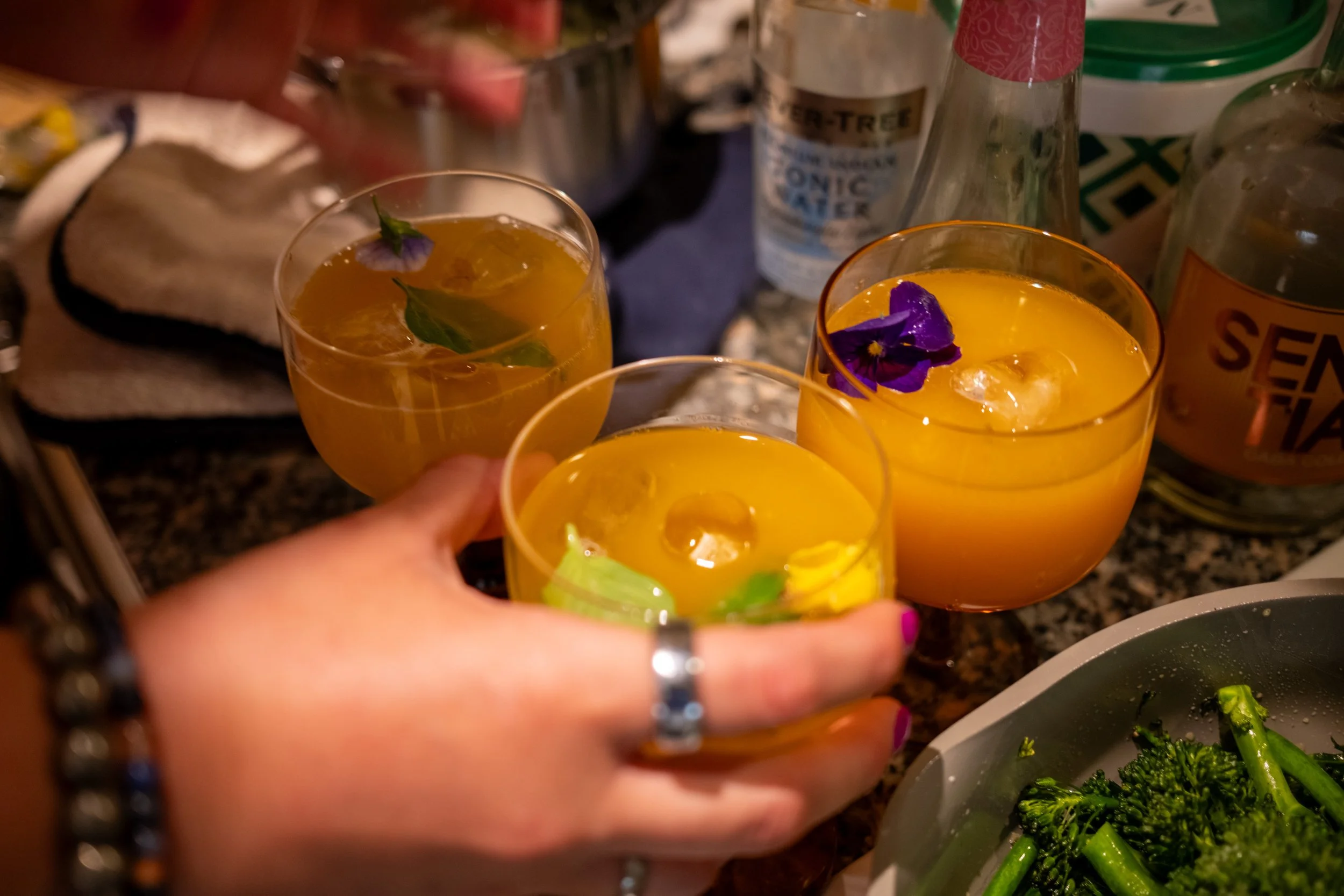
The evening began with special Sentia cocktails, sophisticated non-alcoholic drinks developed at Professor David Nutt’s GABALabs, designed to activate the brain’s GABA system for a sense of calm and connection.
THE MENU:
Freudian Bite:
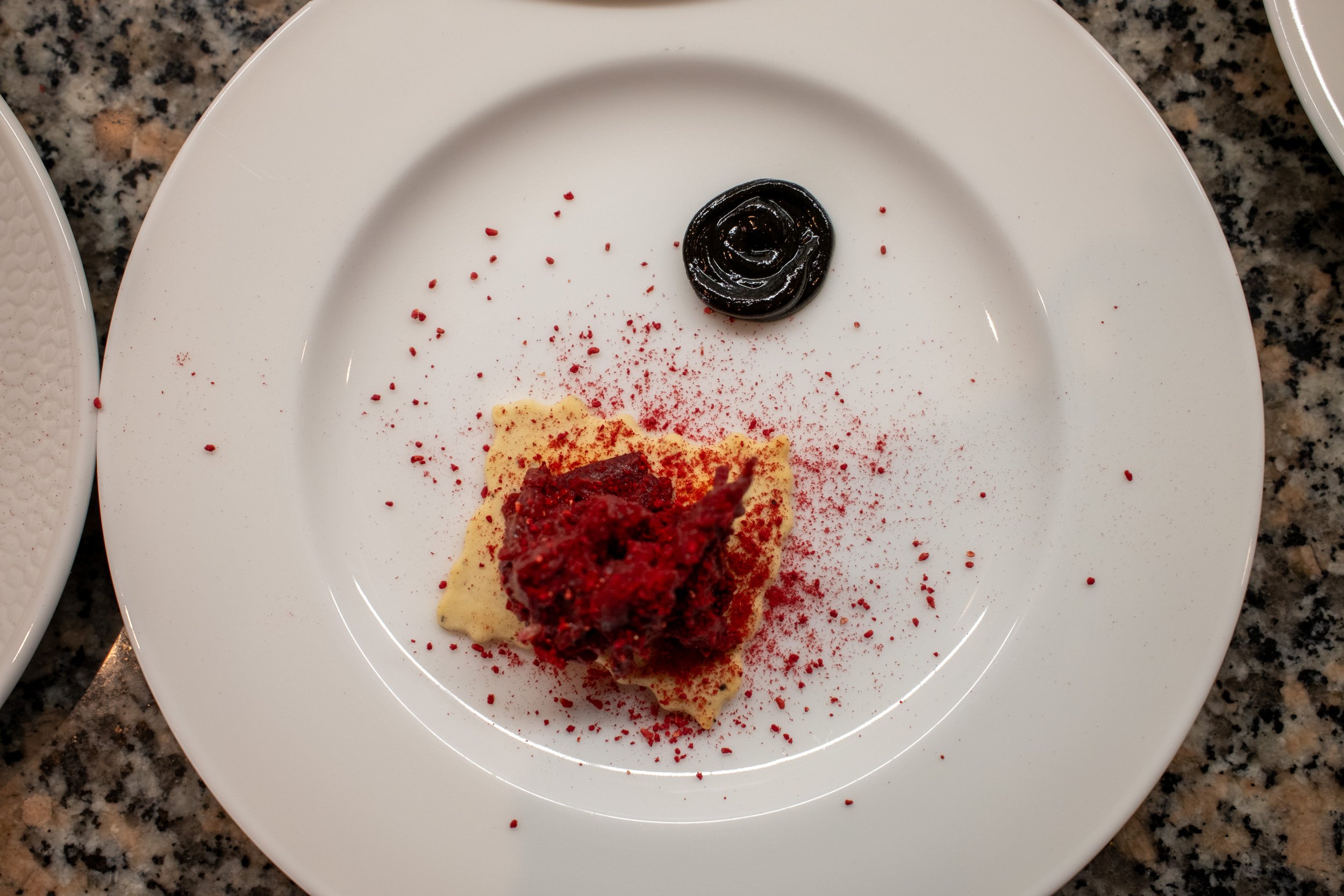
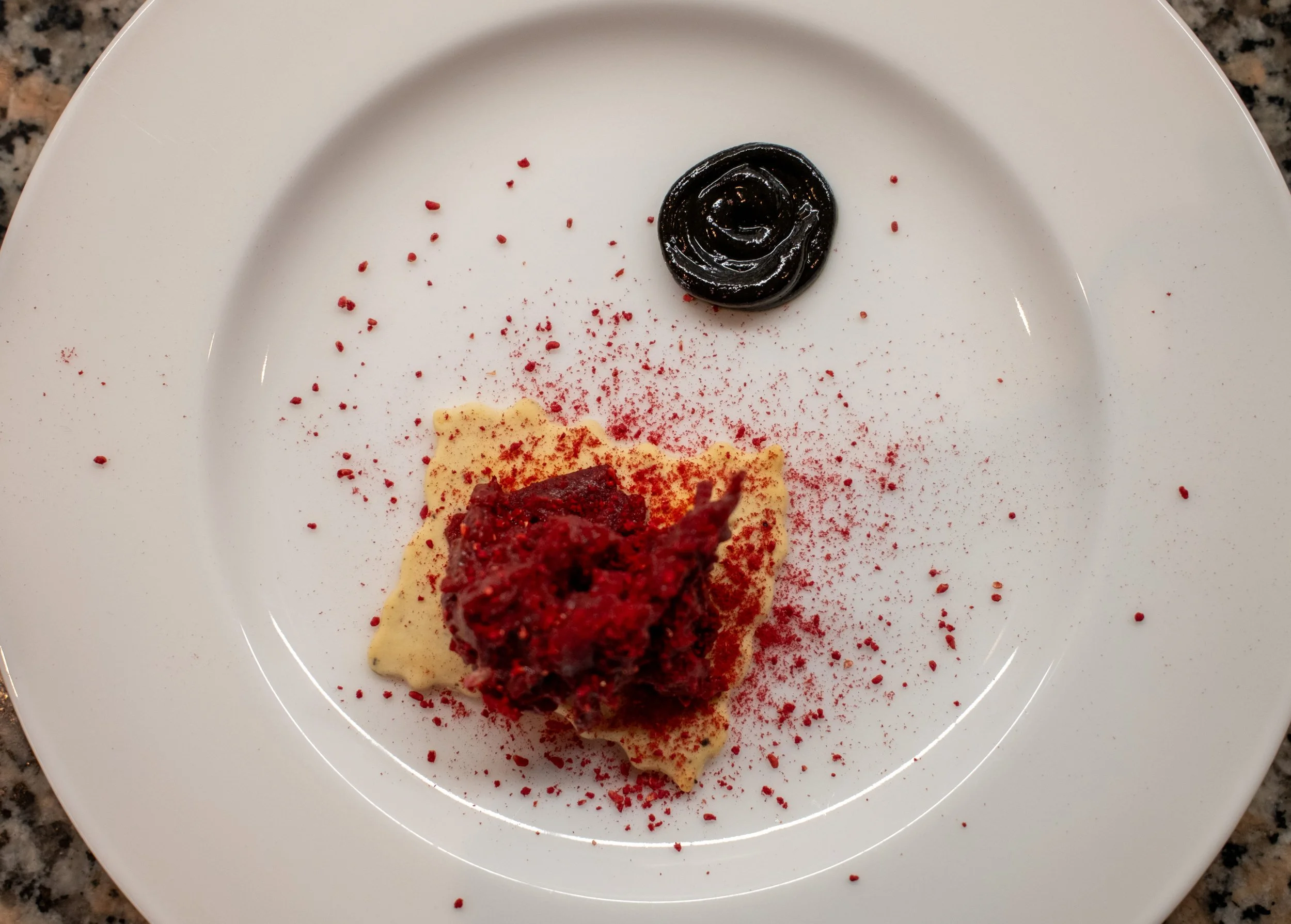
Pleasure Principles: Beetroot, berries, black seed, honey
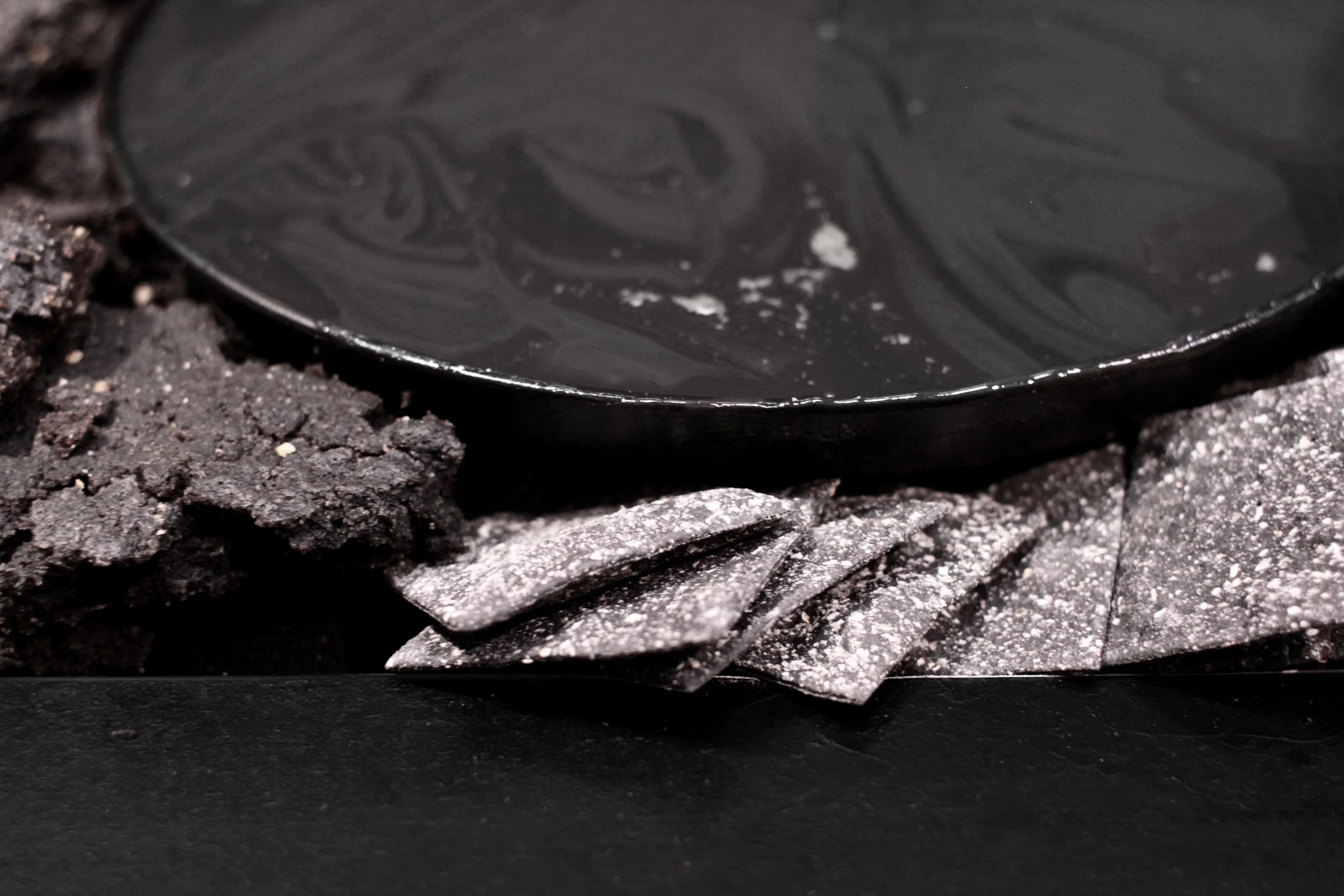
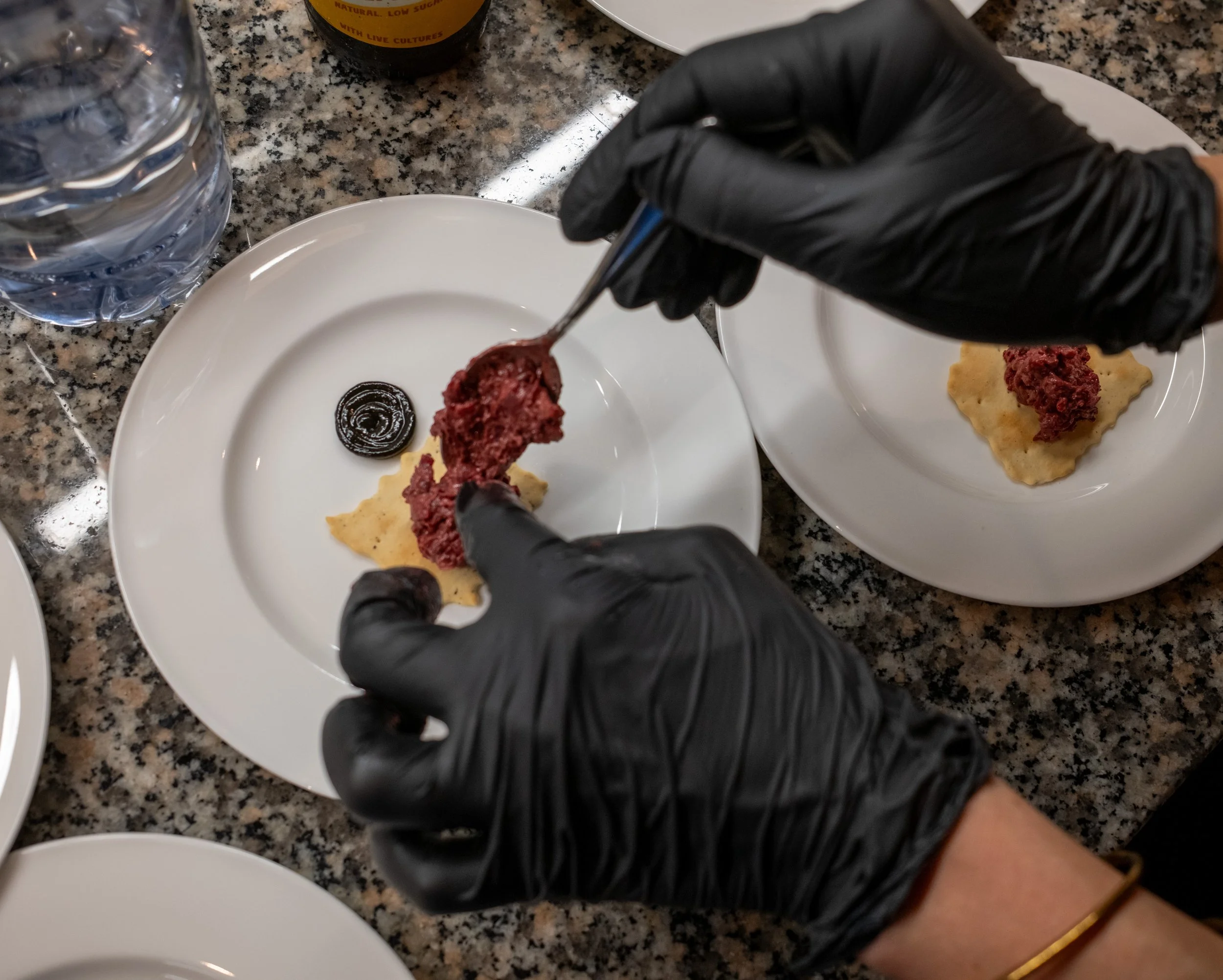
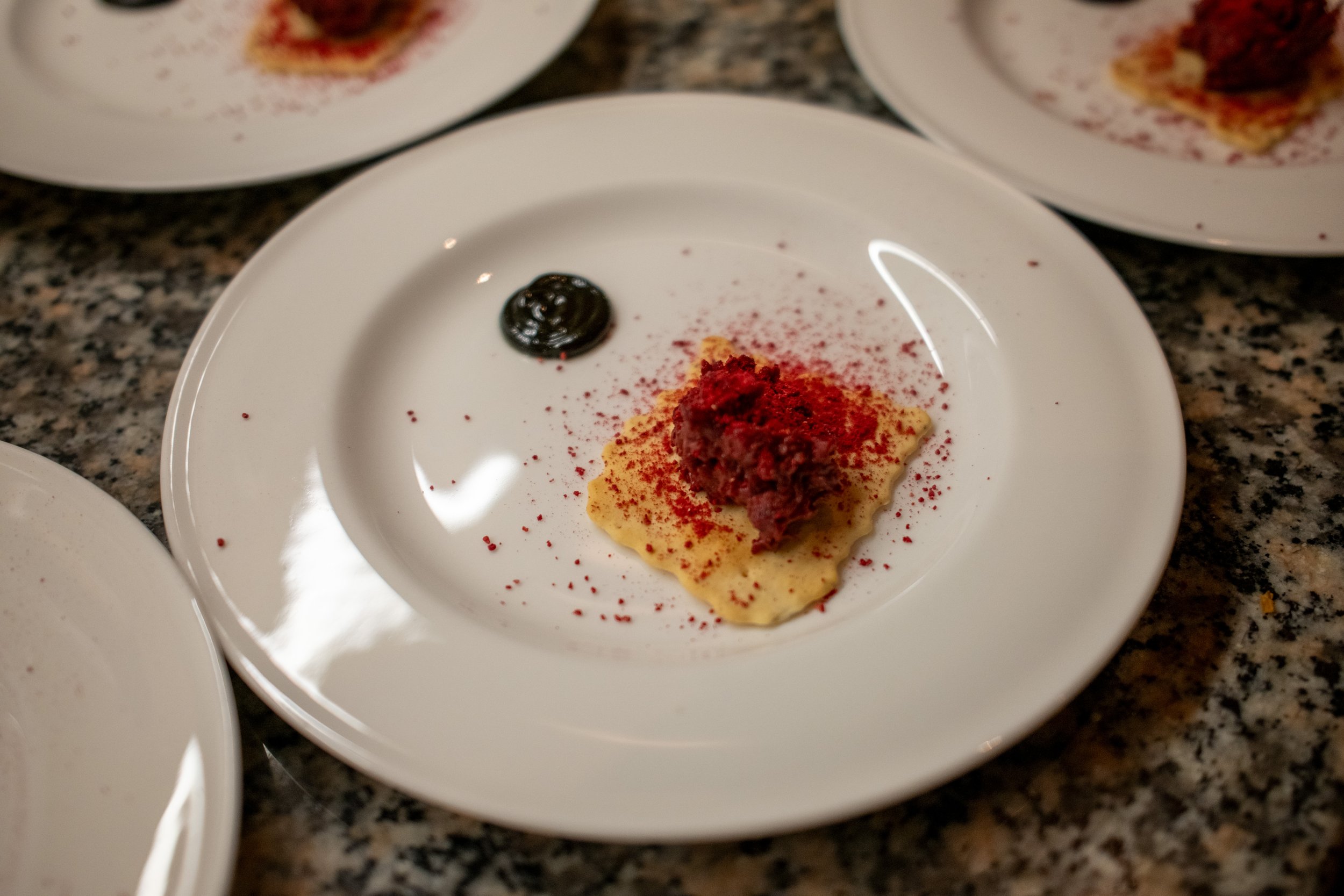
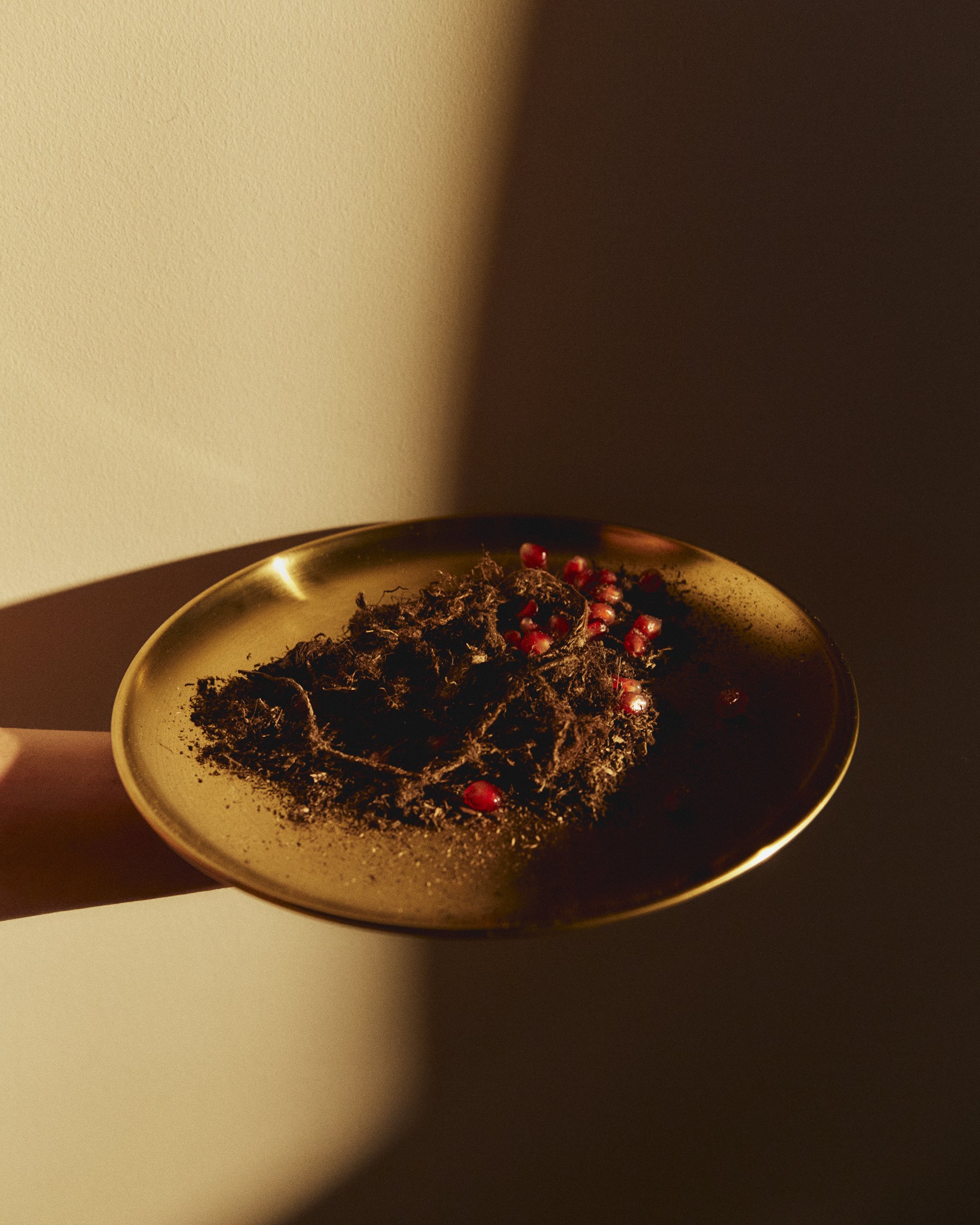
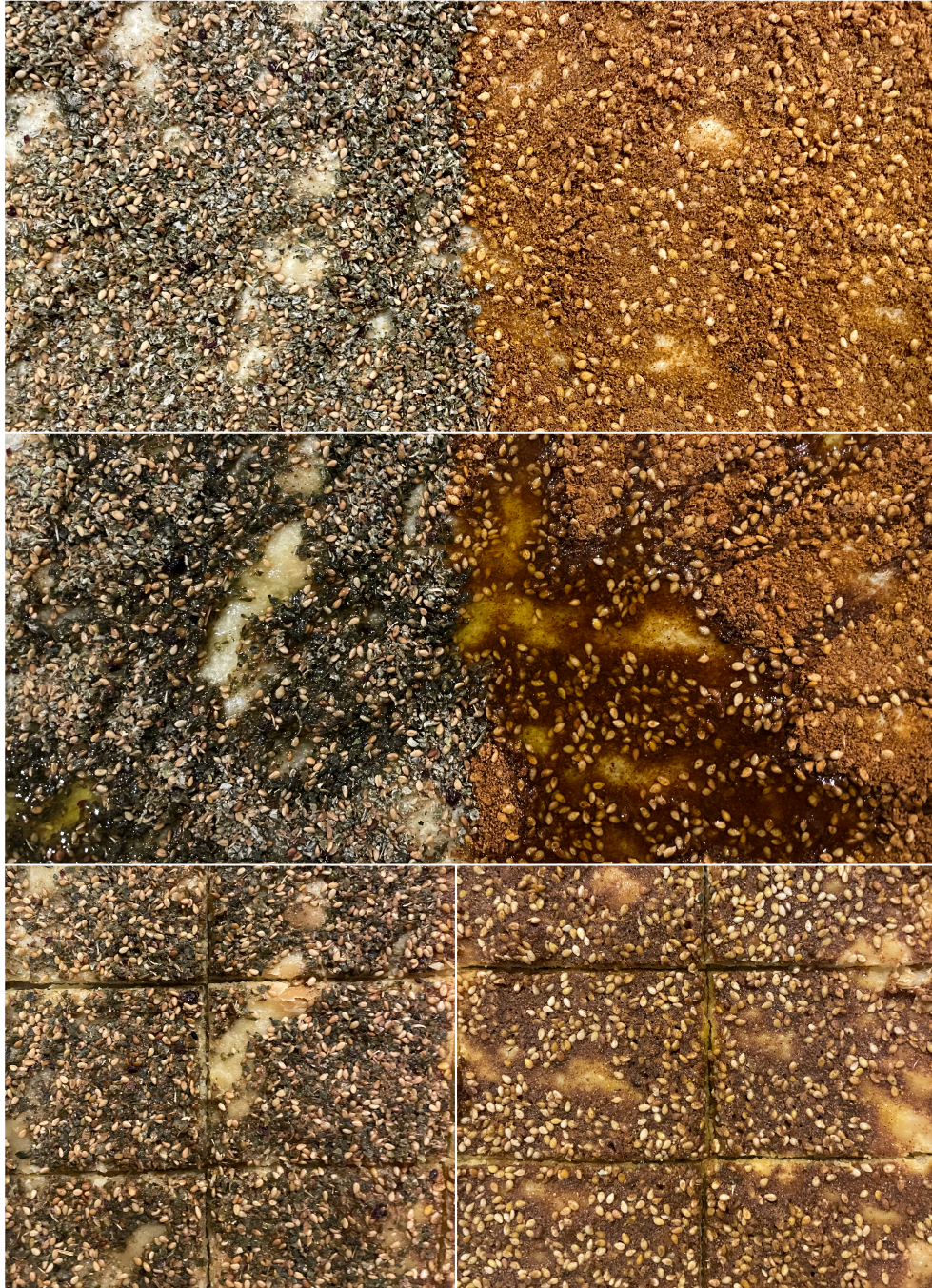
A bite in two parts, exploring the limits of pleasure made possible through texture, colour and flavour, suspended in the space within the duality of life and death. On the plate, a black, tarry disc of bitter black seed paste - known culturally as the blessing seed, a cure for everything but death - mixed with honey and salt. In contrast, a crispy black pepper cracker carrying a fresh, floral, sweet and tart beetroot and berry mixture - which in essence is life in the slow process of decay. Guests were asked to wash their hands, and use a finger to dip into the black paste, before moving on to the second half of the bite.
Starter:
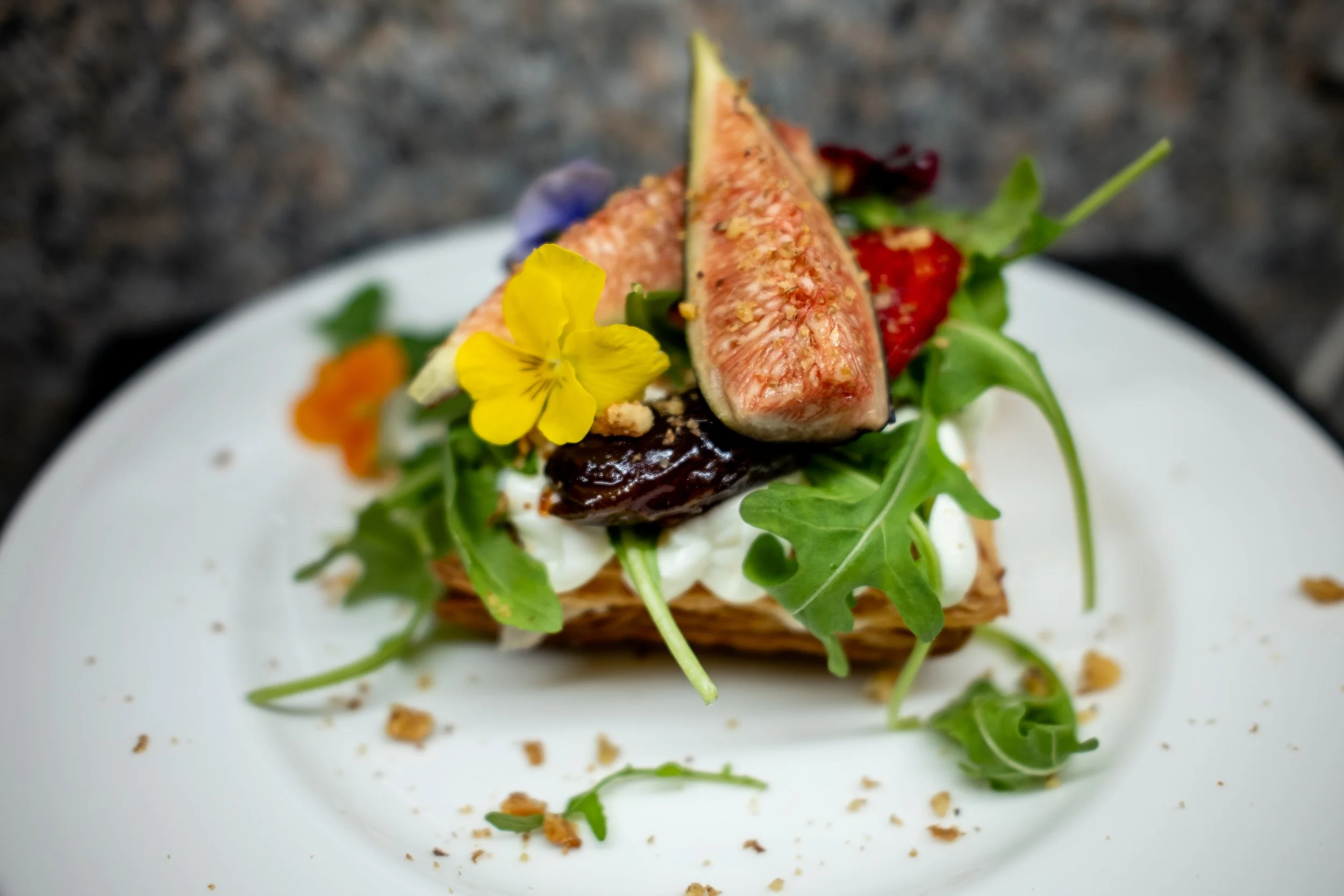
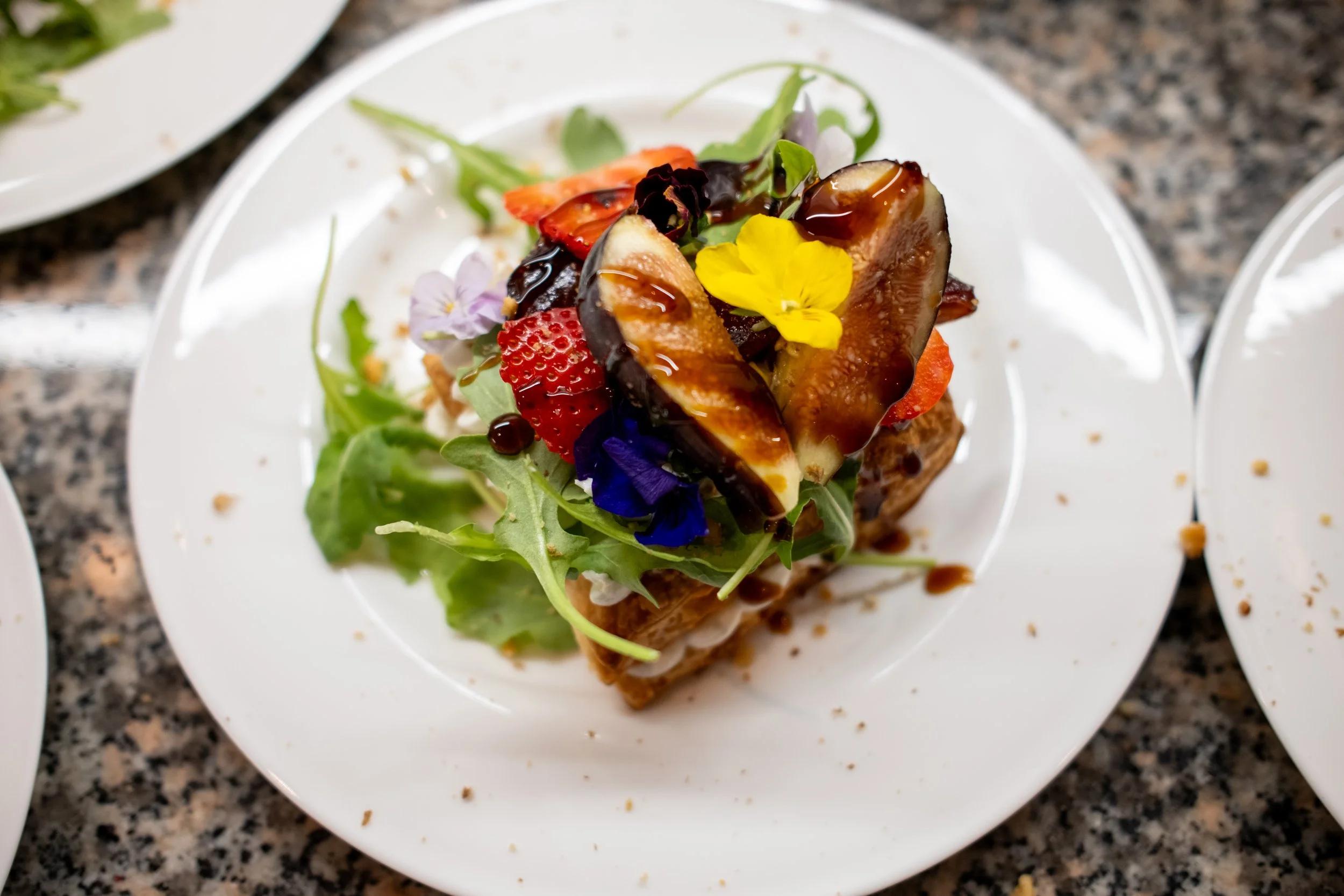
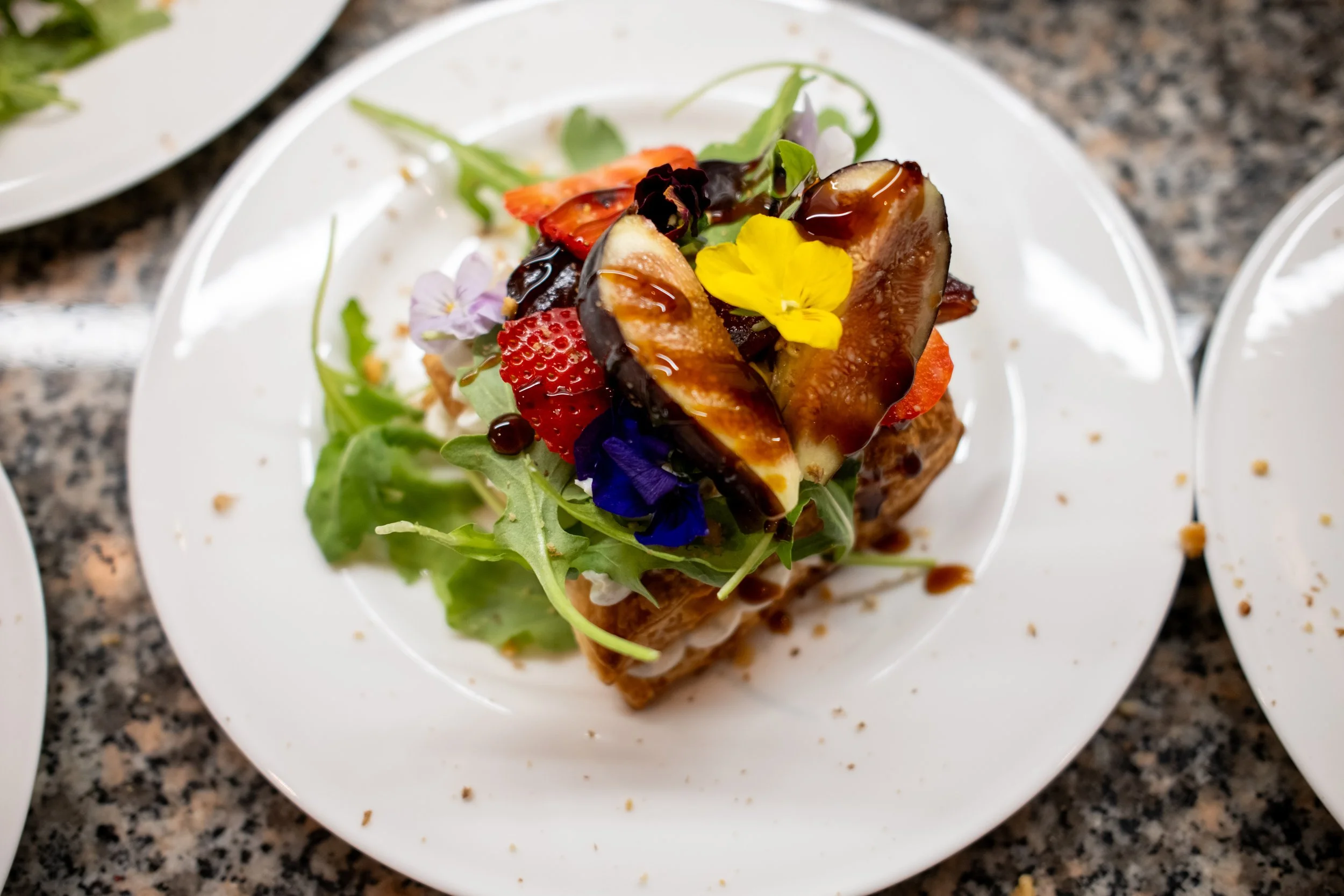
Life, Love and Desire: Goat cheese, figs, caramelised dates, balsamic glaze, toasted walnut dust
For the starter, I wanted to create a dish that embodied abundance, and blended in ingredients that - across the SWANA - were symbols of blessings and life, from fresh fruit to hints of aromatics that give each bite a subtle lift, without being pronounced. An indulgent savoury mille feuille, folding in layers of whipped goat and feta cheese with honey and a touch of floral essence. The crisp layers and velvety whipped filling were perfectly completed by the pan-fried caramelised salted dates, fresh figs, strawberries, toasted walnut dust and balsamic glaze, mixed with cherry molasses.
Main:
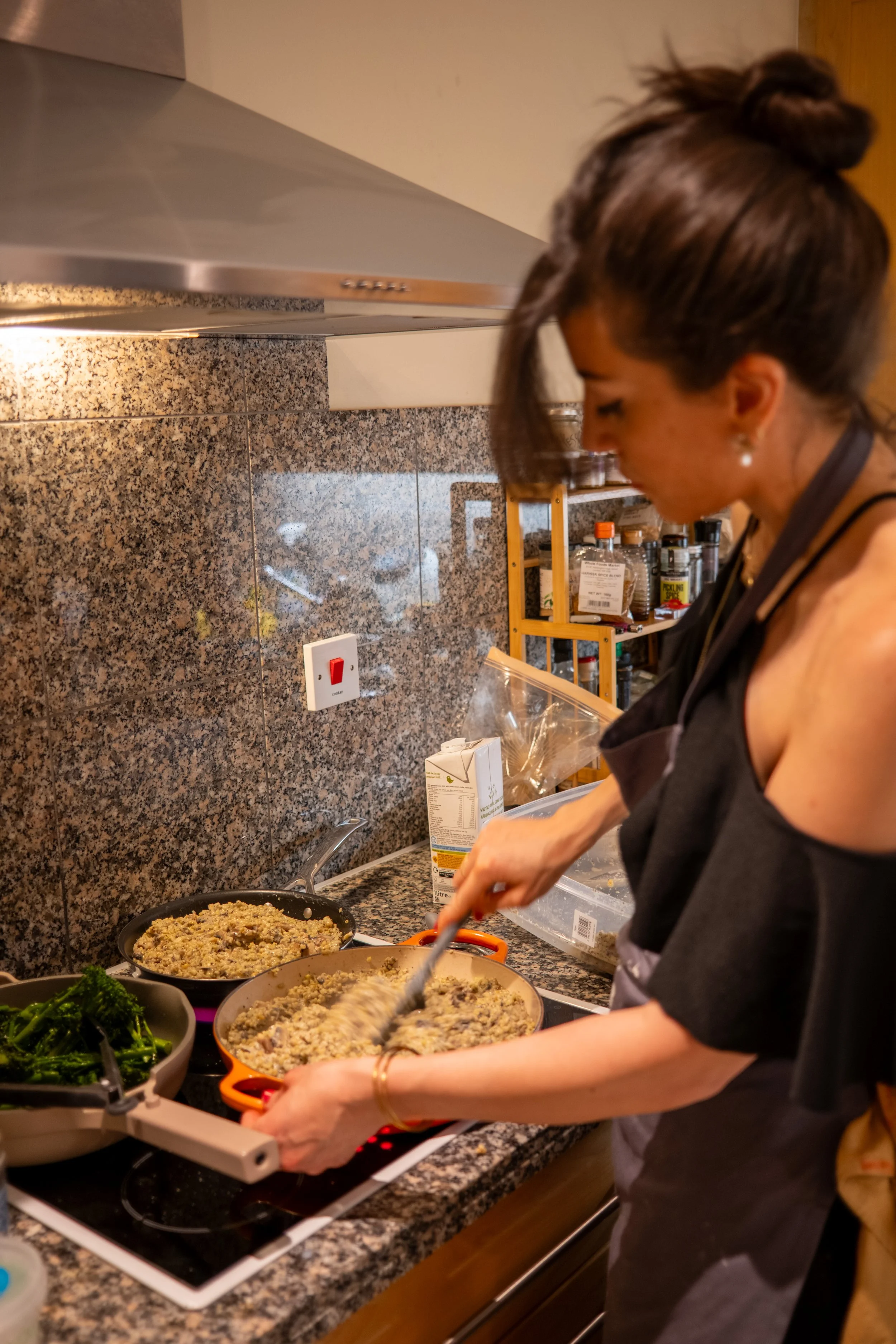
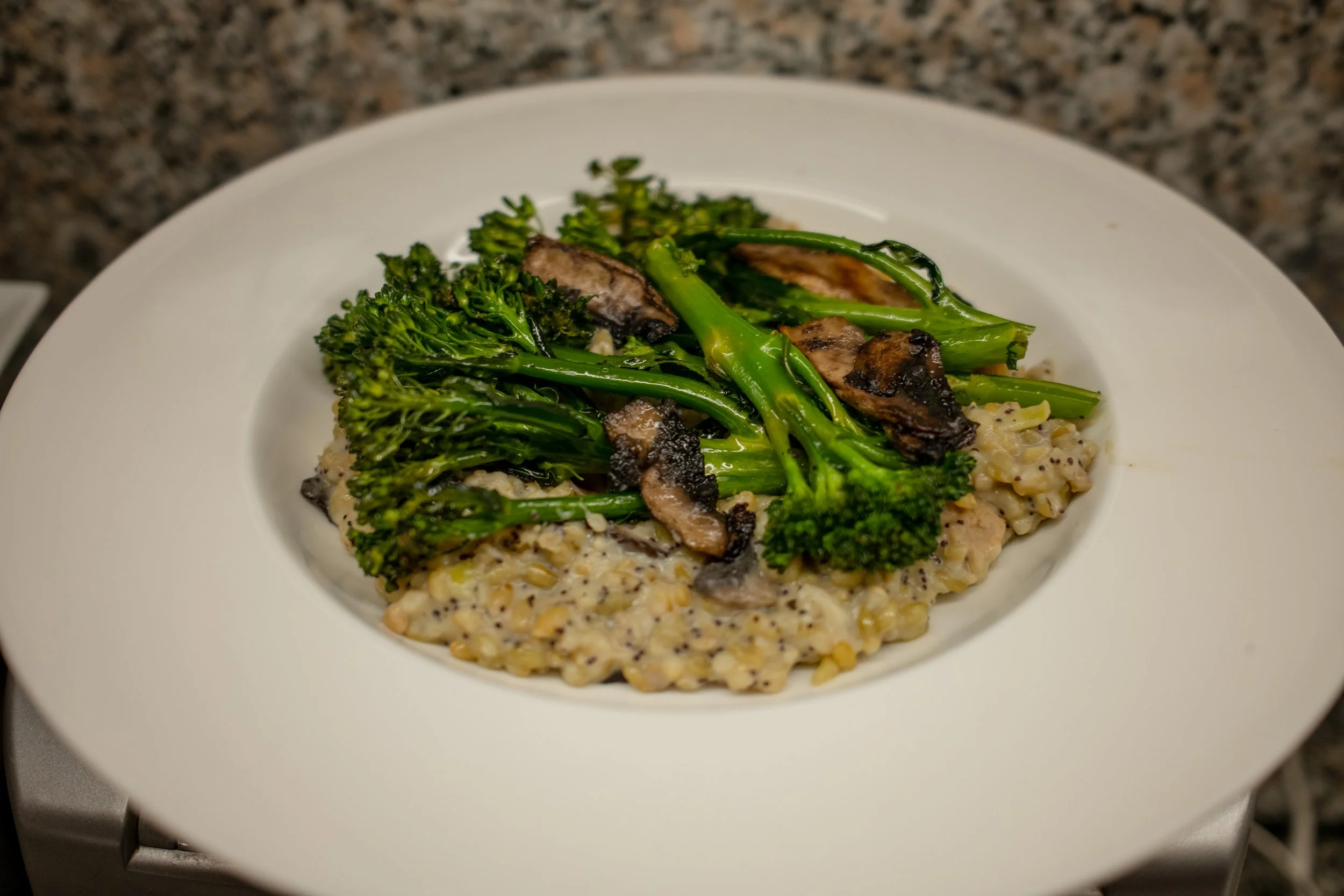
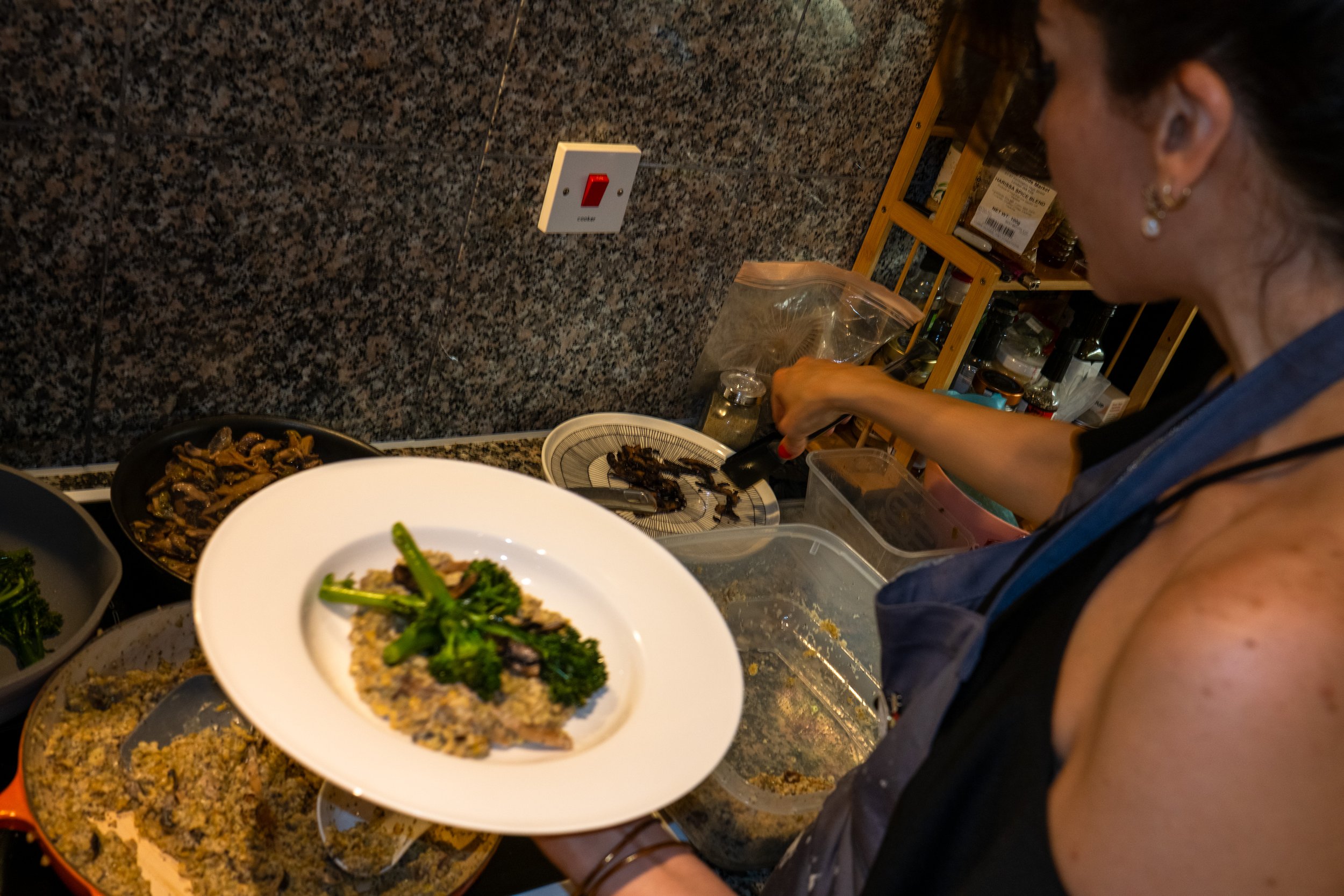
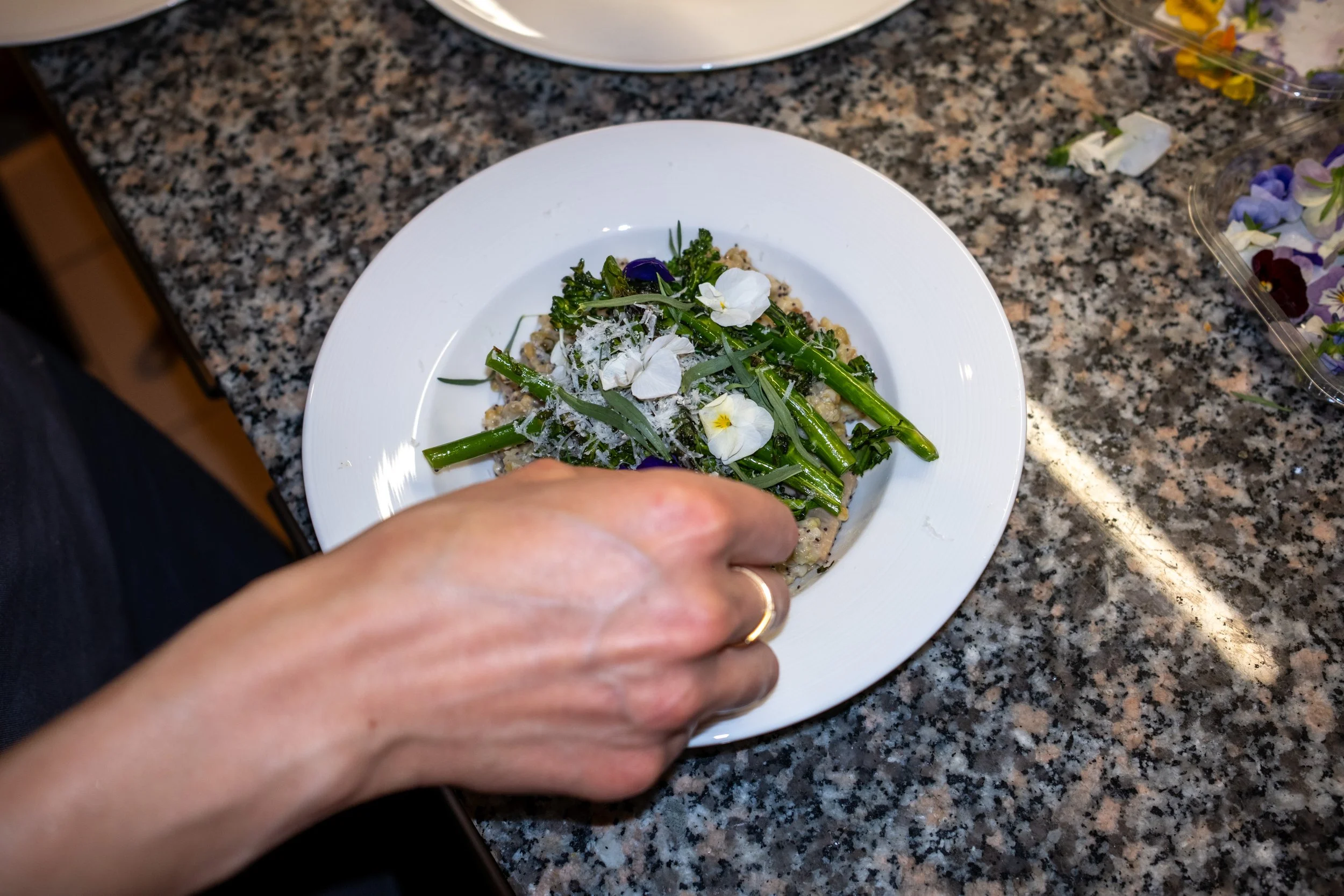
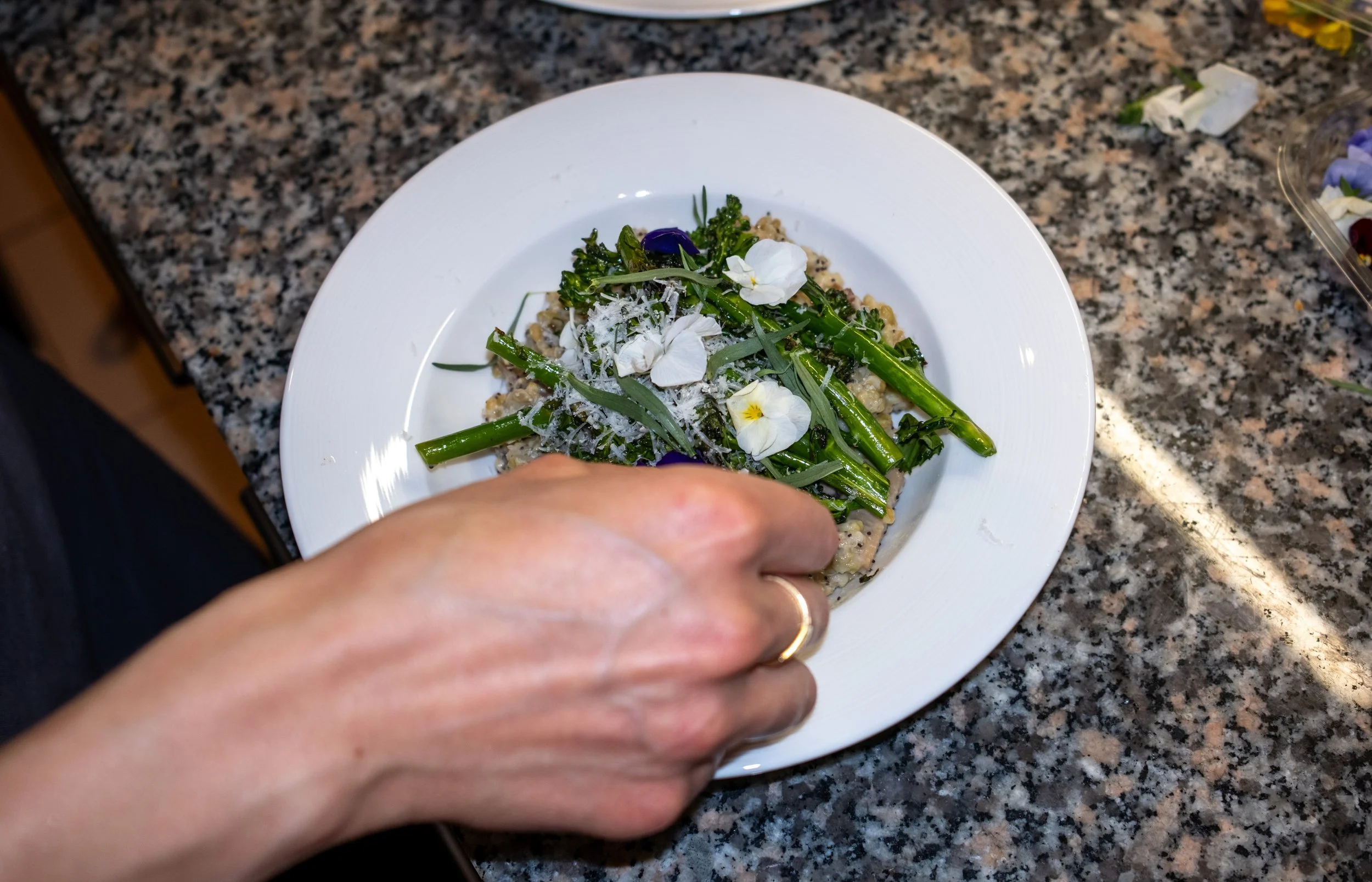
Indulgence and Intoxication: Truffled freekeh risotto, wild mushroom, poppy seeds, pecorino, tenderstem broccoli with black sesame hummus
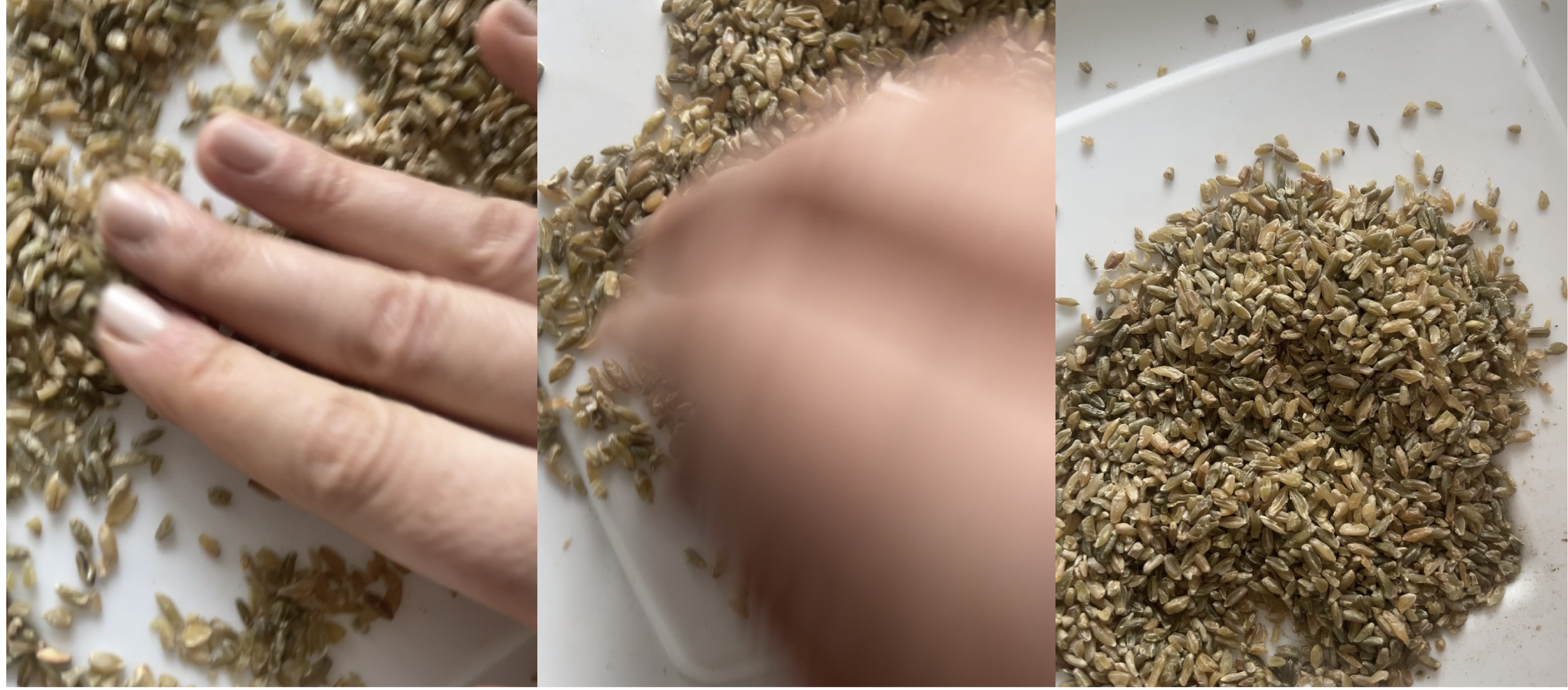
A bitter earthy dish of smoked cracked green wheat, almond cream, and pecorino, with poppy seeds bringing in the narrative of intoxication to an already indulgent dish. Topped with crispy wild mushroom and charred terderstem broccoli, the dish presents in layers, accentuated by a light finishing of truffle oil, with fresh tarragon as the flavour that pulls it up from soil to sun.
Dessert:
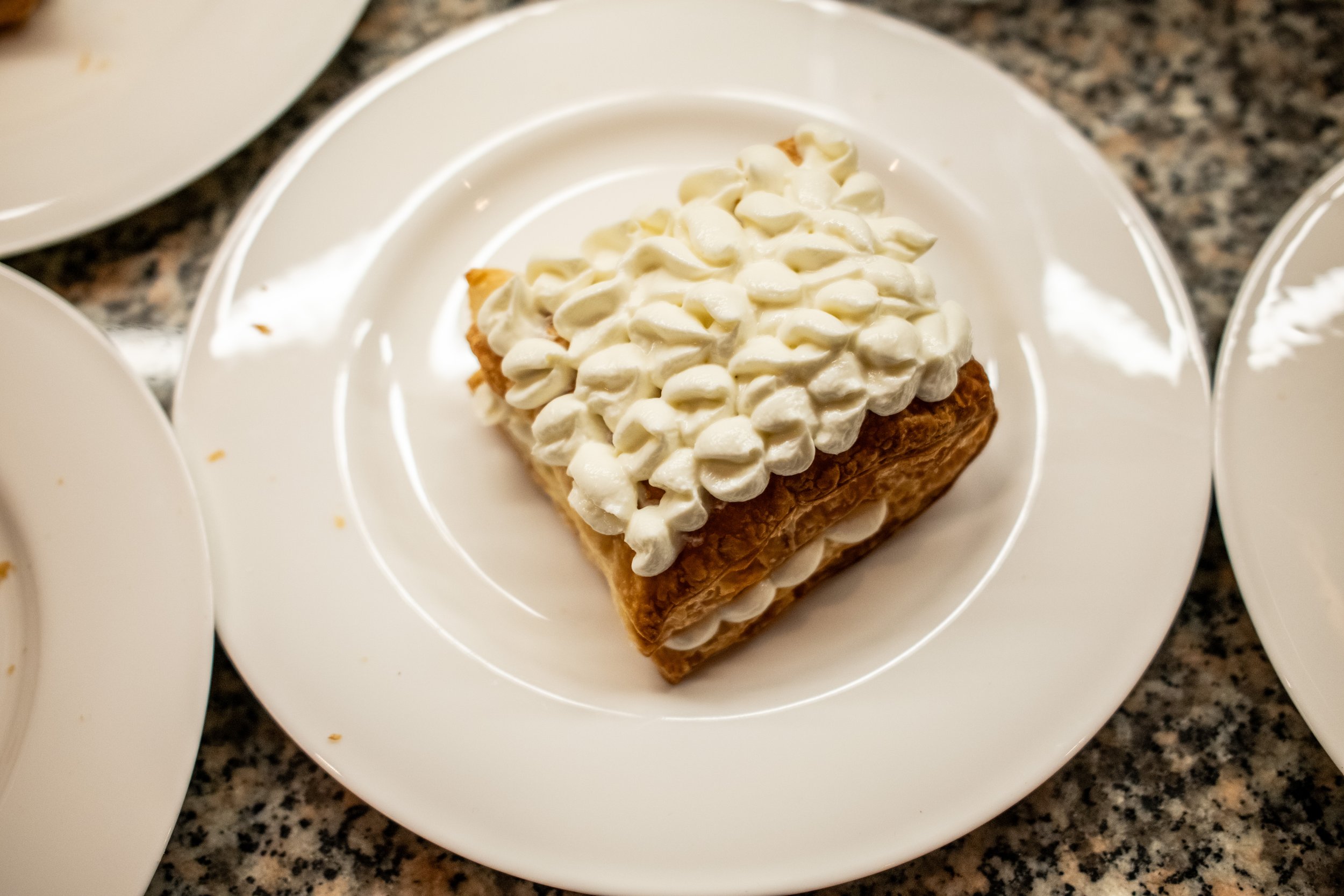
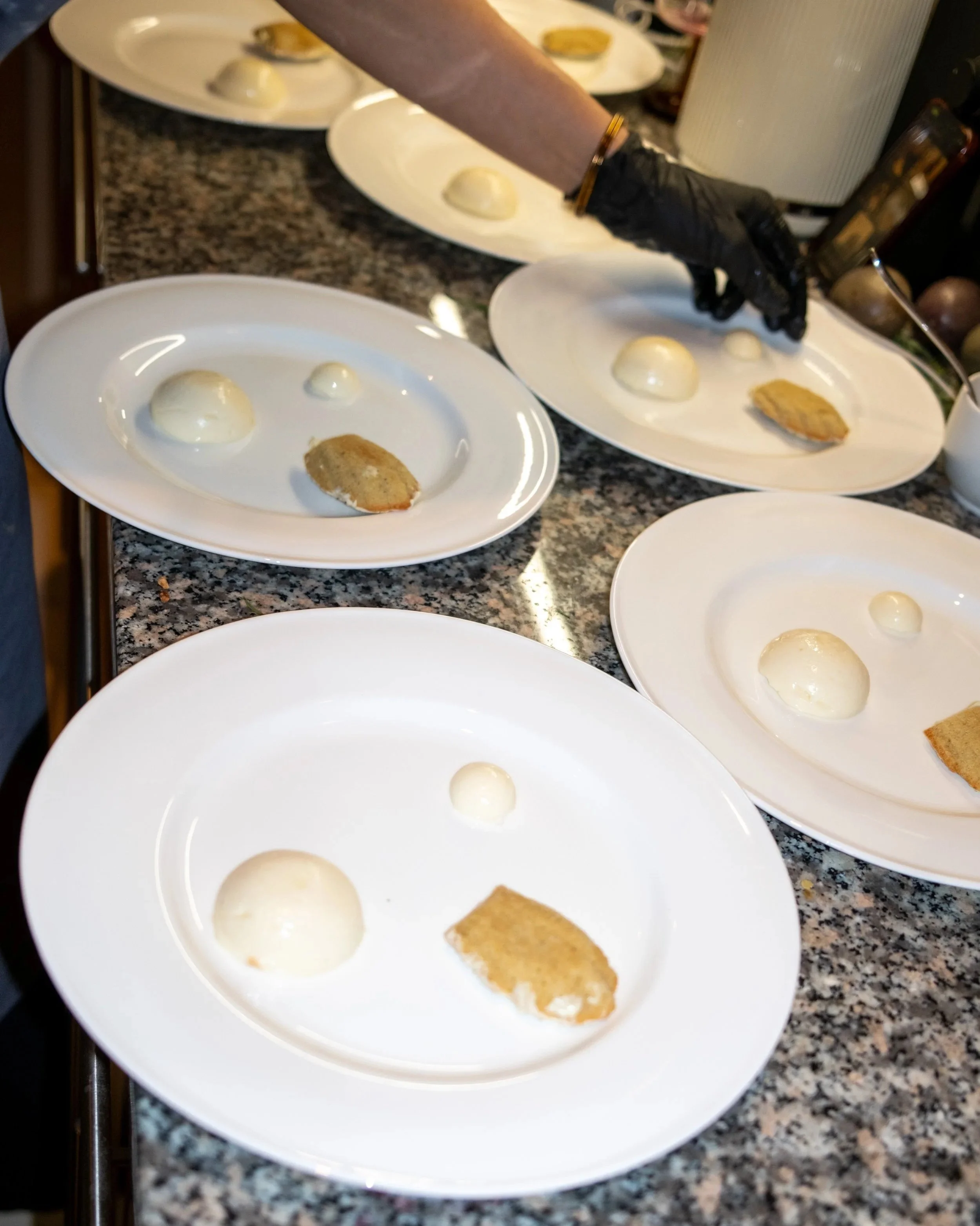
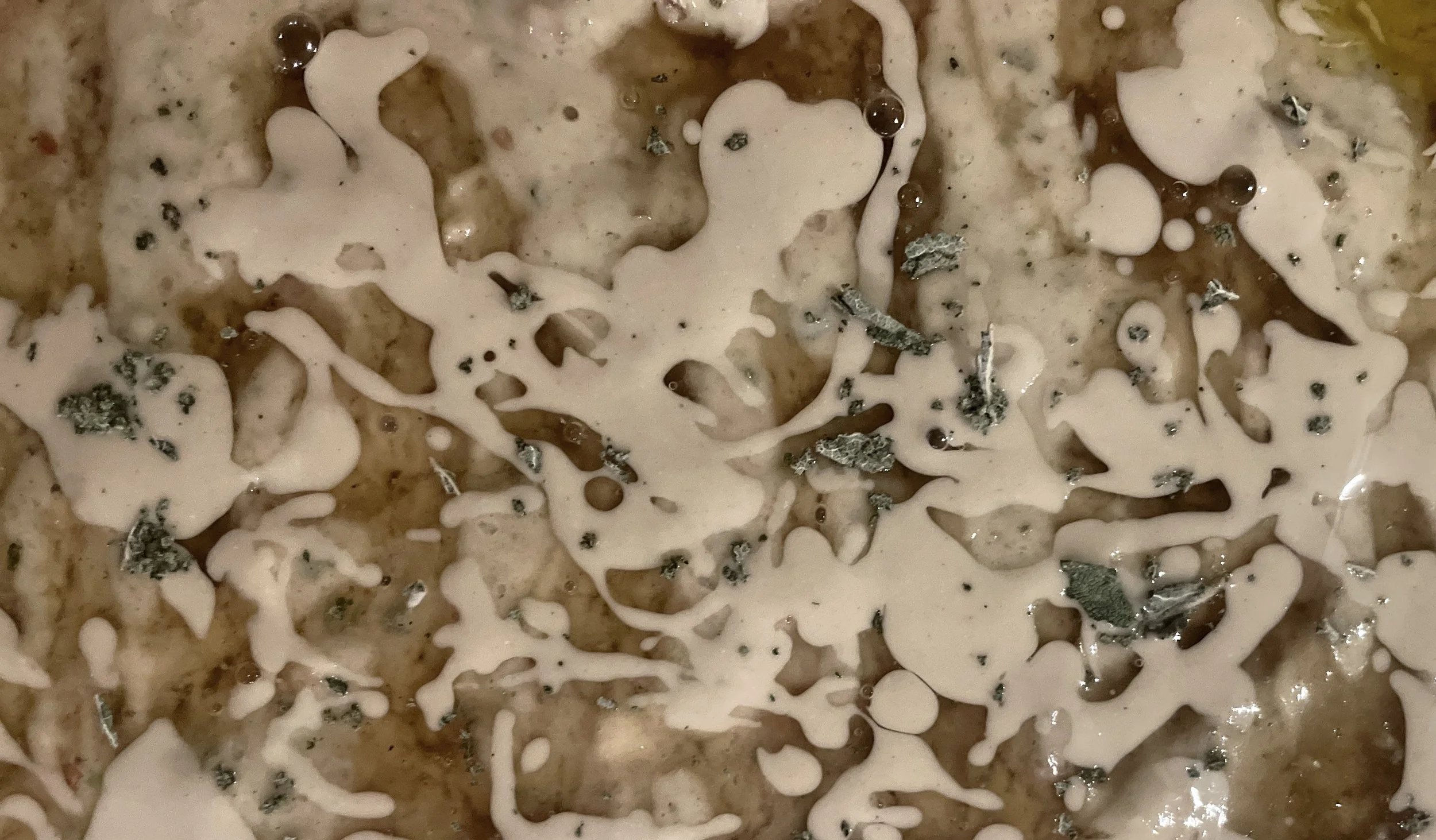
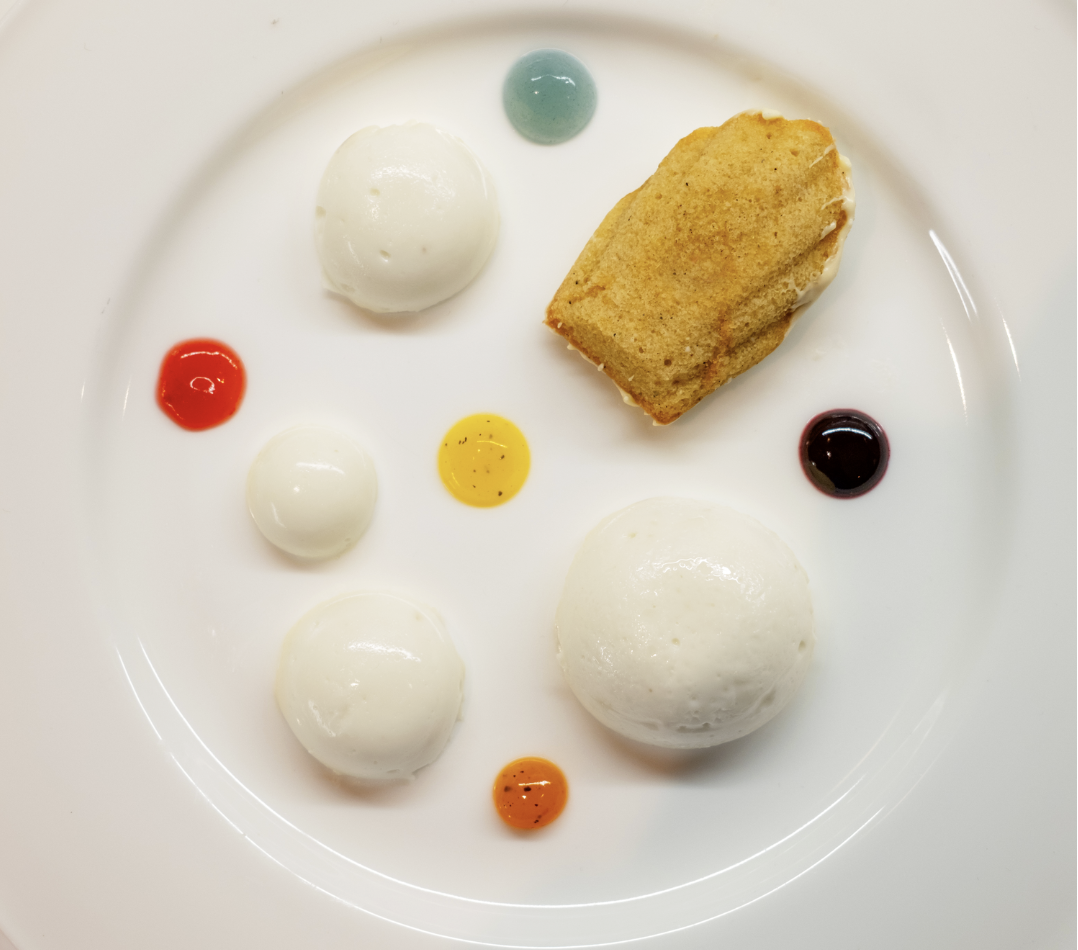
Death, Renewal and Rebirth: Floral/fruity muballabieh
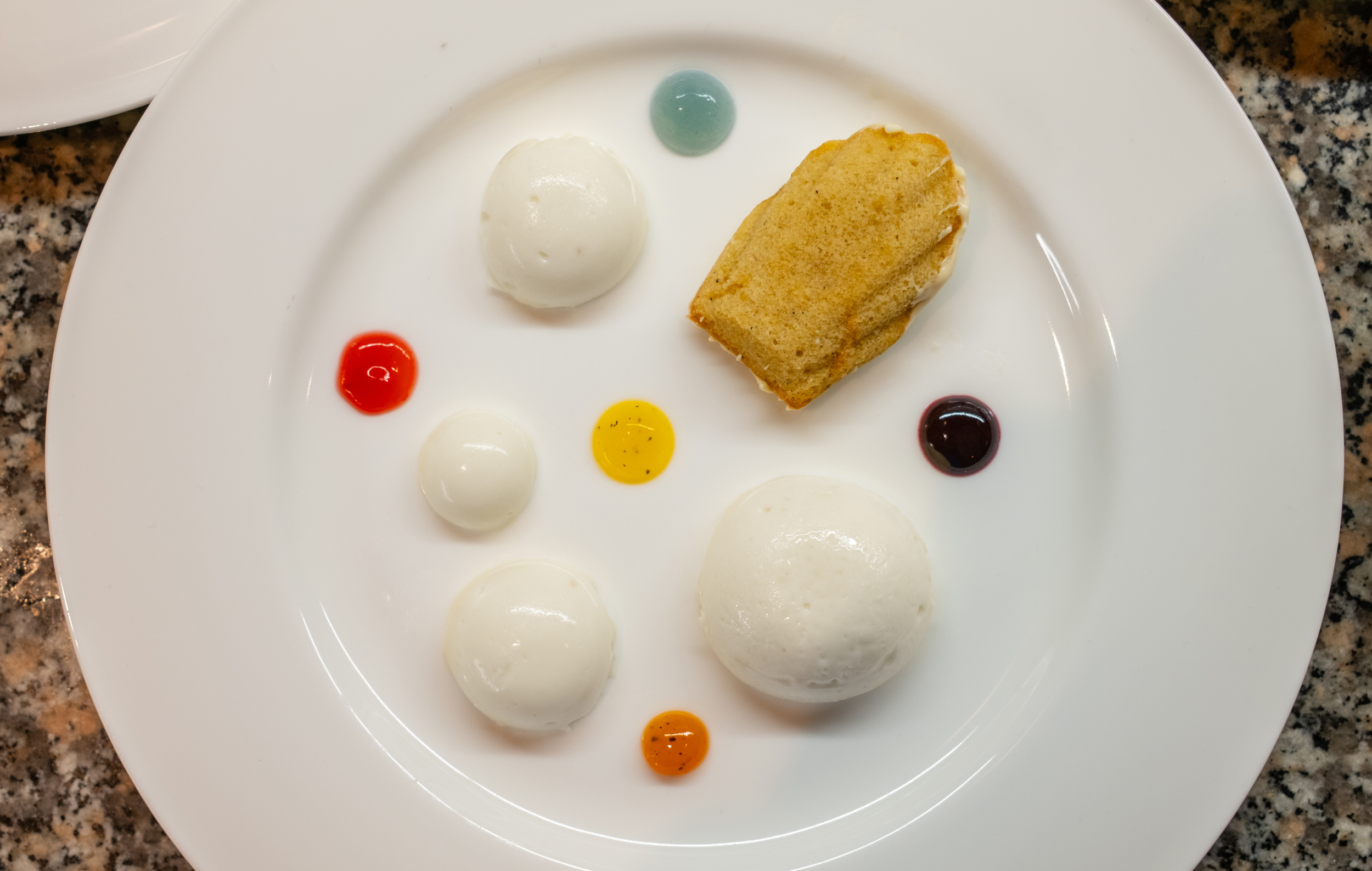
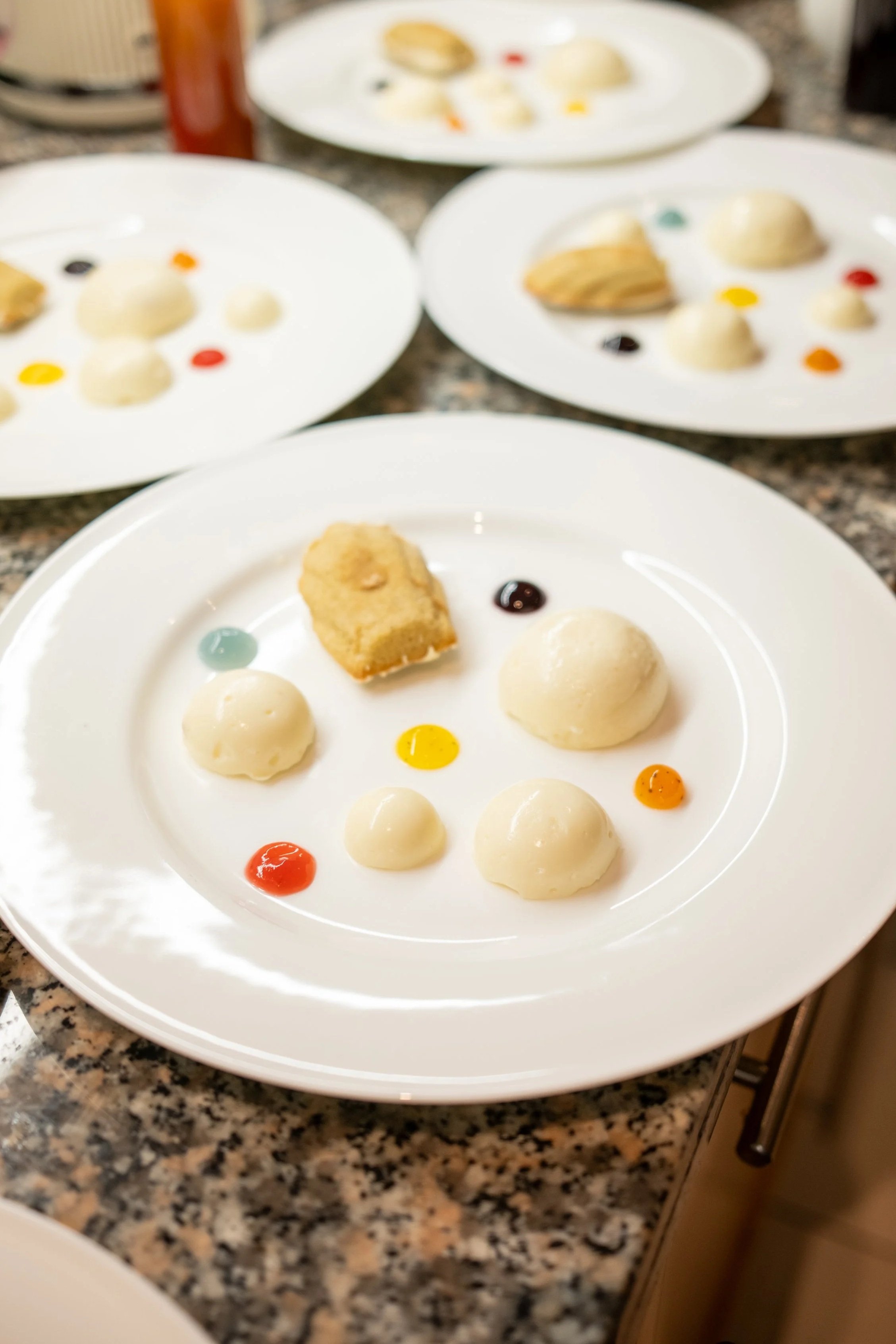
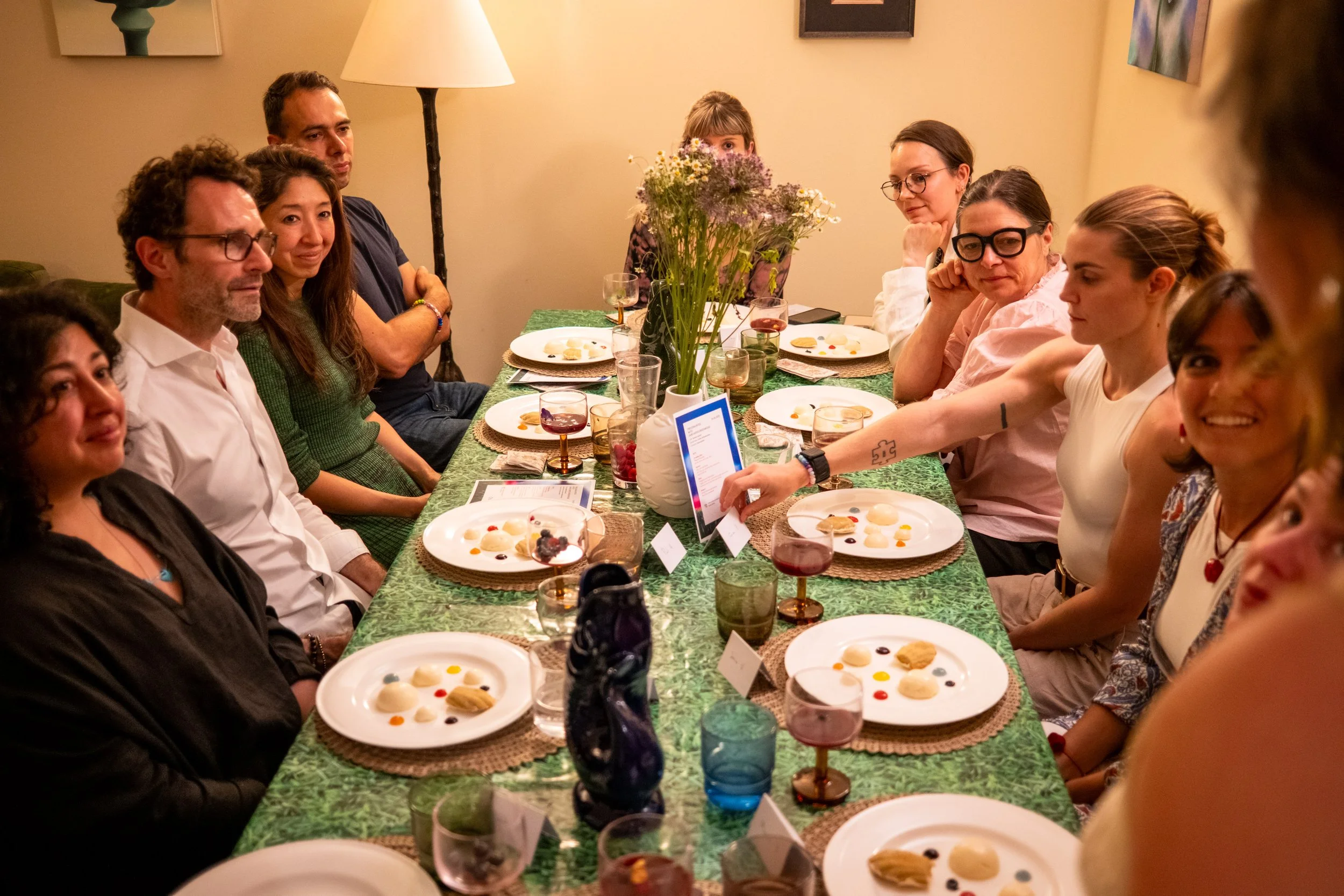
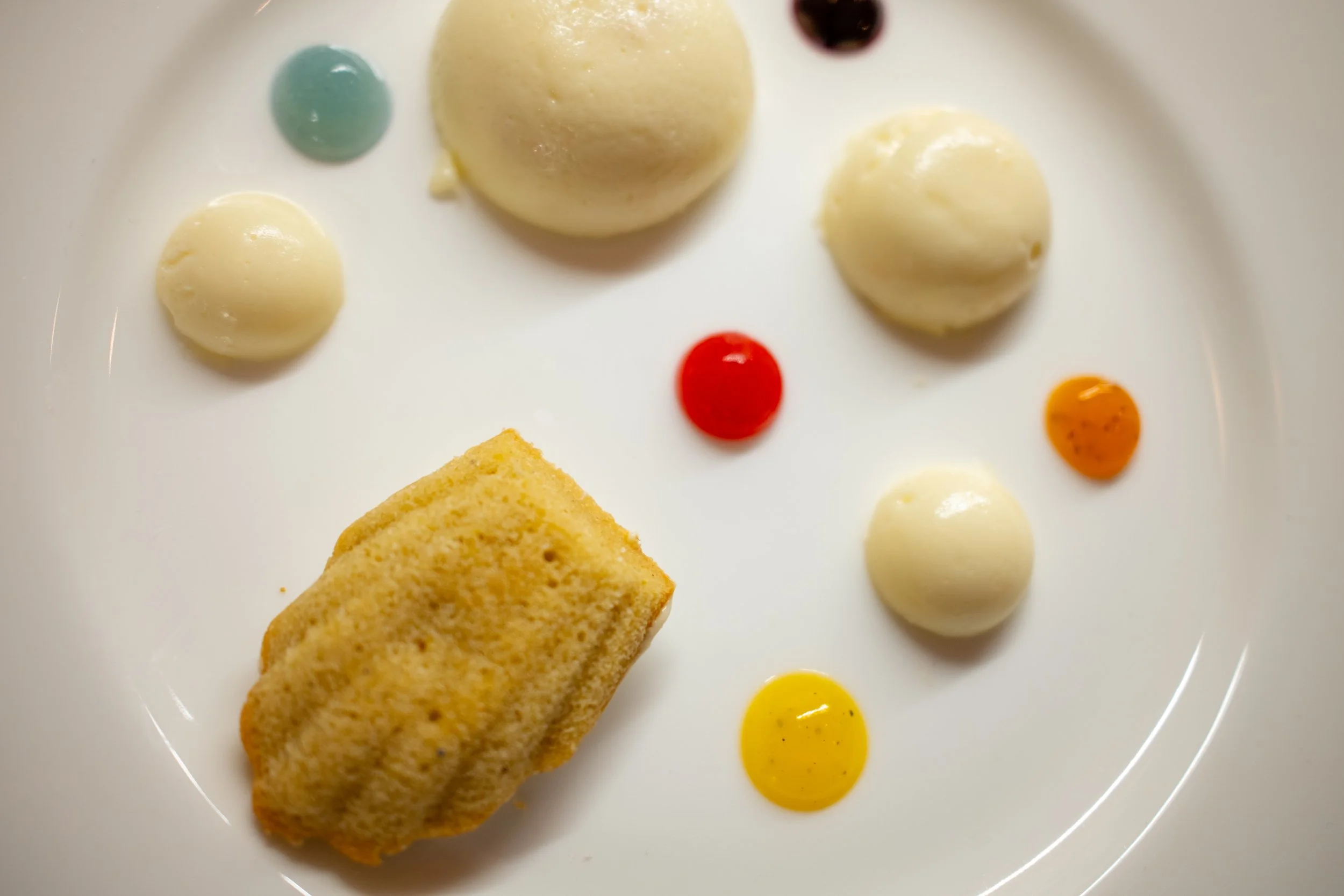
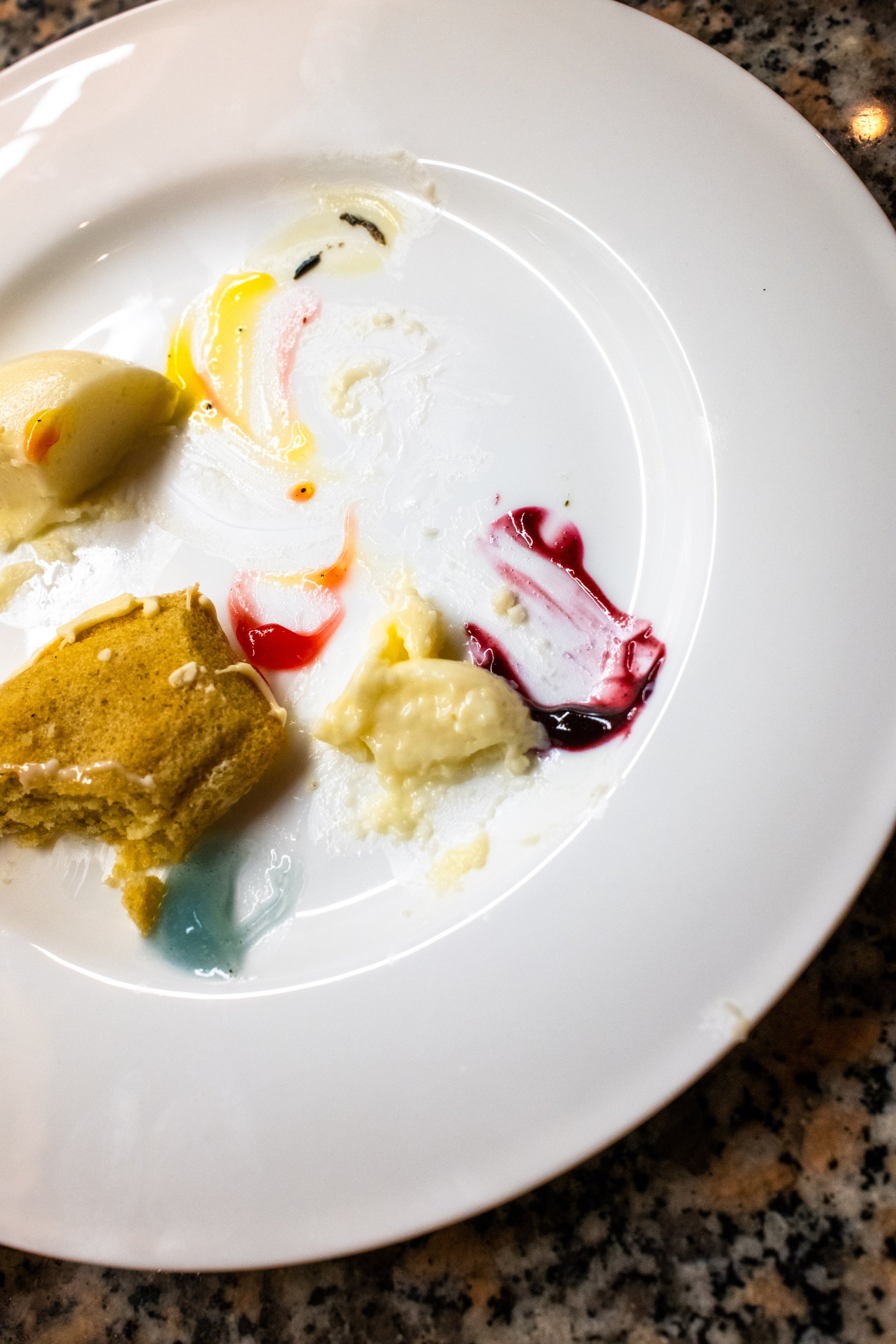
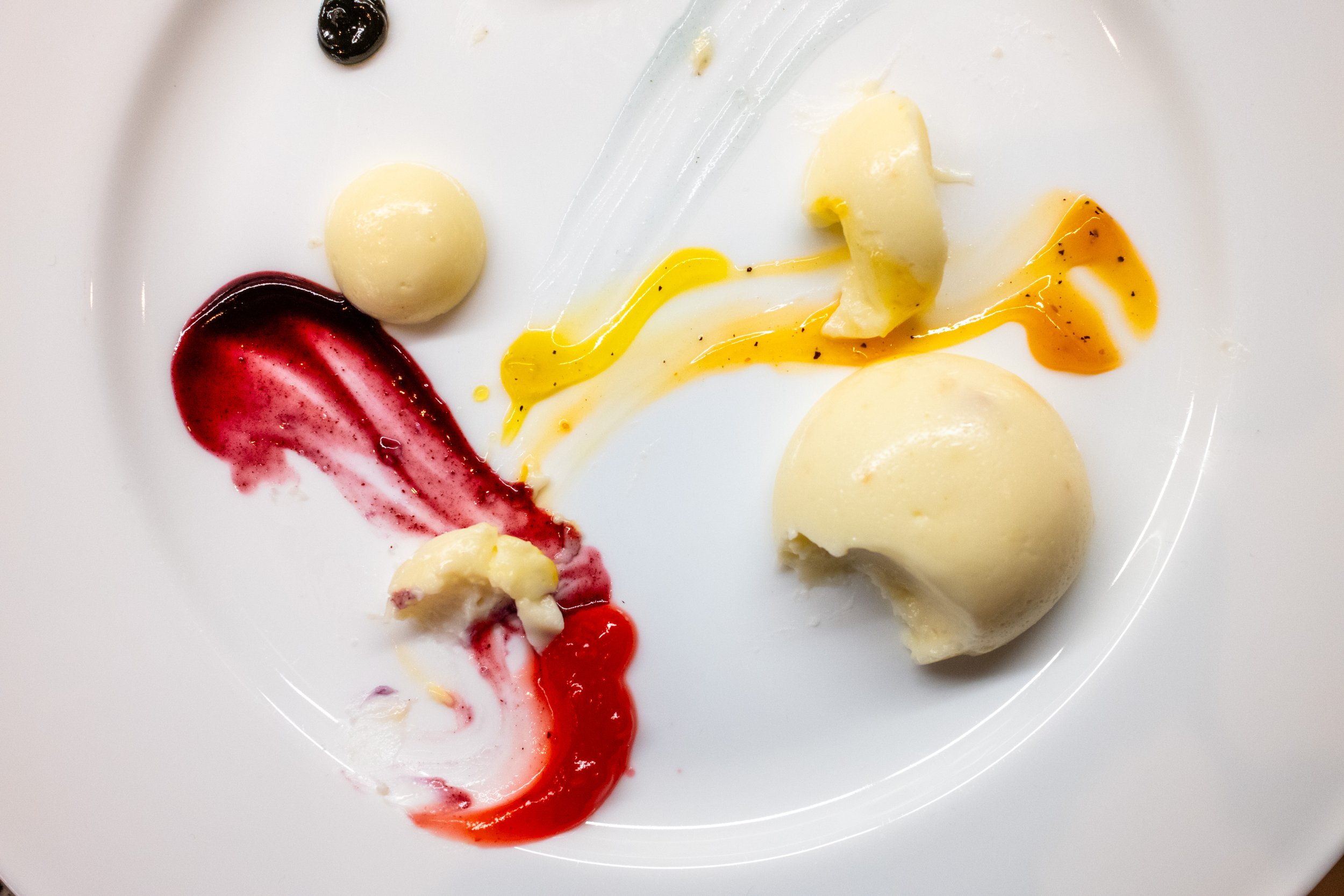
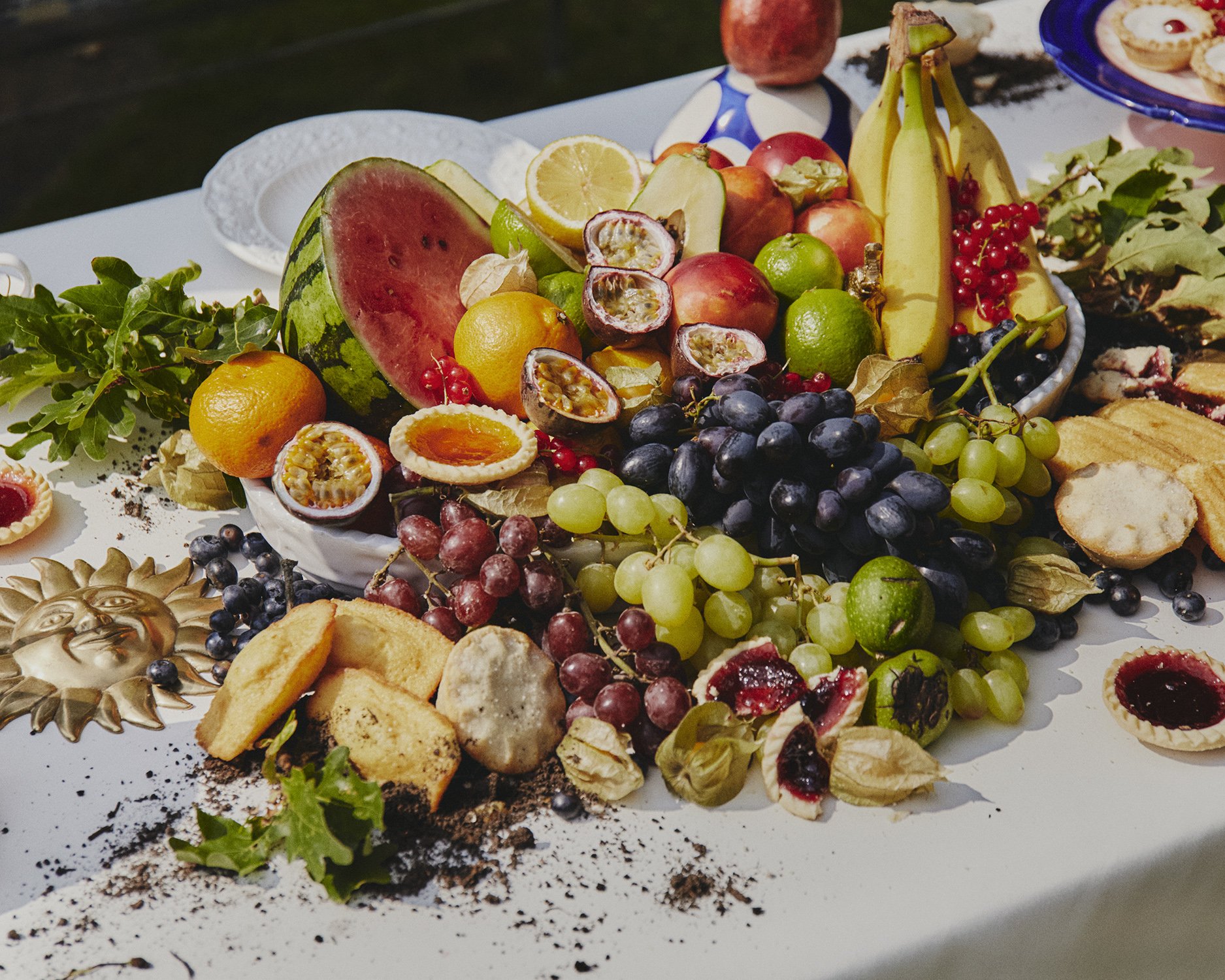
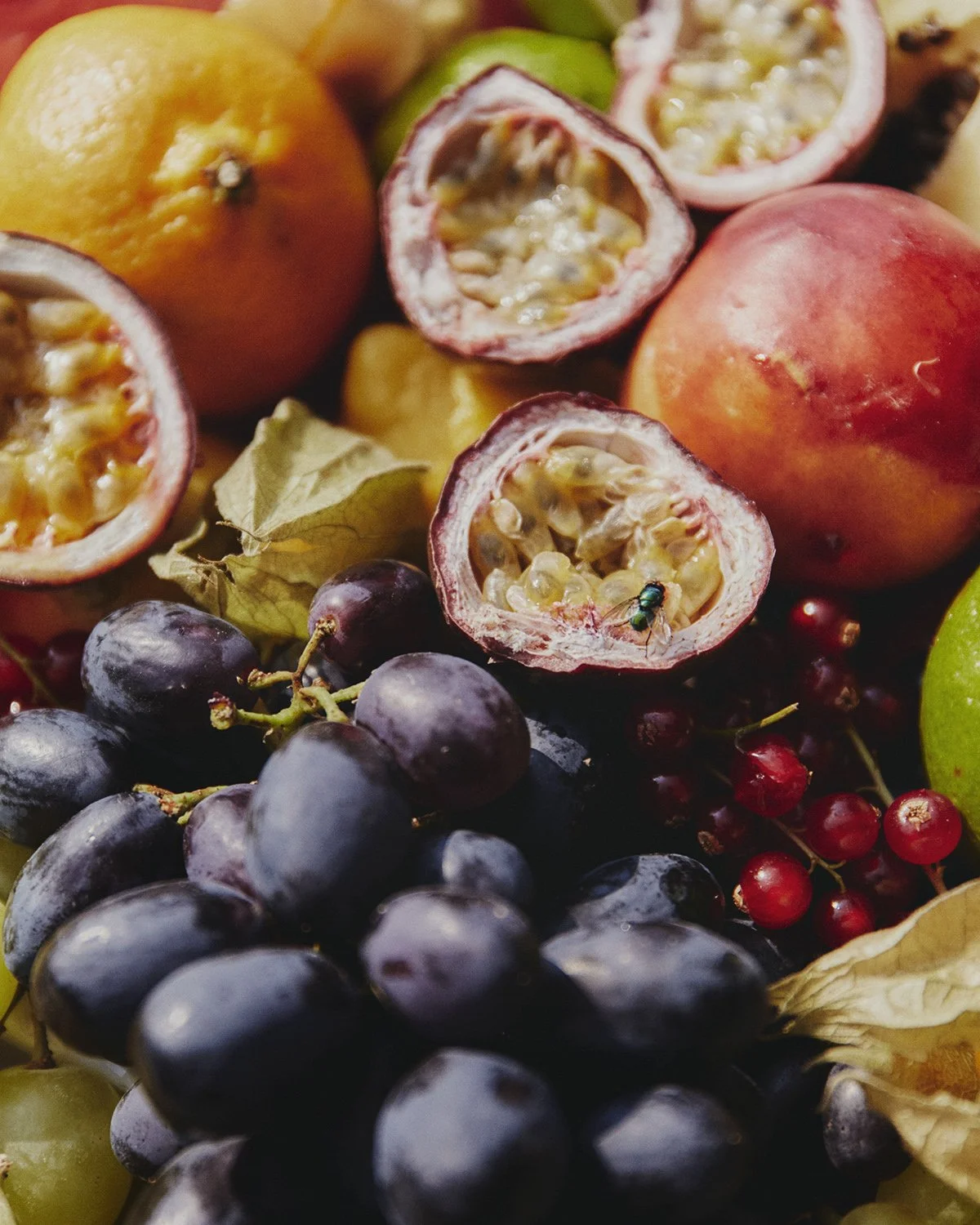
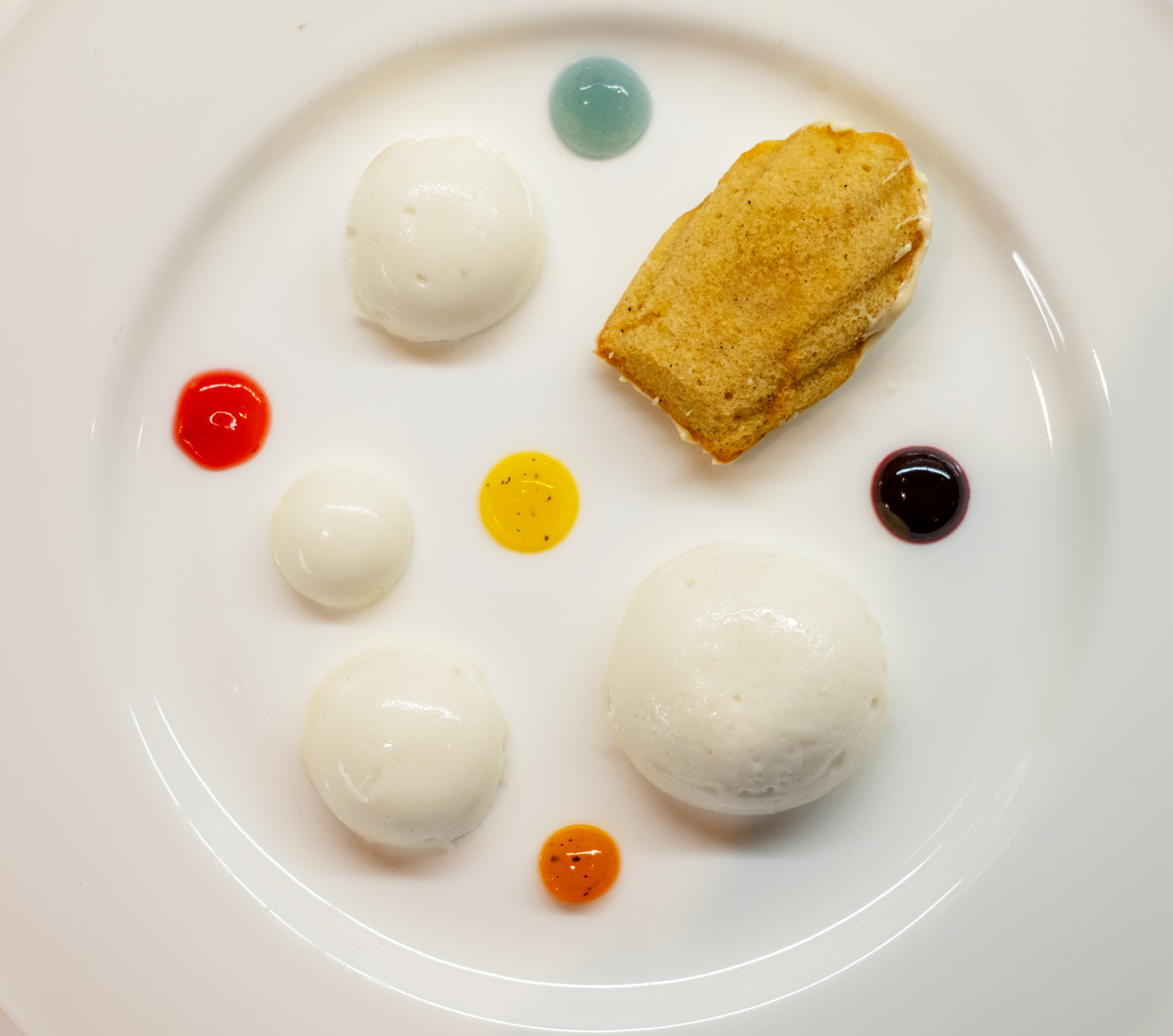
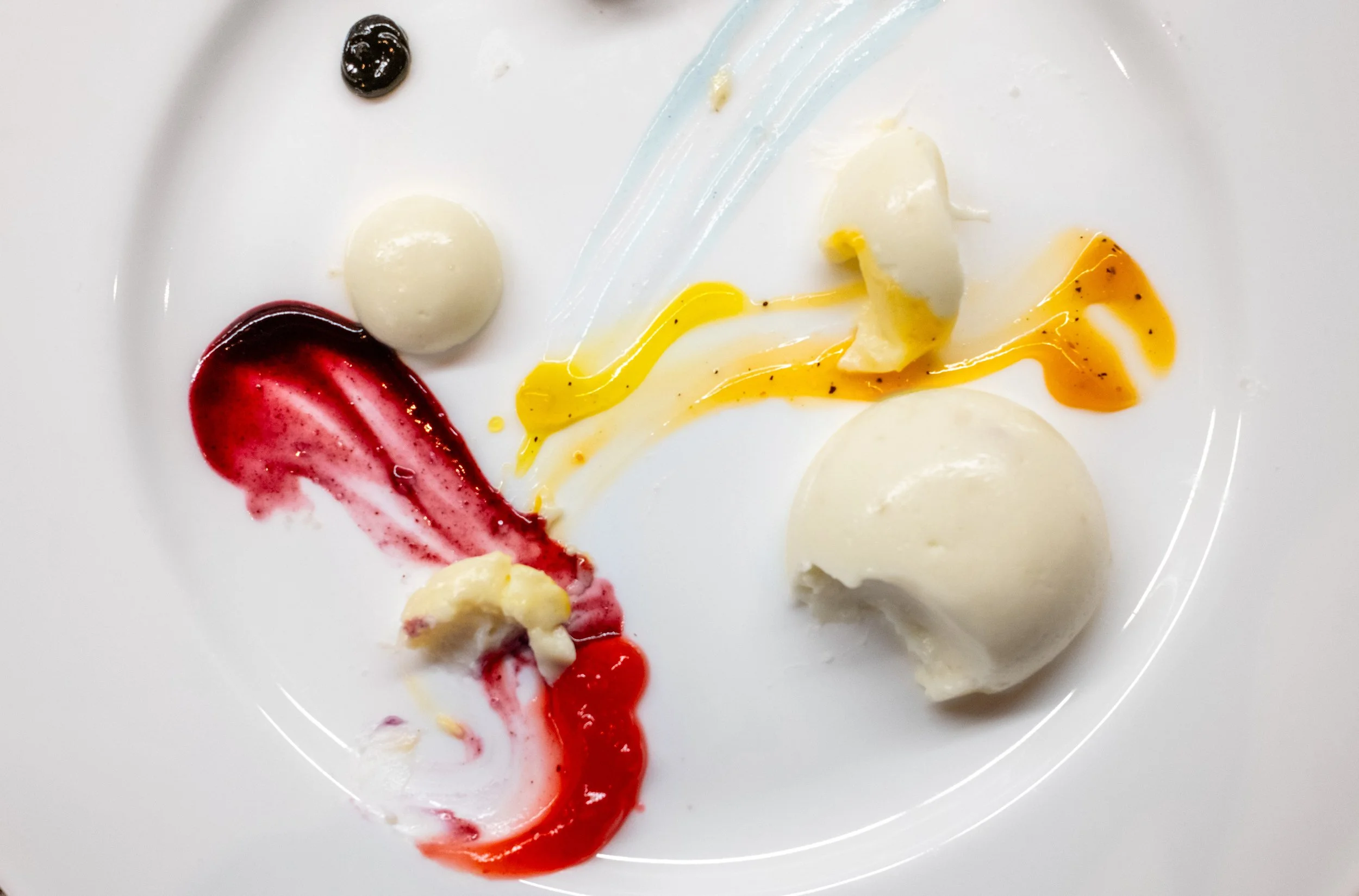
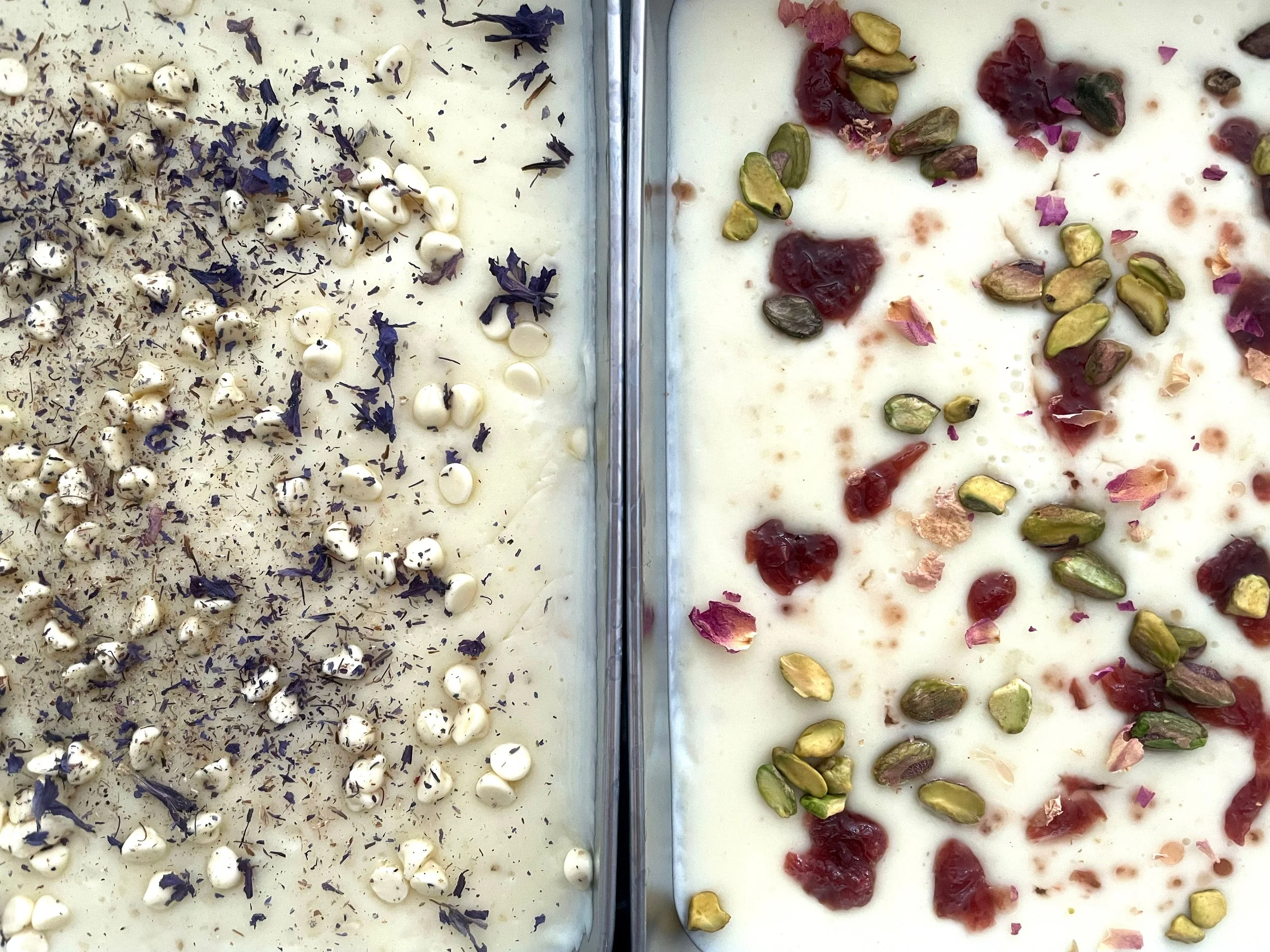
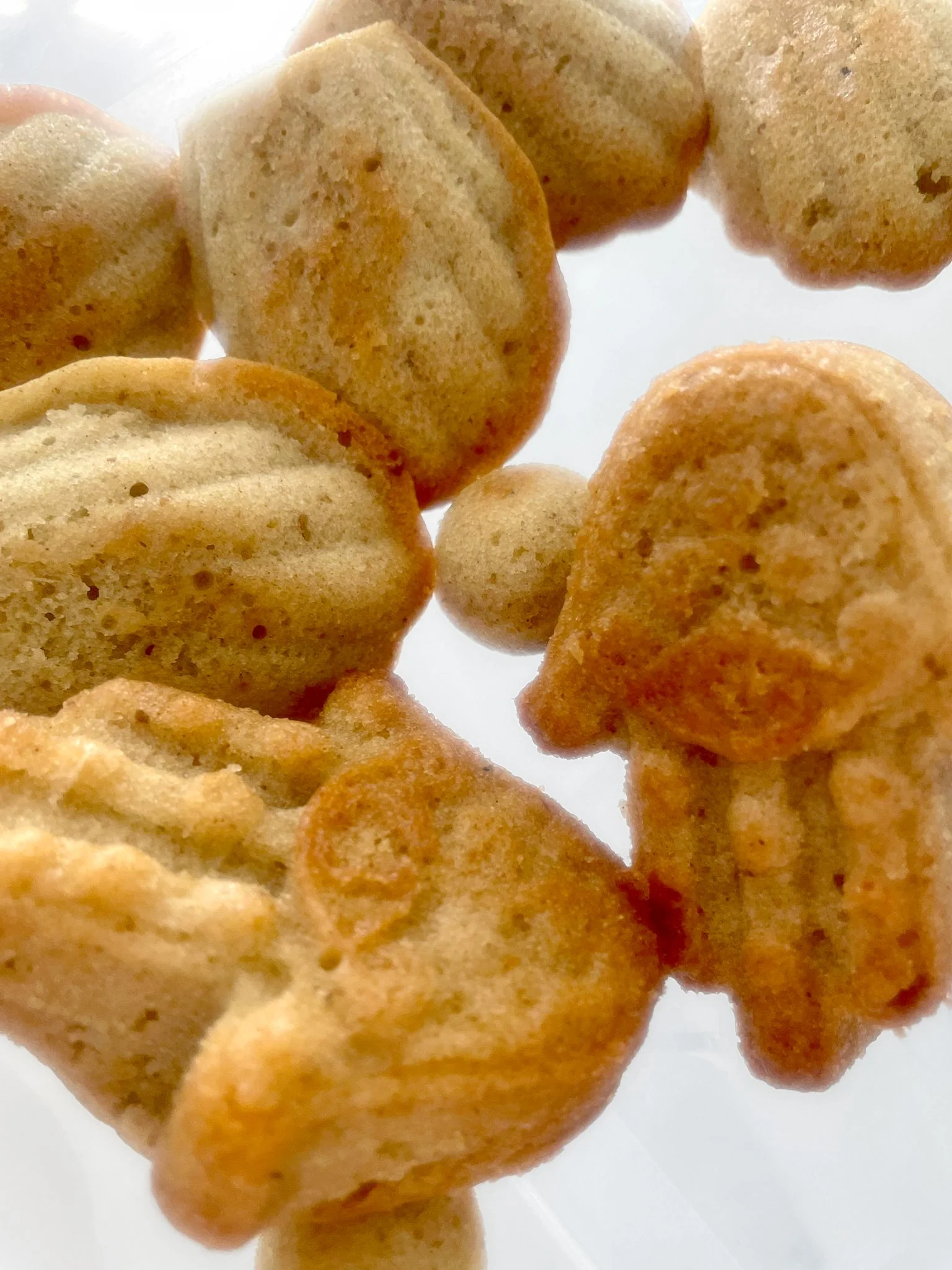
A reimagining of the traditional muhallabiyeh as a ‘choose your own adventure’, curiosity-led and then preference-guided exploration. With the white muhallabieh domes acting as a prompt, guests are encouraged to pair the milk pudding base with a variety of flavours - a bouquet of fruits, floral essences and aromatics. As guests explored their preference, they left traces of visible coloured streaks across their plates, turning them into visualisations of their personal flavour profile. A cardamom, poppy seed and white chocolate Madeleine anchors the flavours to a subtly earthy interjection, whenever one was needed. Here, the black seed sweet ‘tar’ that guests dipped their fingers into at the beginning of the evening reappears as part of the experience, reframing the starting narrative.
My culinary practice leverages the politics and poetry of food through flavour, physicality and provenance, enabling the emergence of the space to tackle complex, layered issues through familiar formats.
It looks at food as an experiential format, and through a narratological lens, continuously reframes its role as dramaturg, device, subject, narrator, or interface.
I operate as a fictional entity (The Council for Culinary Curiosities and other narrative affairs), building my knowledge through collaborations, testing, and R&D in food as a narrative device. Through it, I run three supper clubs:
THE BREAKUP SUPPER CLUB is a space for shedding past selves, hindering ideologies and unhelpful relational dynamics through intimate, as well as public culinary performances. The Breakup Supper Club also offers a bespoke service, responding to more personal narratives through similar formats.
SARD W SUFRA (Arabic, translating to 'story & spread') is a series of supper clubs that narrate aspects of culinary heritage in the SWANA region. It weaves through different ecologies and cultures, surfacing ways in which seasonal ecological and agricultural practices start to form narrative structures that shape collective lore and cultural identity.
DINING WITH THE UNSEEN is a series that narrates worlds, beliefs and forces that exist in parallel dimensions through mythologies, folklore and fantasy from various cultures.
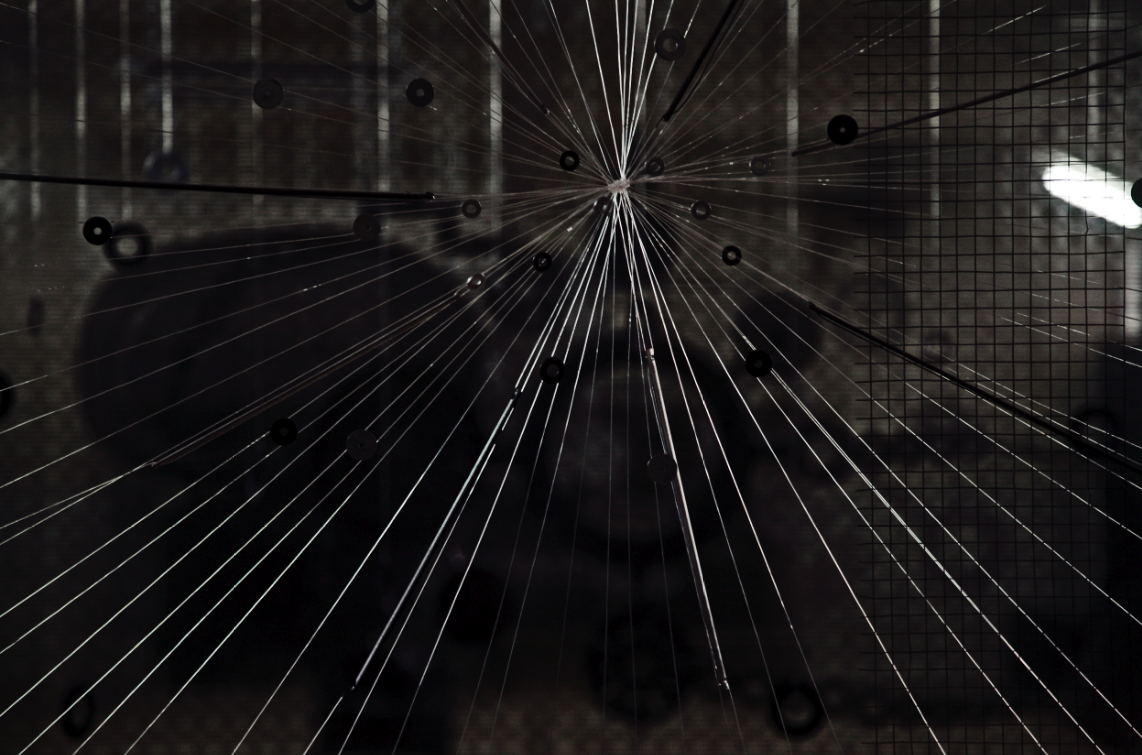
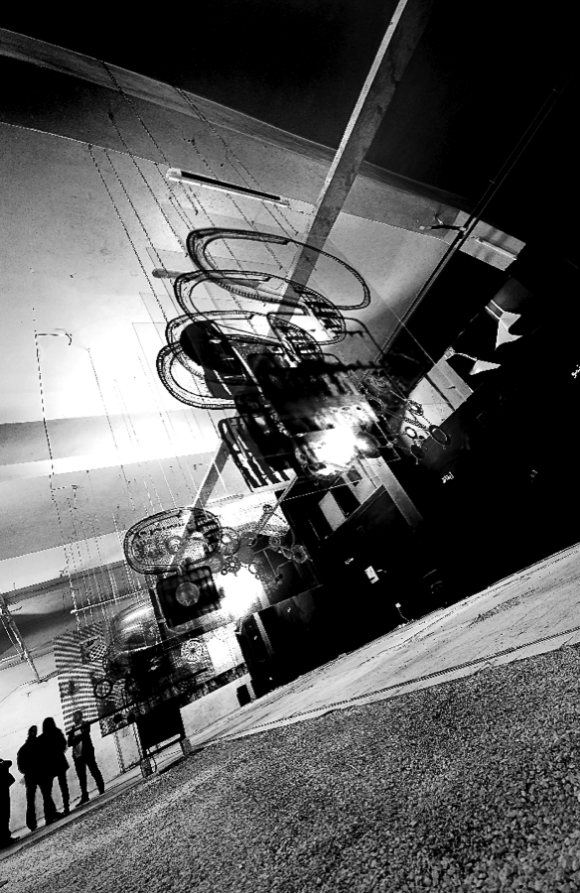
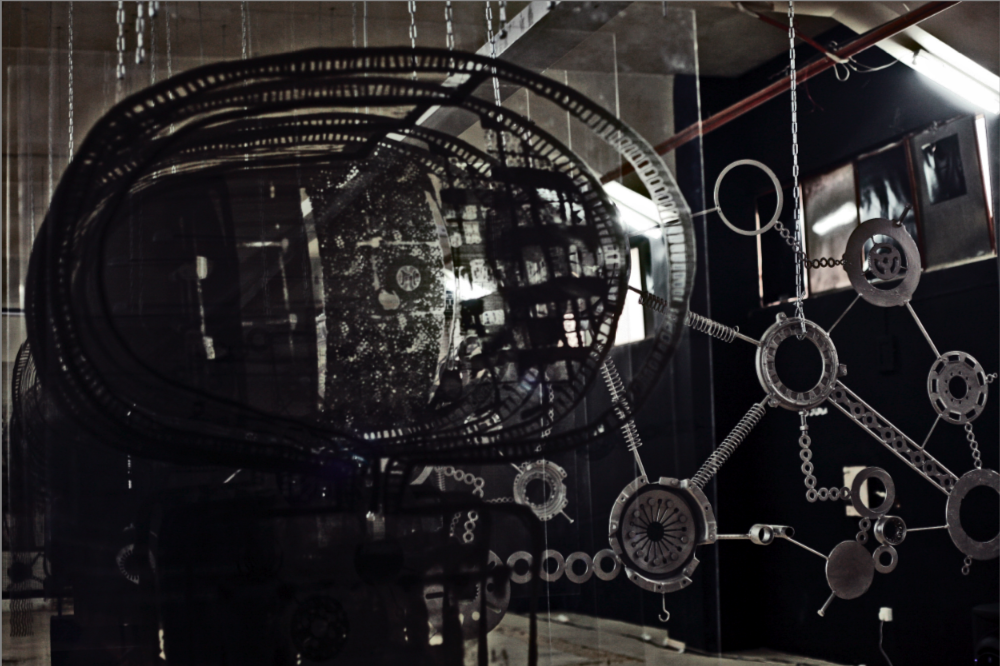
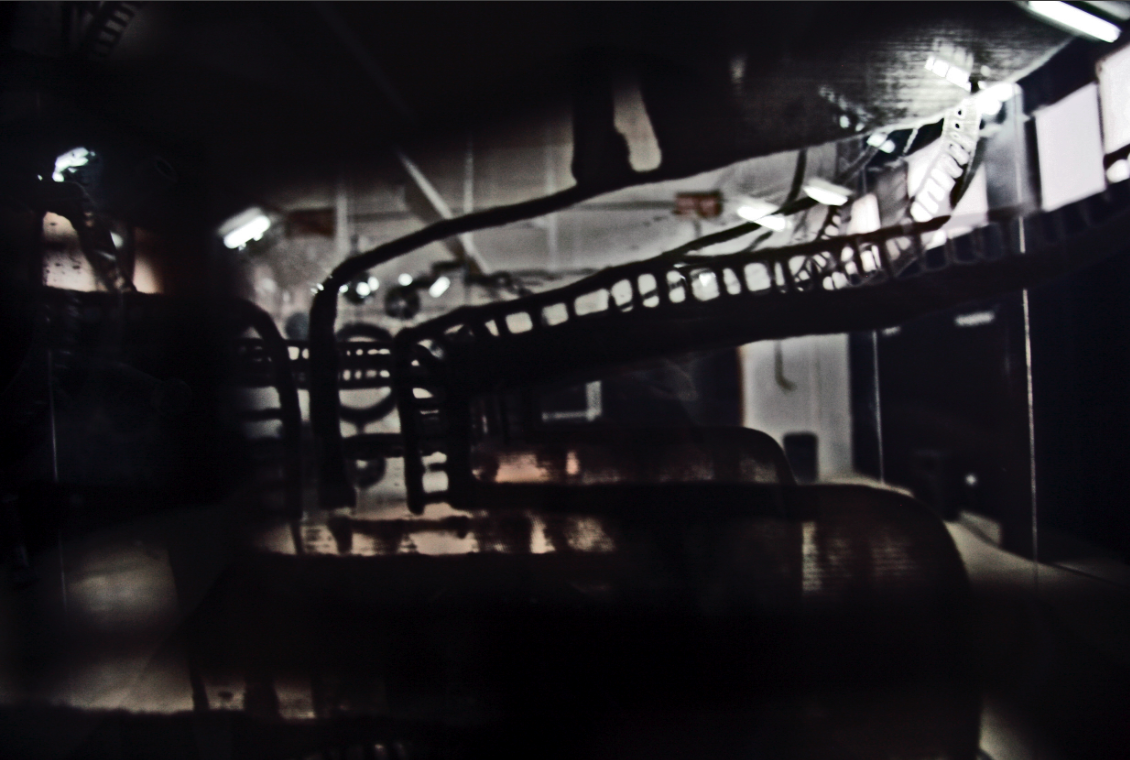
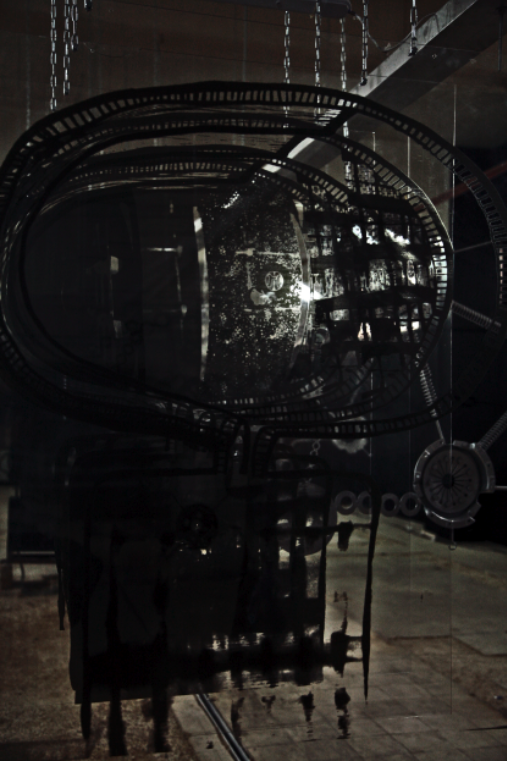
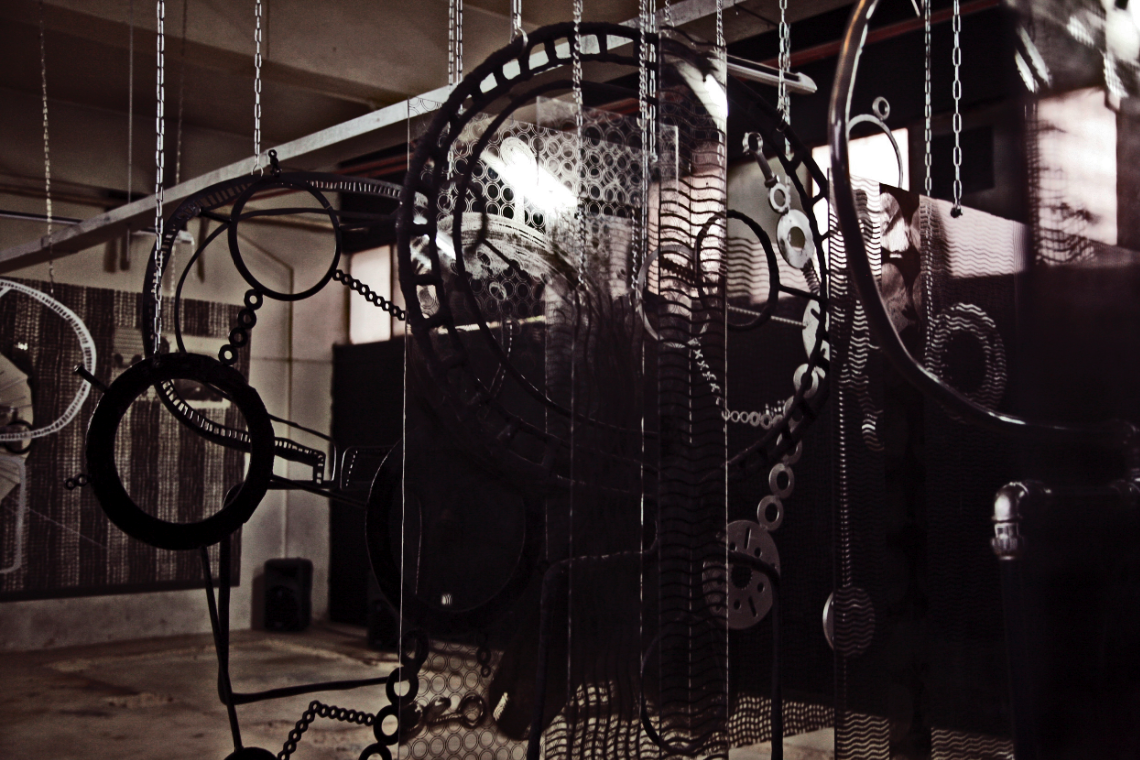
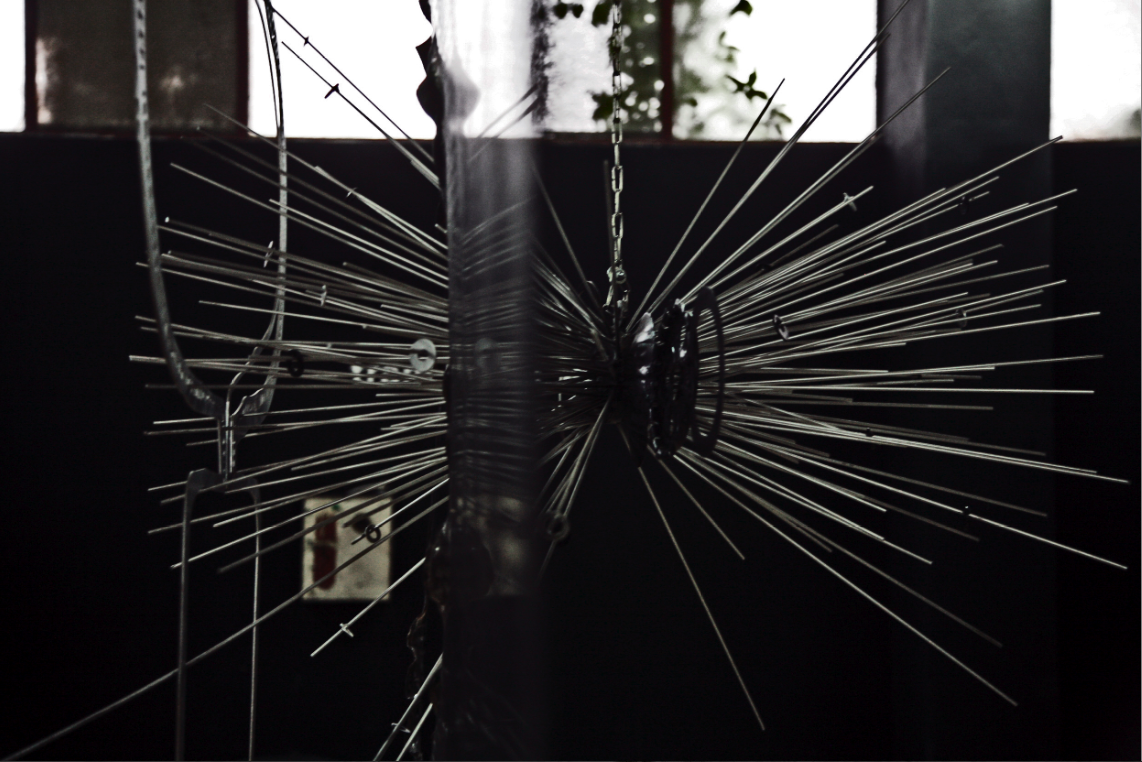
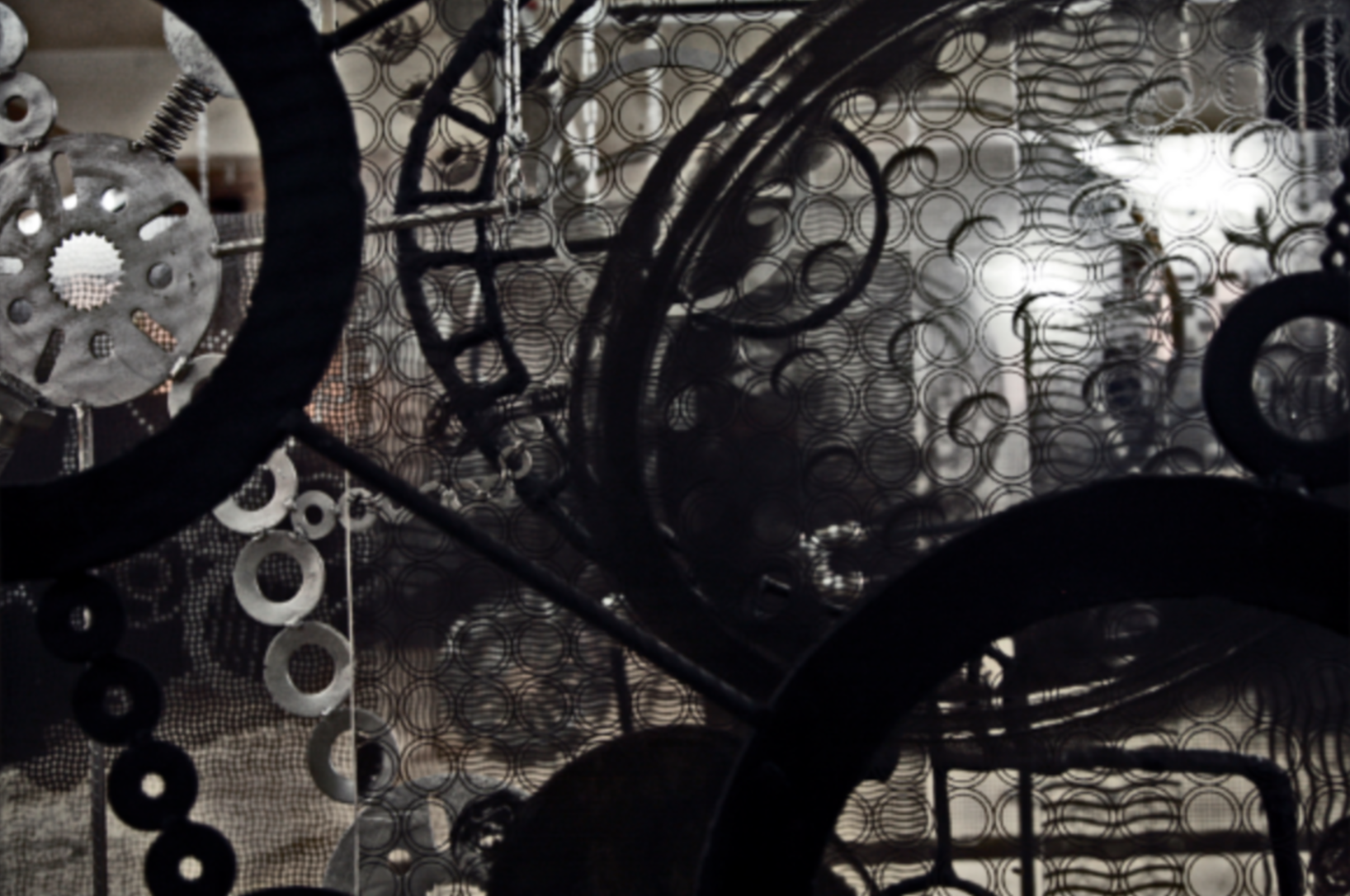
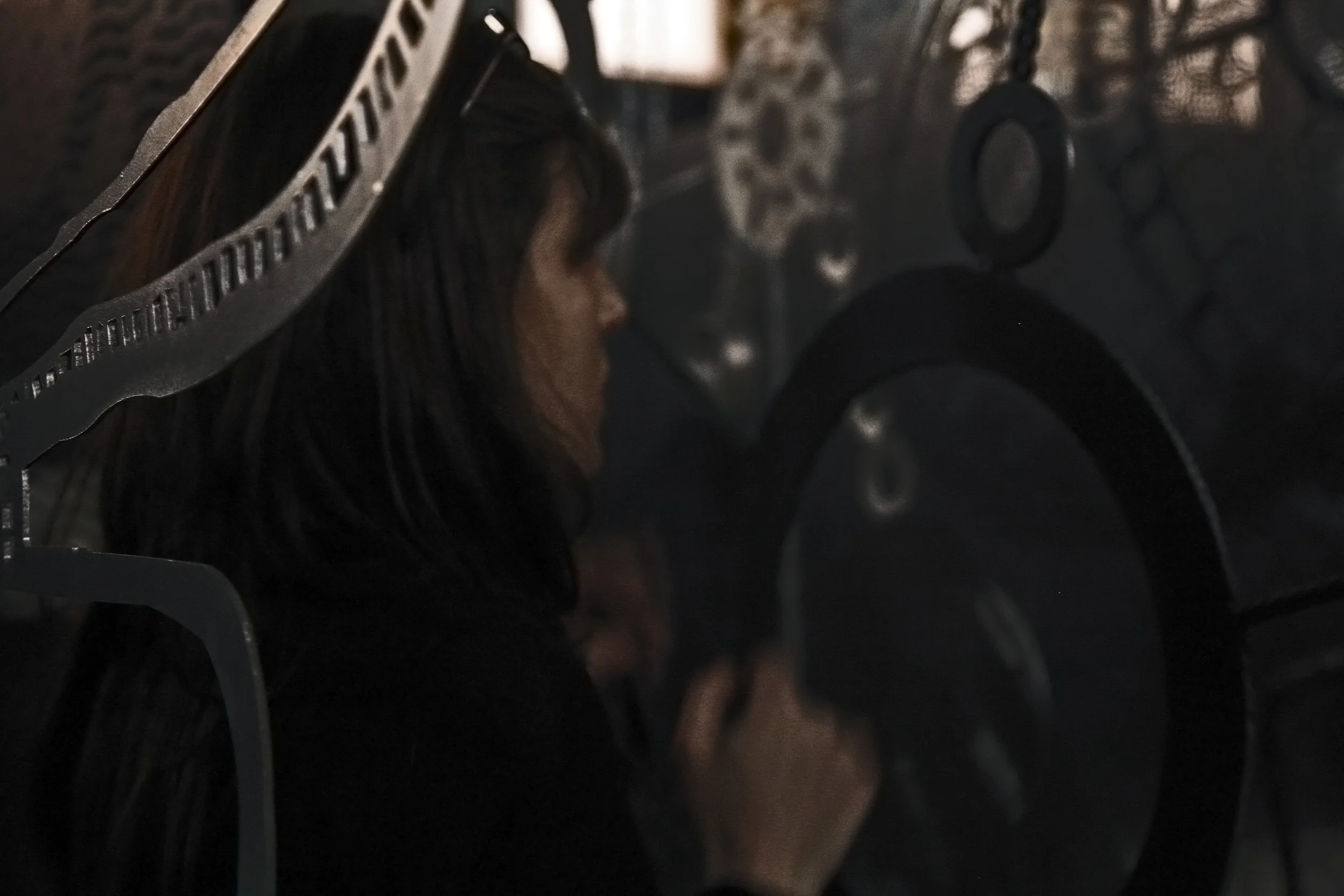
Set in an abandoned factory, FORMLESS is a spatial, sculptural and material conversation that interrogates identity through form and meaning. The installation challenges conventional identity discourse by refusing generic categorical frameworks, instead staging a conversation between 3 entities: character, context, and environment - to examine how they generate meaning and form through unstable relational assemblages , as they seek to define themselves through, as well as against each other, and the process.
Manifesting as a progression of translucent panels with content that shifts with viewer position, the installation creates a phenomenological encounter where perception becomes unstable. This formal strategy embodies the central thesis: that identity exists in continuous transitions - as perpetual becoming -rather than in fixed states. It insinuates intention as a force that moves the process along, perceivable in the space between states.
Critically, it defines formlessness as the constant loss of a defined state through transformation, rather than as lack, absence or void. A state perpetually arriving at itself while already departing.
This positions the work within ongoing philosophical debates about becoming versus being, moving away from models of fixed identity.
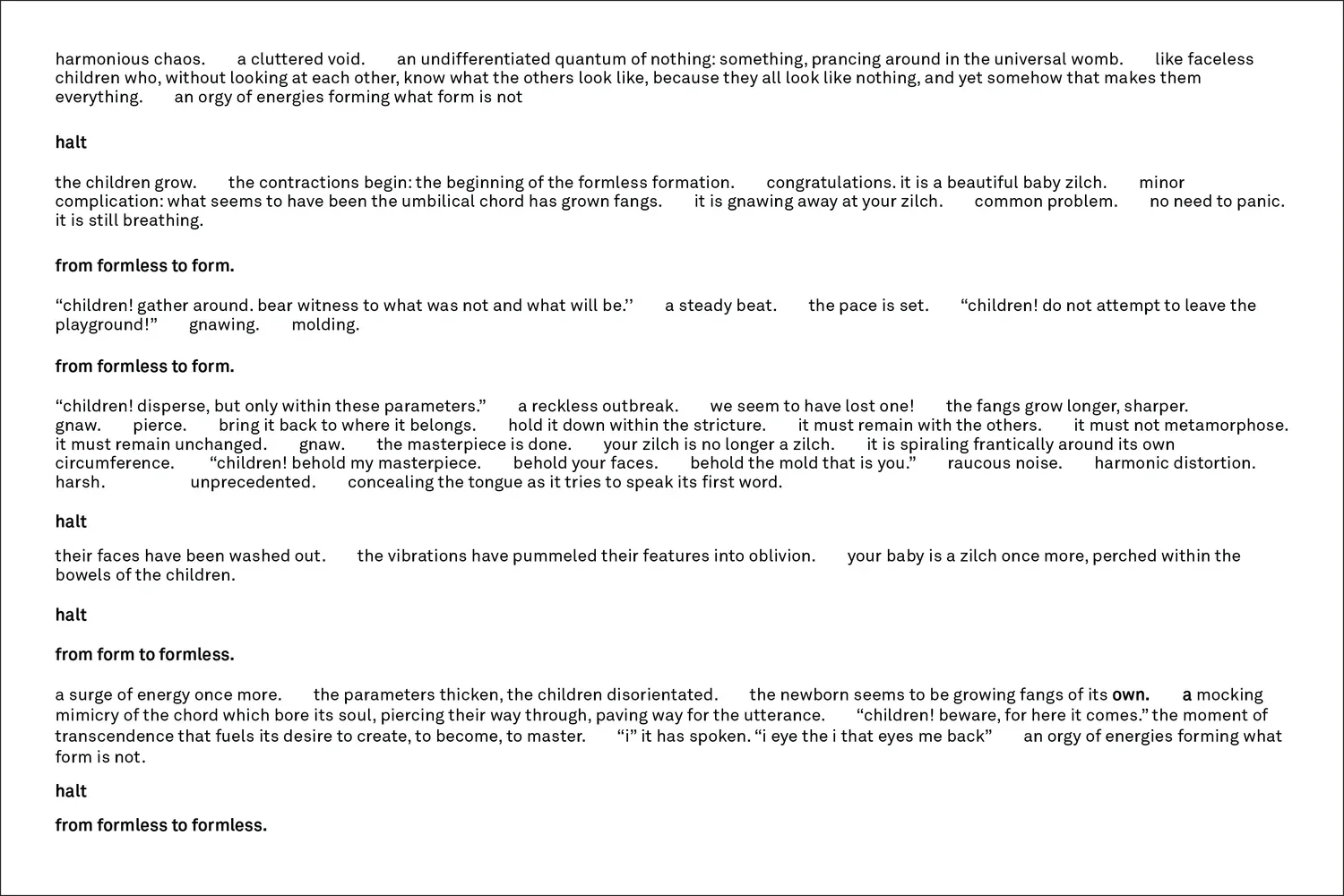
The forms and visuals within the installation are a record of an experimental visual and material dialogue, not guided by intention or aiming to reach any predetermined visual outcome, and instead, allowing the overarching narrative to dictate form.
The installation presents eight phases: Hybrid, Prelude, Birth, Development, Awakening, Conversation, Transcendence, (and back to) Hybrid, framing the experience as an attempt to freeze a single moment within this perpetual state of 'hybridity' in order to to deconstruct it and examine it.
Viewers witness a battle between induced states of form and formlessness, where tangible elements become almost dispensable, bringing intrinsic meaning into question, and creating tension between process & product, material & immaterial, form & formlessness.
Deliberately exhibited at venues that were abandoned or in a state of transience, and at transit points in the city where multiple audiences could experience it, FORMLESS became the backdrop for dialogue between audiences who don’t often interact, usually confined to areas that they identify with - socially, politically or economically . By narrating it as continuous transformation rather than a coherent state, allowed for more expansive dialogue within the physical space, later spilling into online forums.
Funded by Mophradat (previously known as the Young Arab Theatre Fund), among other local sponsors, and exhibited in Amman, Jordan and Beirut, Lebanon.
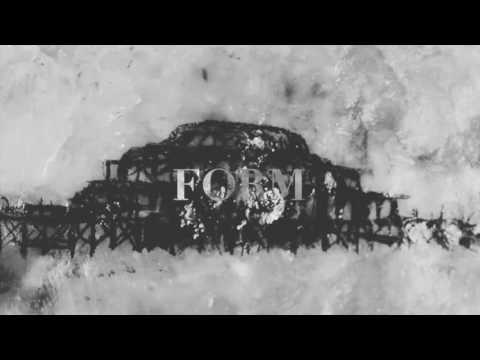
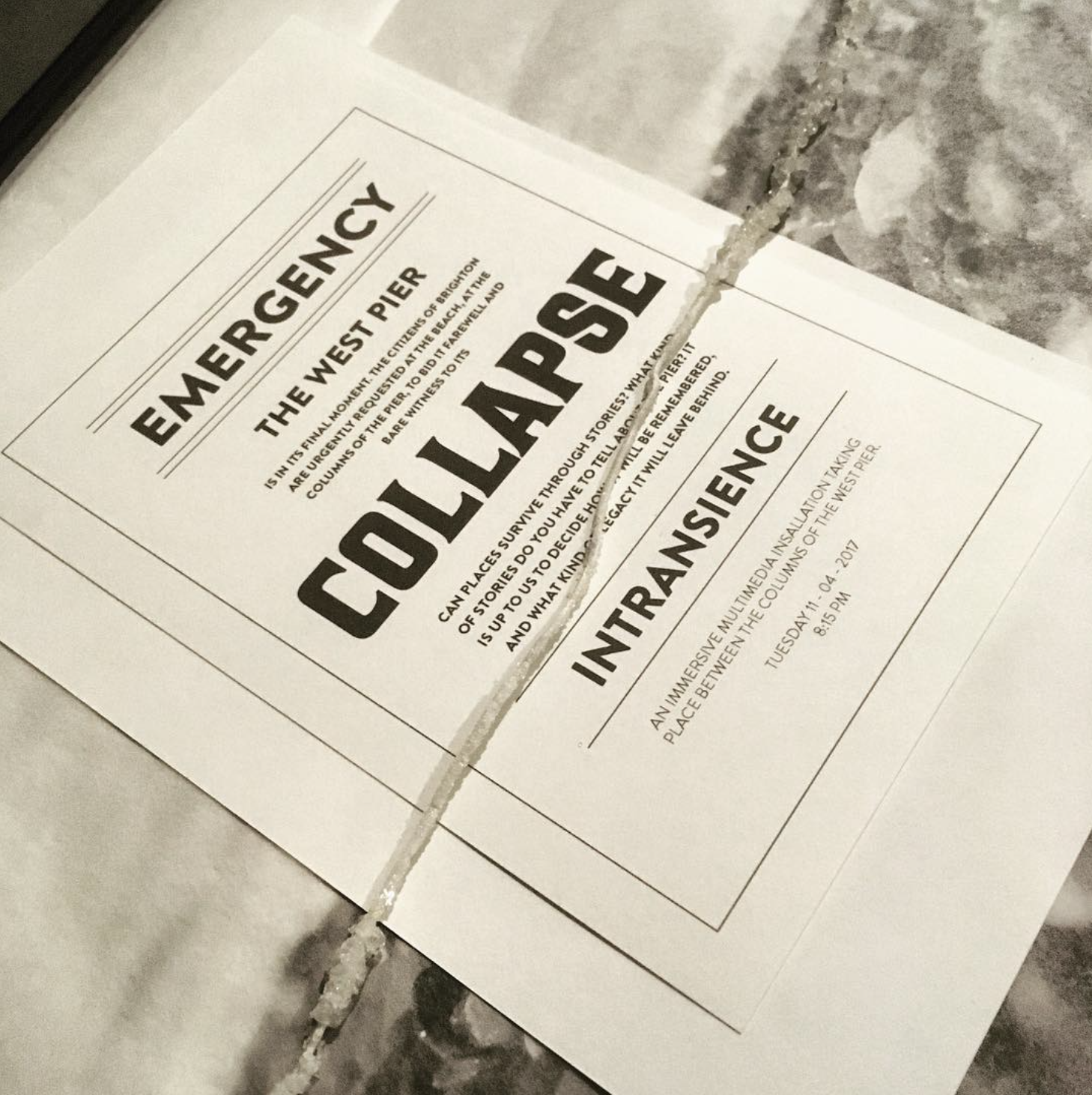
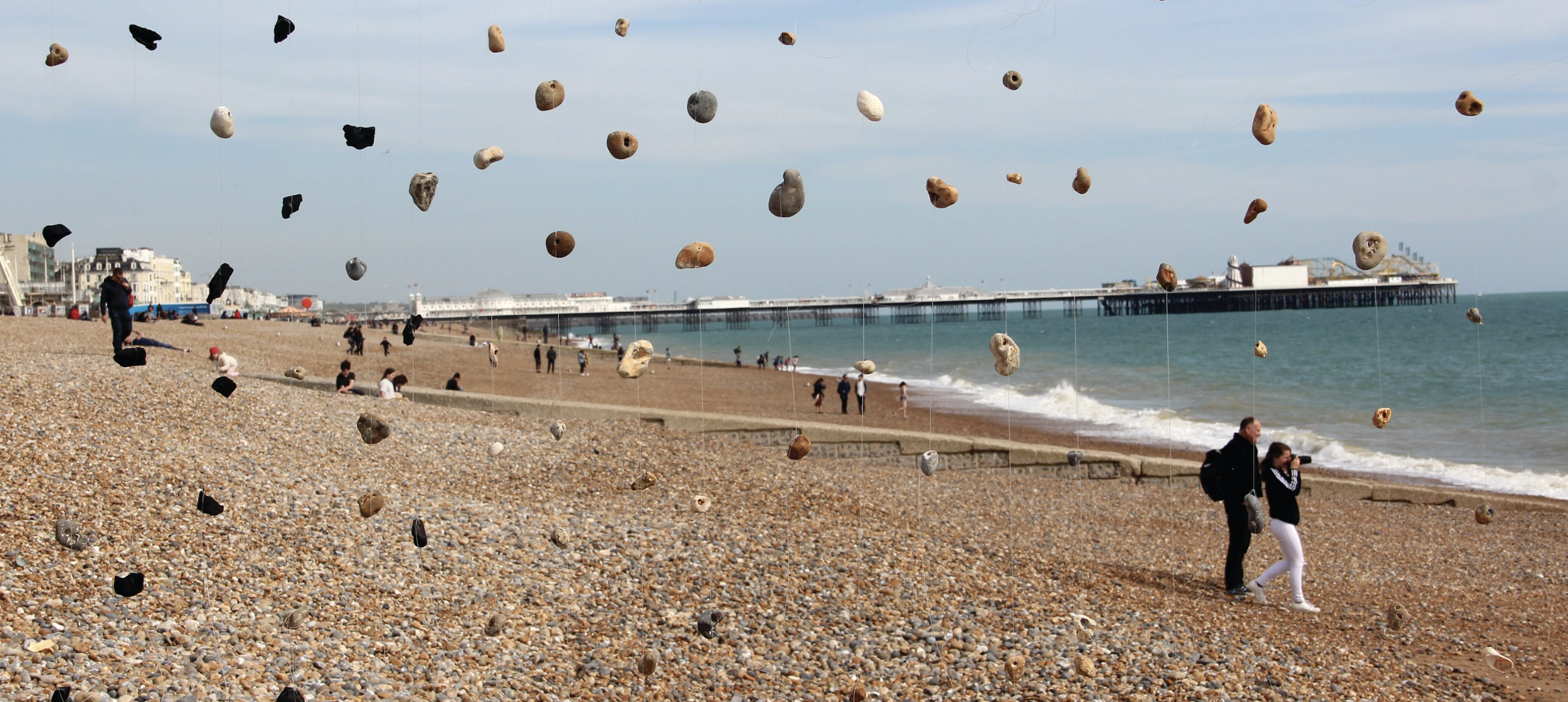
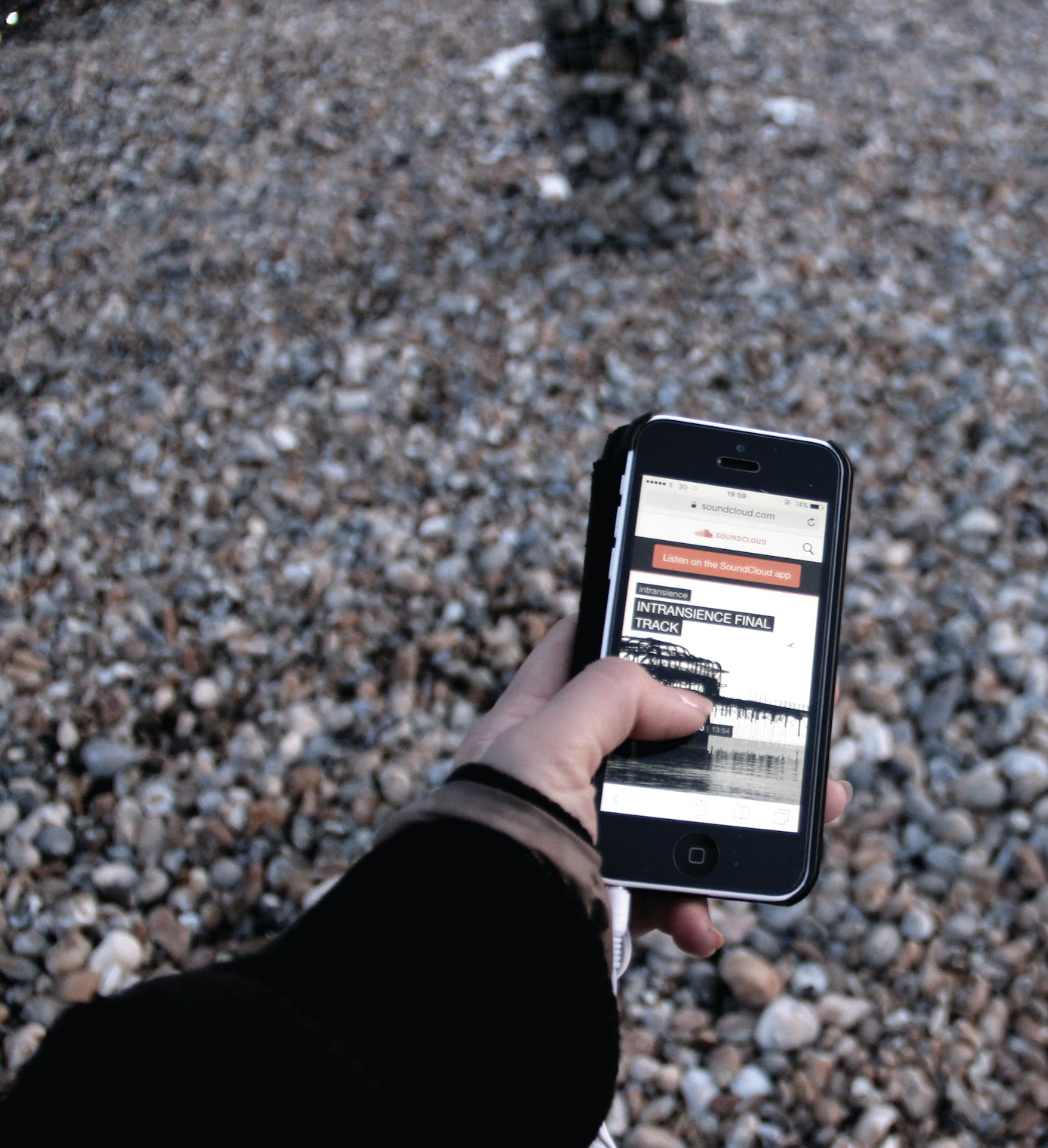
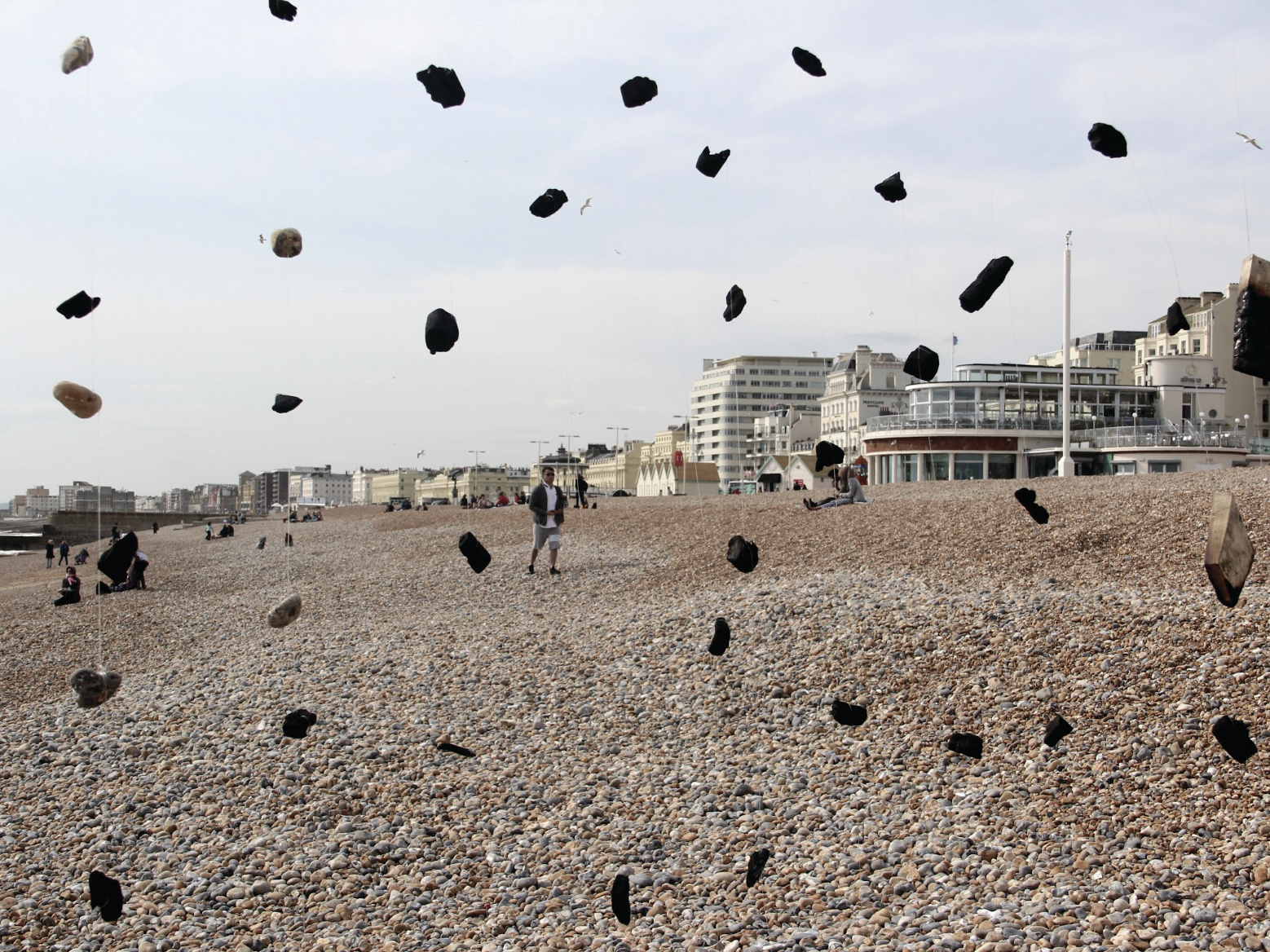
INTRANSIENCE is a site-specific installation that facilitates conversations around the construction of the legacy of place. It anchors the narrative to the skeletal remains of the West Pier in Brighton, augmenting the site through material, spatial and audiovisual layers to activate audiences into the storyworld
The installation halts the progression of linear time within the moment of the collapse of the pier's skeletal remains - its formal 'death' - creating a rift in this dimension that enables visitors to peer into a parallel dimension where they're immersed in the "Afterlife of Buildings". They find themselves eavesdropping on a debate between anthropomorphised structures on how to categorise the pier in its afterlife. Drawing from Greek chorus traditions and Jacques Lecoq's tension levels, the scripted audio debate oscillates between urgency and contemplation, exploring five elements of legacy: Imagination, Memory, Intent, History, and Form. The narrative deliberately removes spectators from passive observation, demanding they participate in shaping the legacy.
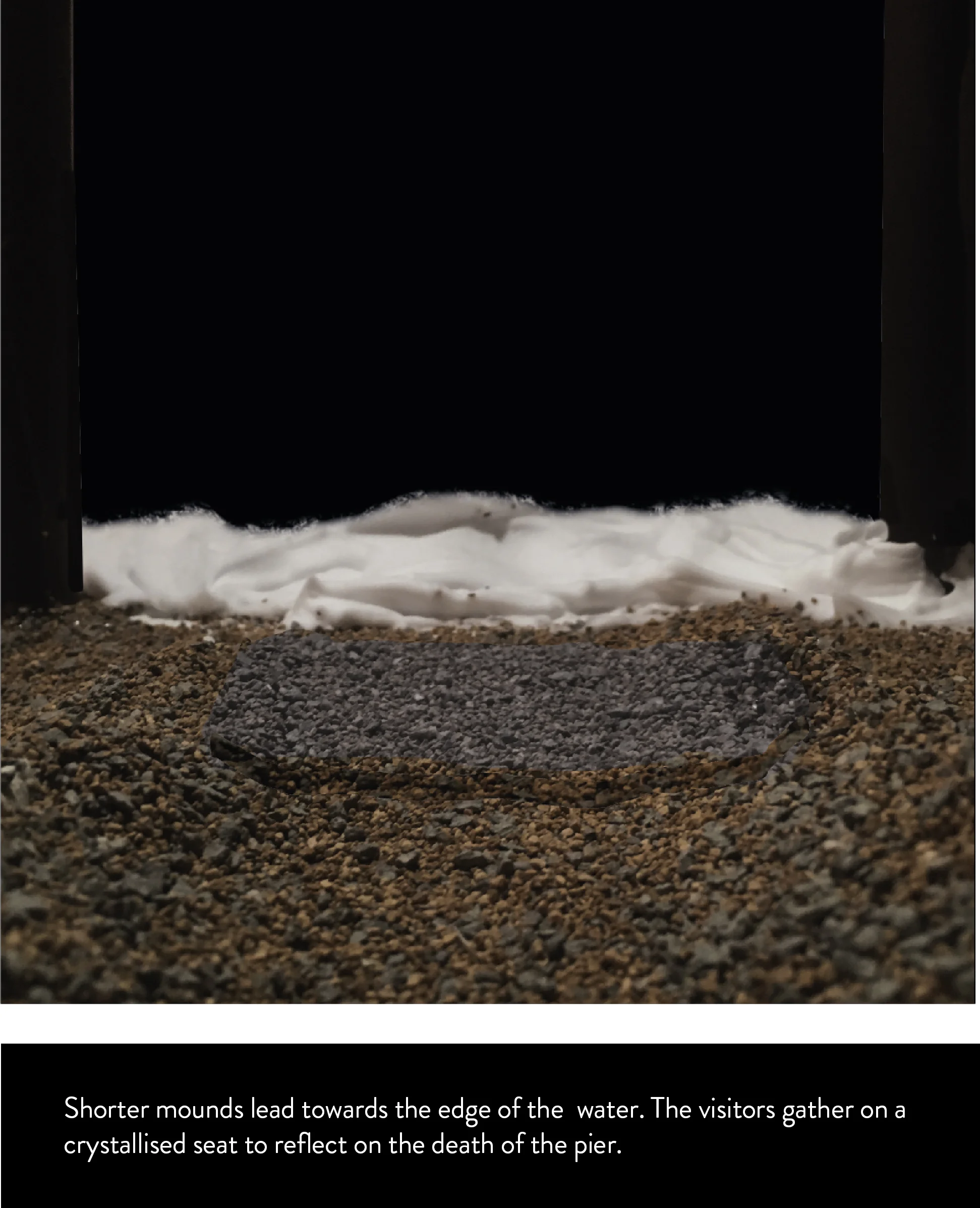
The physical space mirrors this conceptual framework. Designed as an inhabitable enclosure based on a collapsed pier kiosk, it sits simultaneously outside the standing skeleton yet inside the memory of what fell. It alters the physical experience of the space on Brighton beach, to insinuate the existence of this parallel dimension. Memory foam buried beneath pebbles mutes their sound beneath visitors' feet, and creates an uncanny sensation of the beach lifting them as they expect to resist the usual sinking-in. Mounds of pebbles appear to be pulled out of the beach, crystallised with alum salt - a material that preserves and simultaneously contributes to the current decay of the pier's skeletal remains - embodying the paradox of transience, particularly in proximity to the water.
The dialectic approach privileges polyphonic narratives over authoritative historical accounts, acknowledging subjective experiences while constructing a collective legacy that is not solely dictated by Cartesian space. The work becomes both an antidote to transience and an orchestration of entropy, offering audiences agency in creating stories that outlast physical structures. It is a meditation on how we construct meaning from the materials of memory and imagination, and what happens to that meaning when the physical form it is anchored to decays or ceases to exist.