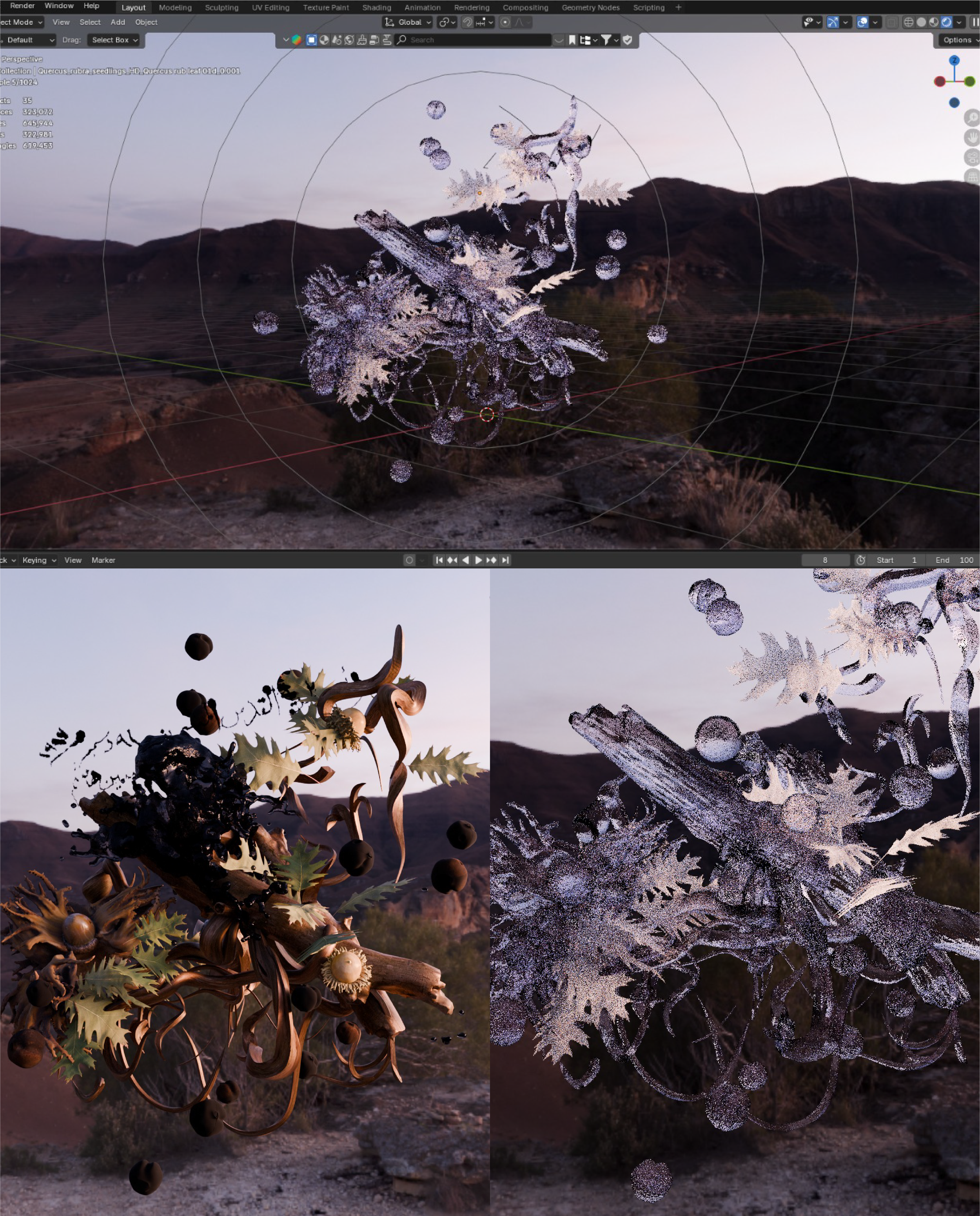
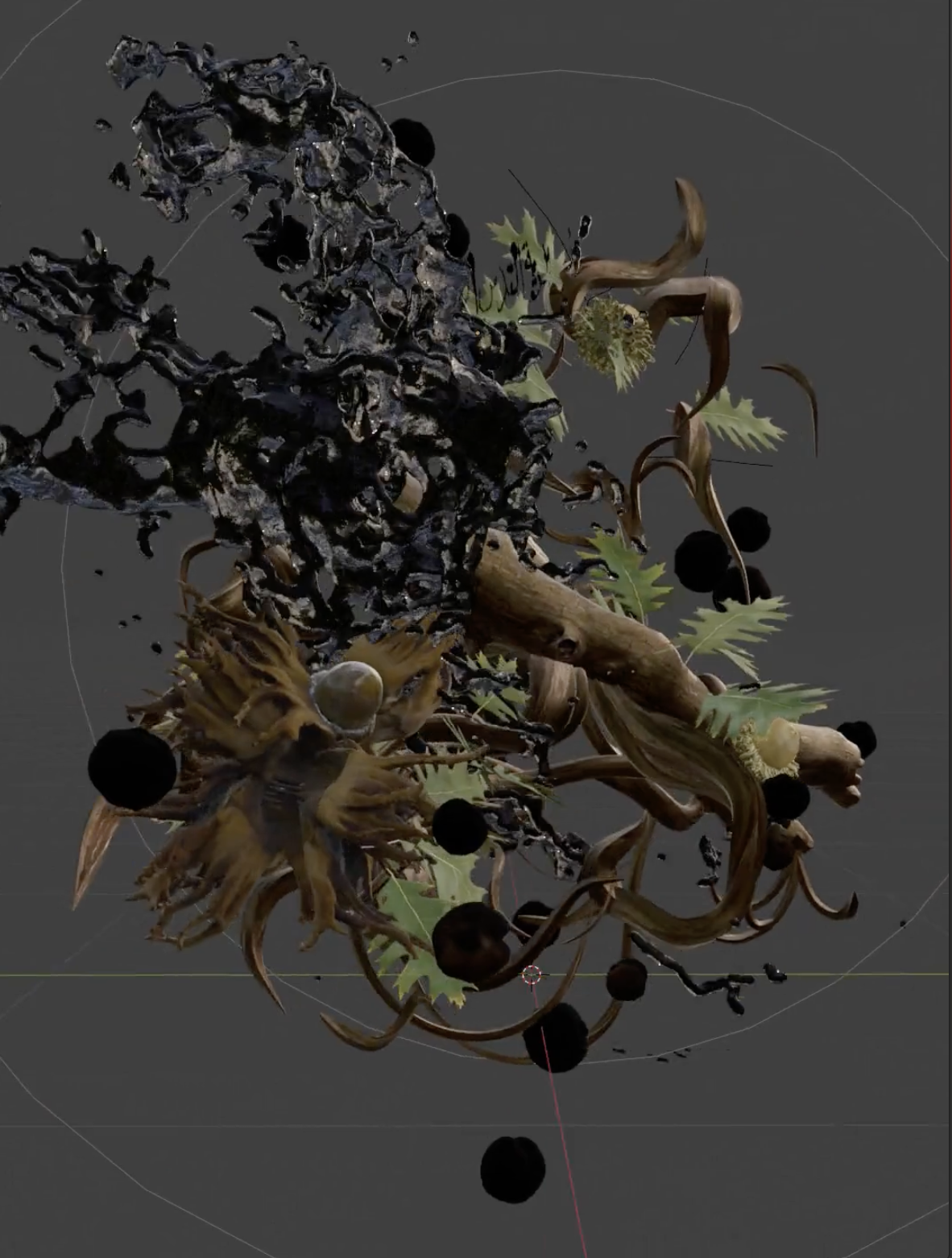
NB: Arduna is confidential as it is still in development, and will episodically reveal an alt history that participants will be cast into through live events and supper clubs. In July 2026, Baraka Obscura introduced the first move of the arduna community: to become strategically illegible to dominant reality while beginning to construct other parallel worlds.
Episode 2 and 3 of this world are currently in the grant application phase, taking the form of a participatory installation exploring mode of myth-making across realms and temporalities (see: Borrowed Time) and a scalable, immersive dining experience centred around narratives of the feminine (see: The Red Thread Banquet).
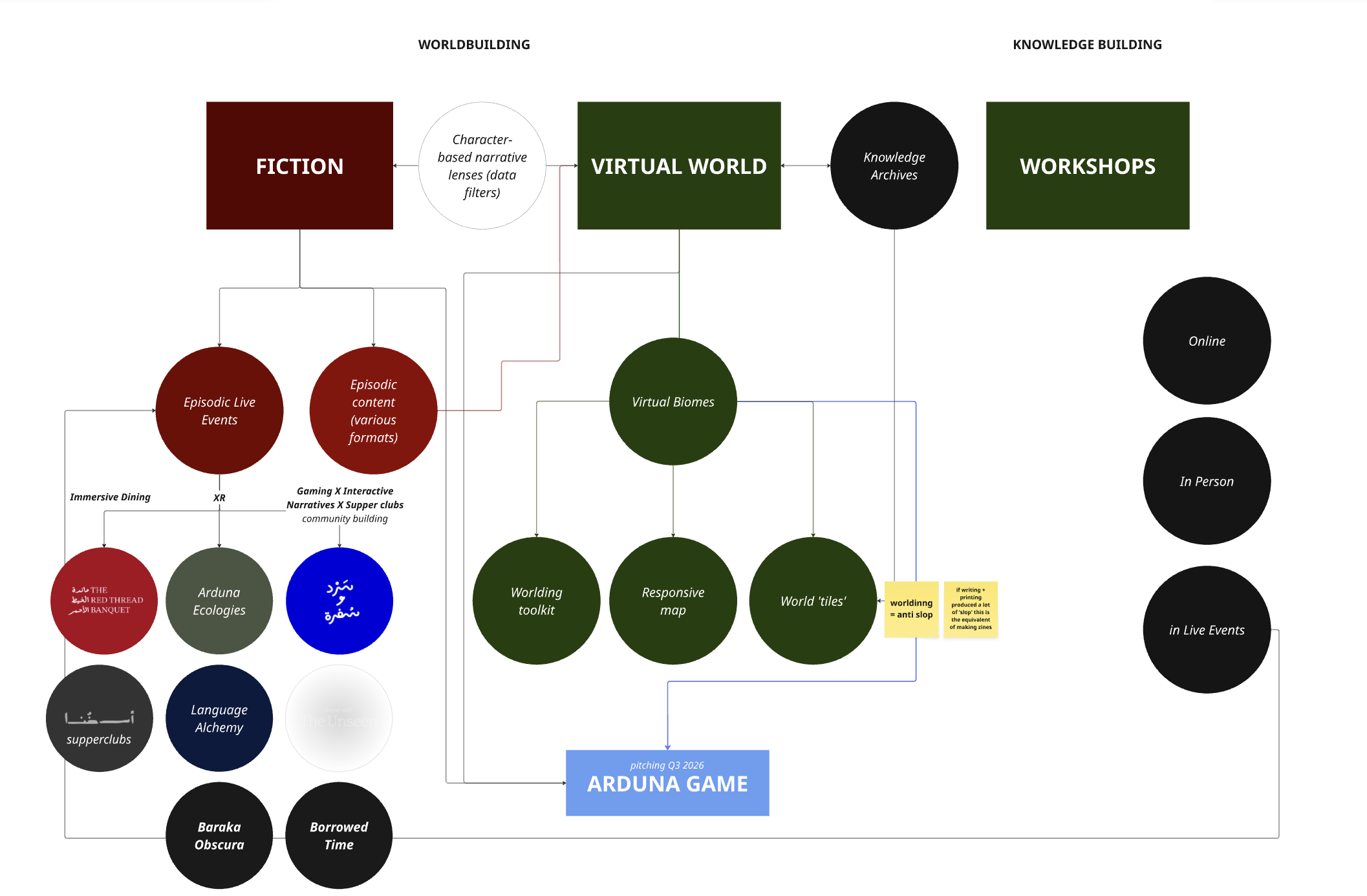
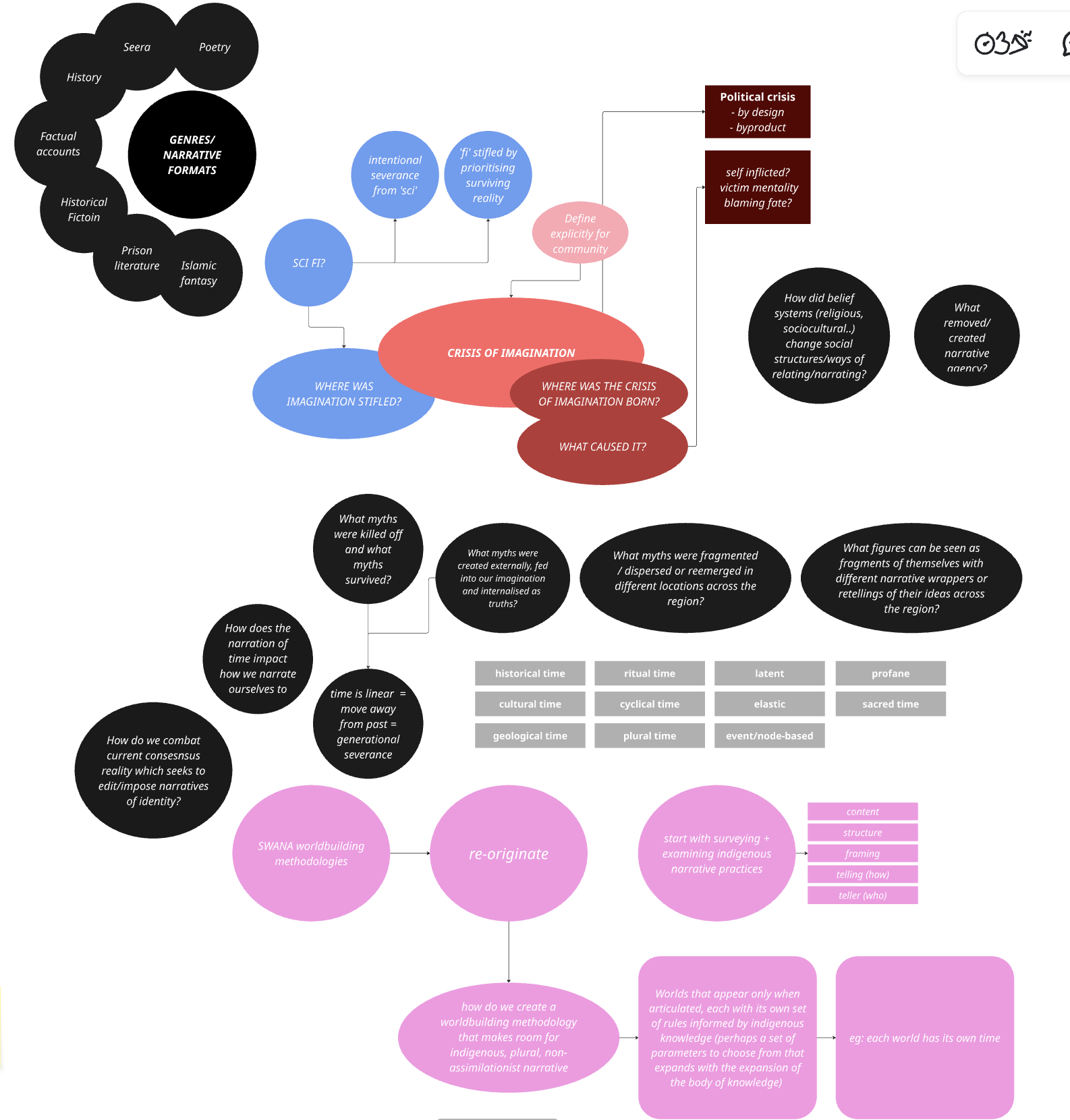
ARDUNA (Arabic: "our land") is a participatory worldbuilding ecosystem for the SWANA region, operating across virtual, physical and social space. It functions simultaneously as a fictional world/alt history, a LARP that unfolds through live events and supper clubs, a worldmaking lab, and an evolving body of collective knowledge. At its centre is an attempt to re-originate the narrative of our being in the world: beginning from the region itself: its lands, languages, ecologies, histories, cosmologies and ways of knowing, and treating these as active worldbuilding systems. Rather than constructing one definitive alternative reality, Arduna creates conditions in which multiple worlds can be generated, inhabited, tested, altered and recorded.
It pulls from principles of alternate reality games, immersive theatre, and narrative design to present a series of live events and experiences that blend reality with the storyworld. It weaves culinary narratives, generative media, and episodio storytelling to explore themes of being, belonging, and origin stories. It tests practical modes of cultural production and the construction of a shared reality across timelines that may have existed, and may emerge alongside the current reality of the region. Arduna's worldbuilding will weave into/be supplemented by a series of workshops around indigenous 'Arab' narrative practices - a curriculum which I have already outlined.
CORE:
ARDUNA positions human, alongside non-human inhabitants that are not metaphors but vantage points from which relations become legible. It uses land and language as the anchor points for investigating current reality, and catalysts for reimagining it. Arduna's storyworld treats "land" as a dynamic relation rather than a backdrop, and language as a container for codes of consciousness, capable of catalysing various experiences of being'. It sets up a responsive world that audiences can simultaneously invoke and inhabit, guided by situated 'actants', where cuisines, scripts, sounds, and ecologies are evolving narrative forces. The aim is to counter imposed, inherited and internalised representations with tools that are made with and for the community that is cast into the storyworld. Through the episodic ''experiments'. It attempts to activate people into iterative, participatory worldbuilding by emphasising that a shared reality can be composed, as well as contested/critically examined throughout the process.
DESIGN PILLARS
Opt-in roles/tiered immersion: Arduna's design framework offers the storyworld to the audience through 3 levels of immersion, allowing varying modes and depths of engagement through different diegetic levels. It starts with the familiar before drawing them into the storyworld
Familiar formats: supper clubs, immersive installations, and interactive experiences form the live event series through which Arduna is experienced and the community begins to form, while the online presence offers storytelling through texts and a webpage.
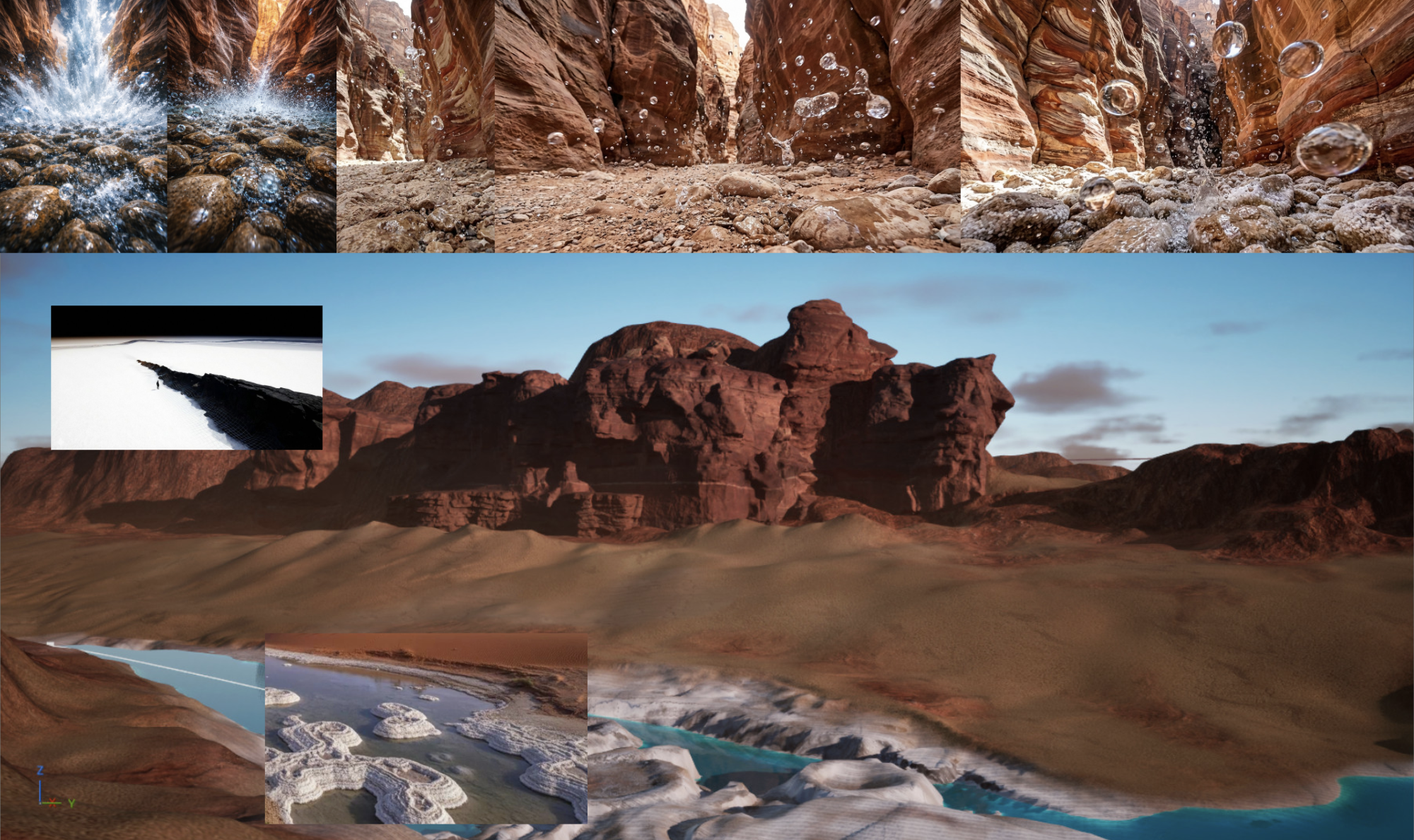
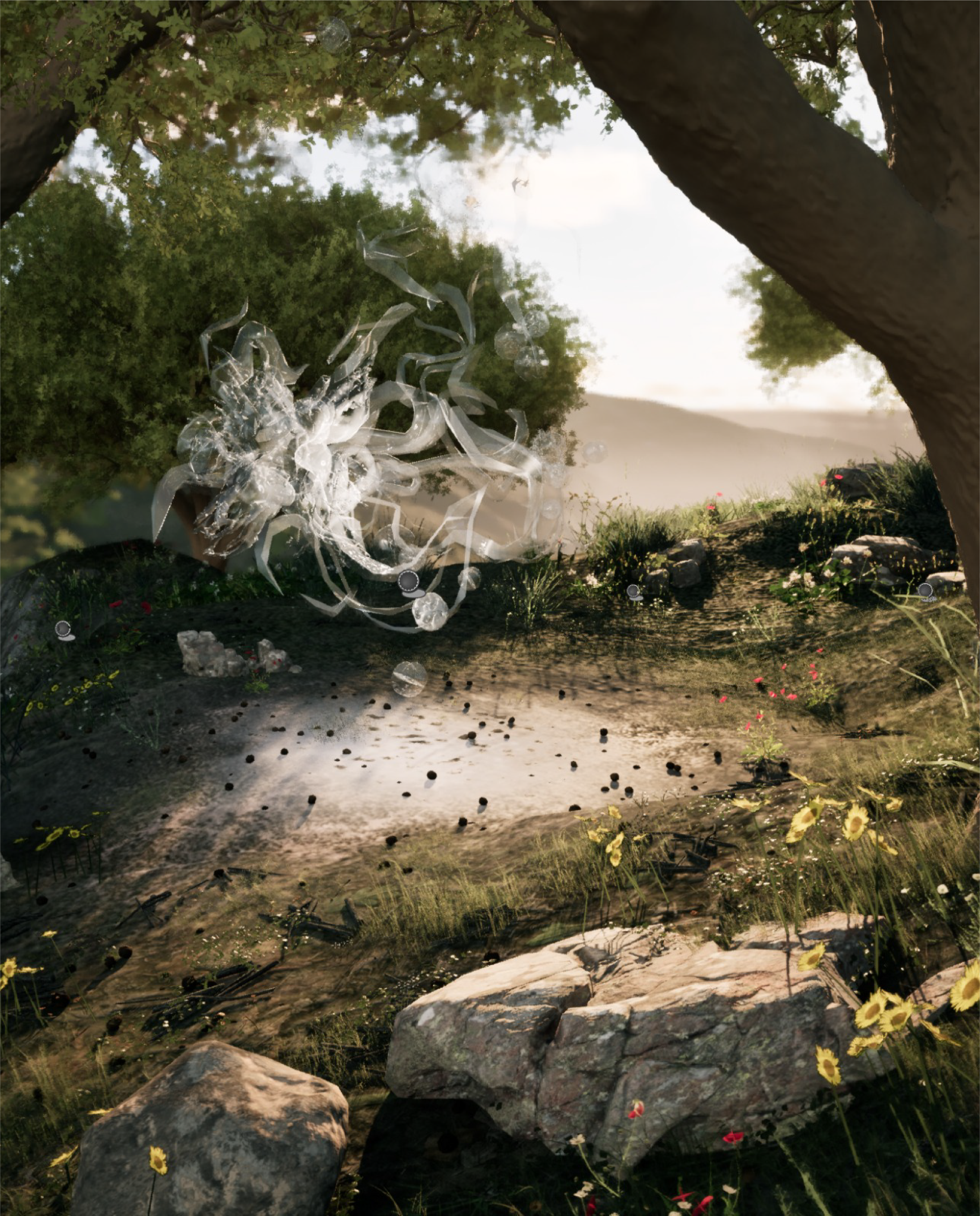
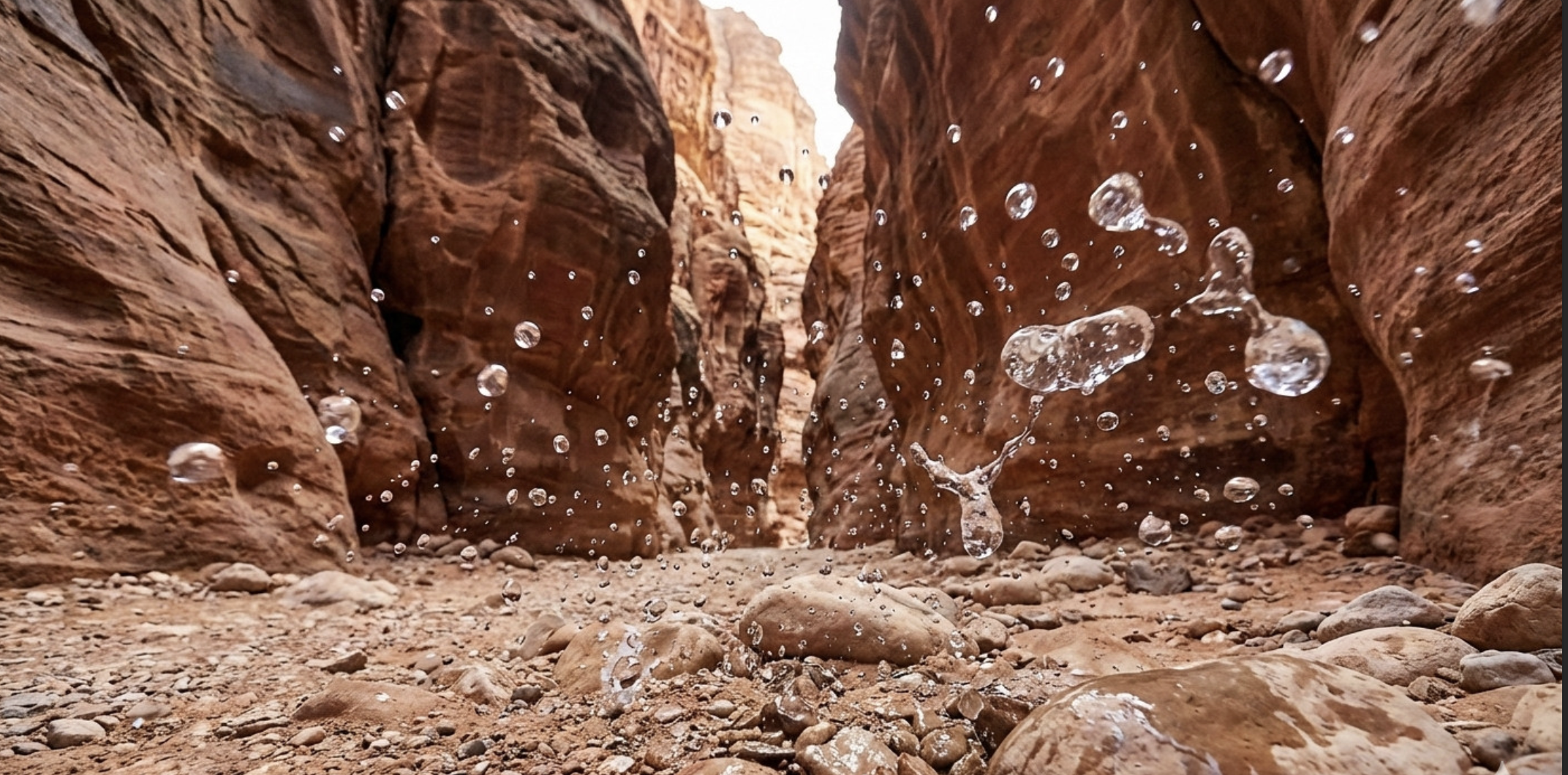
Situated narratives: oral histories, indigenous fictions, and procedurally generated/regionally accurate landscapes that are responsive, enable the storytelling to be situated in an undefined part of the region. R&D explores ethics of representation, tests balance of specificity vs ambiguity of location in suspension of disbelief, as well as experiments with stylisation to prevent the uncanny.
ARG + Game mechanics: the episodic experiences utilise game mechanics to draw participants into the world, with the goal of having each participant transition to an 'inhabitant' of the storyworld, capable of enacting change through clear narrative pathways and modes of agency depending on the parameters of each experience.
Language as shared reality: a series of workshops on excavating through the Arabic language for encoded values shared across the Arabic-speaking worldLanguage as alchemy: investigating how particular uses of language (from ancient to current languages, as well as digital code) can 'shift reality', catalyse states of consciousness and allow access to different temporal experiences (here the study goes into current internet phenomena that are noted by various digital anthropologists examining Gen-Z language and digital esotericism practices).
Symbol & script lab: an expanding script and symbol system inspired by scripts across the Arab world, experimenting with neologisms, and letterforms that attempt to capture meaning beyond current language systems, or build on ancient languages that have passed through the region that possibly captured more expansive meaning that current languages no longer carry.
Multiple perspectives: Arduna explores narratives from the POV of land, flora, fauna, and force/element.Participatory making: recipes, walks, soundings, and micro-work-shops that invite communities and diaspora to co-author content.
Codes of conduct: One of the core aims is to develop a code of social conduct that is responsible and shared amongst partici-pants, that draws from the co-created storyworld, as well as experiences like LARP and immersive theatre, where physical and cognitive safety is taken into account
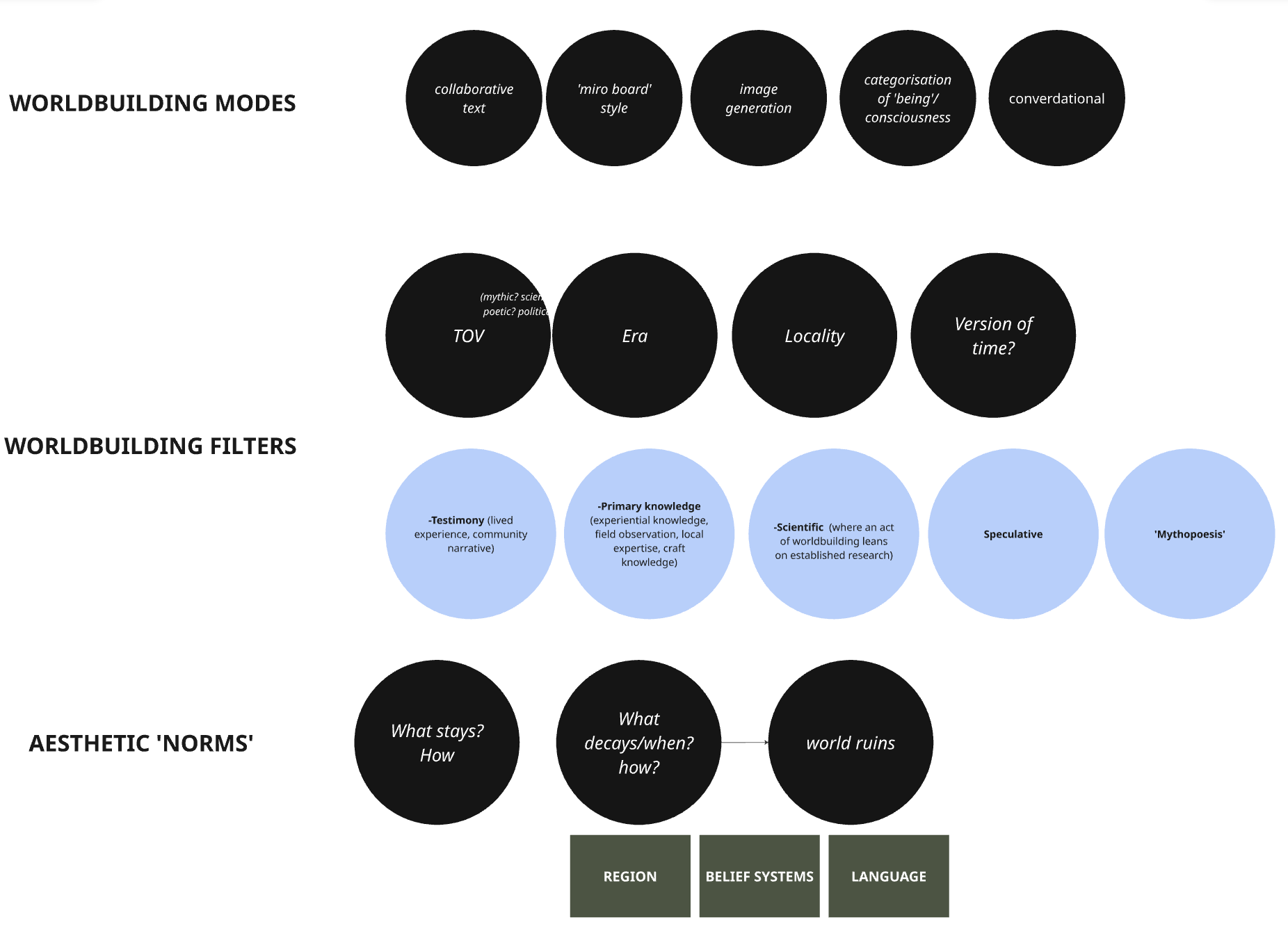
Its methodology moves continuously between knowledge-building and worldbuilding. Research into land, ecological knowledge, language, cultural practice, belief, memory and political history becomes material for speculative construction. Participants surface the narratives already organising a place or condition, examine which structures have been inherited, imposed, extracted or naturalised, and then intervene in them through speculative propositions and what-if forks. These interventions become worlding tiles: modular fragments that can alter Arduna's evolving narrative cartography. The atlas therefore behaves less like a representation of territory and more like a record of accumulated acts of worldmaking, where geography, memory, relations, power and possible histories can be rewritten through participation.
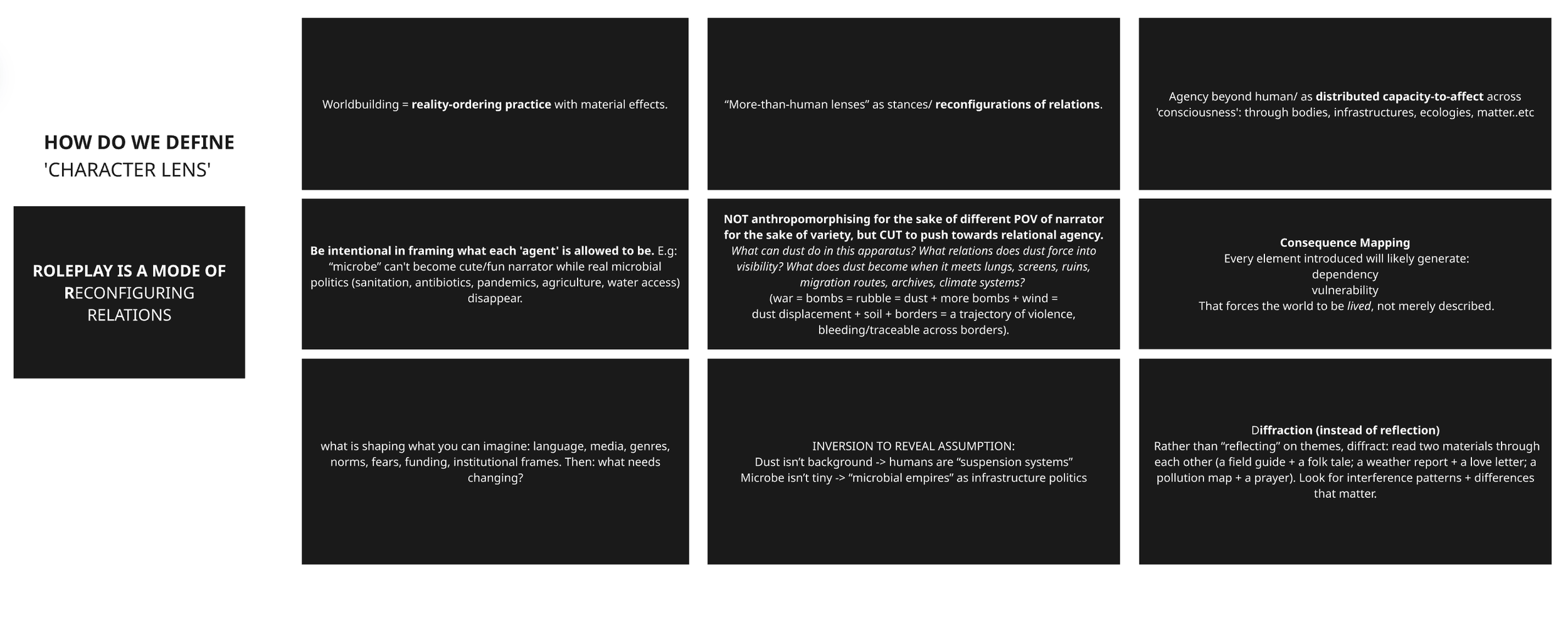
A key part of this process is the use of character-based narrative lenses. Participants do not have to encounter the world exclusively through a human protagonist. They can inhabit or think through flora, fauna, forces, elements, landscapes and adjacent or unseen beings, alongside human characters. A river, wind, olive tree, oryx or atmospheric force can become a position from which the world is perceived and acted upon. Each lens changes what becomes perceptible, what forms of knowledge are available, what relationships become possible and what actions make sense. Character therefore operates as a kind of narrative and epistemic filter: changing the observer changes the world that can be produced.
The ecosystem is activated publicly through workshops, live events, participatory installations, immersive dining, role-play and other collective worlding formats. These are spaces for testing Arduna's methods rather than simply presenting a finished fictional universe. Participants might work through a character lens, examine a particular ecology or narrative structure, construct an alternate history, respond to a rupture in the world, or collectively negotiate the conditions of a possible future. Outcomes from these encounters can subsequently enter the wider Arduna system as stories, rules, relationships, artefacts or worlding tiles. The public therefore contributes to the development of the world and to the knowledge archive from which later iterations emerge.
Underlying this is the idea of the assemblage. Arduna looks at worlds as consequences of particular configurations of people, institutions, materials, technologies, beliefs, environments, histories and forms of power. Certain assemblages can produce conditions of violence; altering even part of that configuration may allow a radically different world to emerge. The methodology can therefore work with existing condition, asking what relations and decisions allowed it to come into being through alternative variations. Speculation becomes a way of examining causality: which elements need to be removed, introduced, reconfigured or related differently for another reality to become possible.
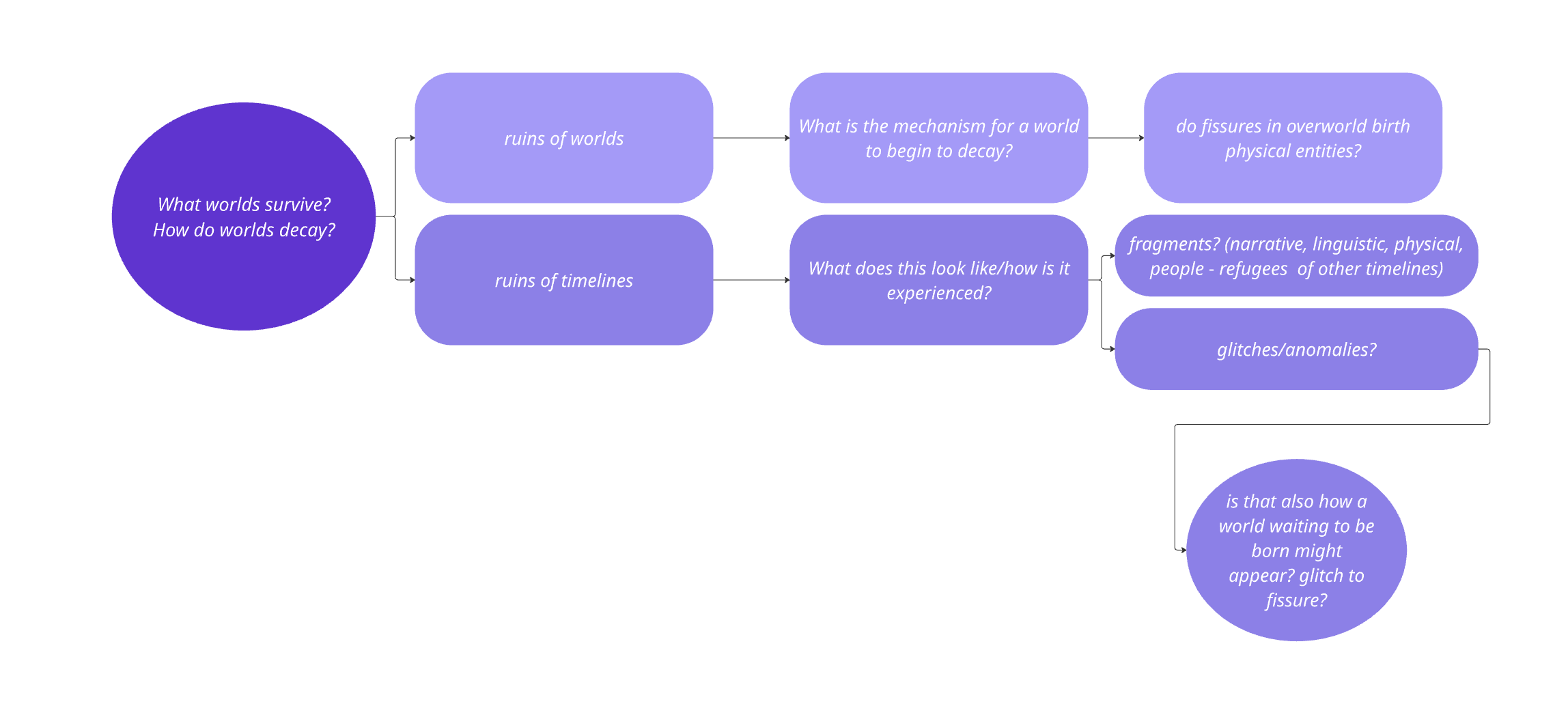
This gives Arduna its temporal structure of editable pasts, parallel presents and plausible futures. The past is treated as something whose consequences can be revisited through counter-history and speculative intervention; the present can contain several simultaneous versions of reality depending on the relations through which it is experienced; and futures emerge from trajectories already latent within those altered conditions. Past, present and future continually feed one another rather than sitting in a fixed sequence. Across Arduna, worldbuilding becomes a method for asking how worlds come into existence, who and what participates in producing them, how violence becomes structurally possible, and what different assemblages might allow other worlds to be rehearsed into being.